A Date with Your Family
"Educational short showing how you"
Keys: Space play/pause · ←/→ 10s · F fullscreen · M mute · </> speed
About this film
Educational short showing how you should never show any emotions at the dinner table.
Cast & crew
More films like this
More Drama films
View all →







More about this film
About the production
Release date1950
Box officeNot applicable - educational shorts were not commercial releases
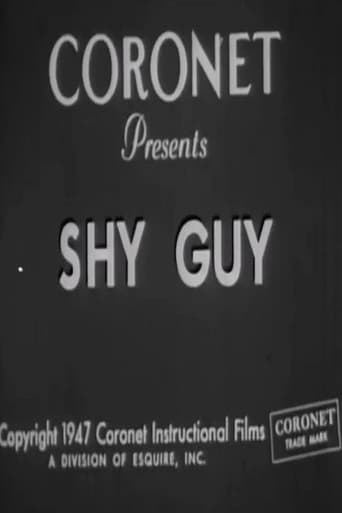
ProductionCoronet Instructional Films
Filmed inChicago, Illinois (likely Coronet Studios)
This film was part of Coronet's extensive library of educational shorts produced for classroom use. The production utilized static camera positions and minimal editing to maintain a straightforward, instructional tone. The film was shot in black and white on 16mm film, standard for educational productions of the period. The dinner table scenes were carefully staged to demonstrate 'perfect' family dynamics according to 1950s social standards.
Themes
Emotional suppressionFamily conformitySocial conditioningGender rolesPost-war American values
Themes & topics
educational filmdinner tablefamily dynamicsetiquetteemotional control1950ssocial instructionbehavior modificationconformitynuclear family
Historical background
Made in 1950, A Date with Your Family reflects production norms of mid-century cinema across Hollywood and world markets—shorter runtimes, regional audiences, and limited preservation infrastructure.
Why this film matters
Historians reference A Date with Your Family (1950) when discussing 1950 film.
Making of
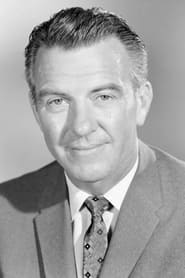
A Date with Your Family was produced during the golden age of educational films, when companies like Coronet Films created thousands of shorts for classroom use. The film was directed by Edward G. Simmel, who was a prolific director in the educational film industry. The production was shot on a minimal budget, likely in a single day, using basic lighting equipment and static camera setups. The actors were instructed to deliver their lines with minimal emotion to match the film's instructional tone. Hugh Beaumont, already established in television, brought name recognition to the production. The film's script was written to align with contemporary psychological theories about family dynamics that emphasized emotional restraint and proper social behavior. The dinner table set was carefully arranged to represent an idealized middle-class American home of the era.
What critics said
Trade and revival screenings have kept A Date with Your Family (1950) on the map for collectors and scholars rather than mass first-run promotion.
Did you know?
- Hugh Beaumont, who plays the father, was best known for his role as Ward Cleaver in 'Leave It to Beaver'
- The film has gained modern notoriety for its bizarre, robotic portrayal of family dynamics
- It was featured on Mystery Science Theater 3000, which brought it to a wider audience
- The film's advice to 'never show emotion at the dinner table' has become infamous among vintage educational film enthusiasts
- Coronet Films produced over 1,000 educational shorts between the 1940s and 1970s
- The film is often cited as an example of post-war American conformity and social conditioning
- The dinner scene was reportedly filmed in a single take to maintain continuity
- The narrator's deadpan delivery has become one of the film's most memorable aspects
- The film was shown in schools across America throughout the 1950s and early 1960s
- Modern psychologists have criticized the film's advice as emotionally damaging and unhealthy
Visual style
The film employs straightforward, static camera work typical of educational productions of the era. The cinematography uses basic three-point lighting to clearly illuminate the dinner table and family members. Camera angles are simple and functional, primarily using medium shots to capture the family interactions. The visual style is clean and uncluttered, reflecting the film's instructional purpose. The black and white photography emphasizes the formal, almost sterile atmosphere the film attempts to create. There are no creative camera movements or experimental techniques, as the focus is on clearly demonstrating the 'correct' behavior patterns.
Innovations
As an educational short, the film does not feature notable technical innovations. It was produced using standard 16mm film equipment common in educational film production of the era. The technical aspects are straightforward and functional, focusing on clear audio and visual presentation rather than artistic experimentation. The film represents the standard technical quality of Coronet Films' productions from this period, which were known for their consistent, if basic, technical execution.
Music
The film features minimal background music, typical of educational shorts which often relied on narration rather than musical accompaniment. The soundtrack consists mainly of the authoritative narrator delivering the instructional script in a deadpan, matter-of-fact tone. Any music present is likely generic, library-produced pieces meant to provide subtle background ambiance without distracting from the instructional content. The sound design emphasizes clarity of the narrator's voice and the minimal dialogue from the actors. The overall audio presentation is functional rather than artistic, serving the film's educational purpose.
Famous quotes
These boys and girls have come home from school. They have changed their clothes and are ready for dinner.
A pleasant voice is welcome at the dinner table. A loud voice is not.
Never show emotion at the dinner table.
The family that eats together, stays together.
Good manners are a sign of good breeding.
Memorable scenes
- The opening sequence where the children arrive home from school and robotically change clothes without any enthusiasm
- The dinner table scene where the family eats in complete silence except for minimal, controlled conversation
- The narrator's deadpan delivery of the advice to suppress all emotions during meals
- The perfectly staged family interactions that appear more like a business meeting than a family dinner
What audiences thought
When originally shown in schools, the film was likely received as straightforward instructional material by students and teachers of the 1950s. However, modern audiences have found the film unintentionally humorous and disturbing. Its popularity surged after being featured on Mystery Science Theater 3000, where hosts mocked its bizarre advice and stiff performances. Today, the film has a cult following among vintage educational film enthusiasts and is frequently shared online as an example of bizarre mid-century social conditioning. Viewers often express shock at the film's recommendation to suppress all emotions during family meals, with many commenting on how psychologically damaging such advice would be.
Film connections
Influenced by
- Contemporary psychological theories of emotional restraint
- Post-war American social norms
- Traditional etiquette guides
- 1950s family counseling approaches
This film influenced
- The film has influenced modern parodies and satirical works about 1950s family life
Film restoration
The film has been preserved and is available through various archives and educational film collections. It exists in the public domain and has been digitized by several institutions including the Internet Archive and Prelinger Archives.
Where to watch
- Internet Archive
- YouTube
- Prelinger Archives
- Mystery Science Theater 3000 episodes featuring the film
- Various educational film websites