

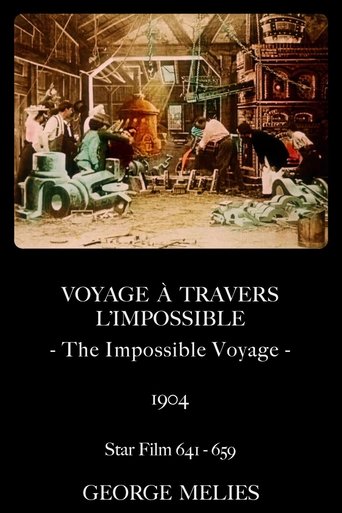
An Extraordinary Dislocation
"Clown magic with detachable body parts"
Keys: Space play/pause · ←/→ 10s · F fullscreen · M mute · </> speed
About this film
A clown performs various feats of magic based on his ability to detach and reattach different parts of his body.
Cast & crew
More films like this
More Comedy films
View all →







More from Georges Méliès
View all →

More about this film
About the production
Release date1901
Box officeUnknown - box office records from 1901 are not preserved
ProductionStar Film Company
Filmed inMontreuil, Seine-Saint-Denis, France (Méliès's studio)
Filmed in Méliès's glass-walled studio in Montreuil using multiple exposure techniques and stop-motion effects. The body dismemberment effects were achieved through careful editing and substitution splices, with Méliès pioneering techniques that would become staples of special effects cinema. The production required precise timing and coordination between the performer and camera to create the illusion of body parts moving independently.
Themes
TransformationThe limits of physical realityComedy and absurdityMagic and illusionThe body as malleable object
Themes & topics
Historical background
Made during the nickelodeon years around 1901, An Extraordinary Dislocation reached audiences through theatrical programs, fairground booths, or specialized distribution channels typical of its generation. A clown performs various feats of magic based on his ability to detach and reattach different parts of his. Historians now read such works for what they reveal about production methods, national taste, and the expanding vocabulary of screen narrative.
Why this film matters
Archivists and programmers still screen An Extraordinary Dislocation when tracing how popular entertainment evolved. Its subject—a clown performs various feats of magic based on his ability to detach and reattach different parts—gives later viewers tangible evidence of what drew crowds in the silent period. Home video, restorations, and festival sidebars keep the title circulating among students of film history.
Making of
The production of 'An Extraordinary Dislocation' took place in Méliès's innovative glass studio, which allowed natural lighting to illuminate the elaborate sets. André Deed had to perform the role with extreme precision, holding perfectly still between takes while Méliès and his crew made the necessary adjustments for each substitution effect. The body dismemberment sequence required multiple exposures and careful masking techniques, with each body part needing to be filmed separately before being combined in the final print. Méliès worked closely with his team of technicians to perfect the timing of each effect, often requiring dozens of takes to achieve the seamless transitions that characterized his work. The film's success led to increased demand for similar effects in other productions, establishing Méliès as the go-to filmmaker for cinematic magic.
What critics said
Original trade coverage treated An Extraordinary Dislocation as routine program filler rather than a landmark production—common for shorts. Later criticism emphasizes preservation, stylistic comparison with contemporaries, and whatever cast or crew names later gained prominence. Contemporary writing is mostly historical: assessing completeness, influence, and place in a director's or studio's catalog.
Did you know?
- This film is cataloged as Star Film #317 in Méliès's production catalog
- André Deed, who plays the clown, would later become famous for creating the character Boireau in French comedy
- The film was originally titled 'La Dislocation Extraordinaire' in French
- Méliès reused similar body dismemberment effects in several other films, including 'The Man with the Rubber Head' (1901)
- The film showcases Méliès's background as a magician, translating stage illusion techniques to cinema
- Only one copy of the film is known to survive, preserved at the Cinémathèque Française
- The film was hand-colored in some releases, a common practice for Méliès's more popular works
- The dismemberment effects were created using substitution splices, a technique Méliès discovered accidentally when his camera jammed
- This film was part of Méliès's series of 'trick films' that established him as a pioneer of cinematic special effects
- The clown costume and makeup were designed to maximize visual impact in the black and white medium
Visual style
The cinematography in 'An Extraordinary Dislocation' showcases Méliès's mastery of early film techniques, employing a static camera position typical of the era but using it to maximum effect. The film utilizes substitution splices, multiple exposures, and careful masking to create the illusion of body dismemberment and reassembly. The lighting was carefully controlled in Méliès's glass studio to ensure consistent illumination across the multiple takes required for each effect. The composition was deliberately theatrical, with the clown positioned center stage to maximize visibility of the magical transformations. The black and white photography creates stark contrasts that enhance the surreal quality of the dismemberment effects, while the hand-colored versions added visual appeal for audiences.
Innovations
The film represents several significant technical innovations for its time, particularly in the realm of special effects. Méliès's pioneering use of substitution splices allowed for the seemingly magical appearance and disappearance of body parts, a technique he had perfected in earlier works. The multiple exposure technique used to create overlapping images of body parts was groundbreaking, requiring precise timing and masking. The film also demonstrated advanced understanding of continuity editing, with each effect seamlessly integrated into the narrative flow. These technical achievements established many of the fundamental principles of special effects work that would continue to evolve throughout cinema history. The film's success in creating believable impossible illusions marked a significant step forward in cinematic storytelling capabilities.
Music
As a silent film from 1901, 'An Extraordinary Dislocation' would have been accompanied by live musical performance during its theatrical exhibition. Typical accompaniment would have included piano or organ music, often improvised to match the on-screen action. The score would likely have featured whimsical, circus-like melodies to complement the clown performance and magical effects. Some venues may have used pre-existing classical pieces or popular songs of the era that matched the film's mood. The musical accompaniment played a crucial role in enhancing the comedic timing and dramatic impact of the visual effects, helping to guide audience emotional responses to the surreal events on screen.
Memorable scenes
- The opening sequence where the clown removes his head and places it on a table, introducing the film's central premise of body dismemberment. The climactic finale where all body parts are simultaneously detached and chaotically rearranged before reassembling into the complete clown, showcasing Méliès's mastery of complex special effects in a single, breathtaking sequence.
What audiences thought
The film was well-received by audiences of 1901, who were still marveling at the possibilities of cinema. Viewers were particularly delighted by the seemingly magical effects and the clown's comedic performance, making it a popular attraction in Méliès's theater of illusions and in fairground screenings across Europe. The film's success led to increased demand for similar trick films, establishing a market for special effects-driven entertainment. Contemporary audience reactions were recorded in various publications, with many expressing wonder at how such effects could be achieved. The film's popularity contributed to Méliès's growing reputation as the 'cinemagician' and helped solidify his position as one of the era's most innovative filmmakers.
Film connections
Influenced by
- Stage magic and illusion shows
- Commedia dell'arte traditions
- Circus performances
- Georges Méliès's own background as a magician
- Popular fascination with spiritualism and the occult
This film influenced
- The Man with the Rubber Head (1901)
- The Infernal Cauldron (1903)
- The Living Playing Cards (1905)
- The Melomaniac (1903)
- 后续的特效喜剧电影
Film restoration
The film is preserved at the Cinémathèque Française in Paris. While not completely lost, only one known copy survives, making it a rare artifact of early cinema. The surviving print has undergone restoration work to preserve the image quality, though some degradation is evident due to the film's age and the nitrate stock on which it was originally produced. A digitized version is available for scholarly study and archival purposes.
Where to watch
- The film is available on various home video collections of Méliès's work, including 'Georges Méliès: First Wizard of Cinema' from Flicker Alley
- Digital versions can be found on streaming services specializing in classic cinema, such as The Criterion Channel
- The film is occasionally screened at film festivals and cinematheque events dedicated to early cinema
- Educational institutions with film studies programs may have access through archival databases