
An Up-to-Date Conjurer
"Caught between woman and film"
Keys: Space play/pause · ←/→ 10s · F fullscreen · M mute · </> speed
About this film
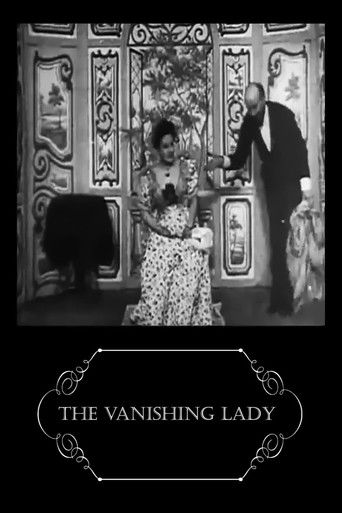
A film from Méliès has him playing a magician who does a few tricks including making a woman disappear.
Cast & crew
More films like this
More Comedy films
View all →







More from Georges Méliès
View all →


More about this film
About the production
Release date1899
ProductionStar Film Company
Filmed inMontreuil, Seine-Saint-Denis, France
Filmed in Méliès's glass studio in Montreuil, which allowed for natural lighting and elaborate set designs. The film was created using multiple exposure techniques and substitution splicing, which Méliès pioneered. The production involved carefully choreographed movements to achieve the seamless magical effects that would become Méliès's trademark.
Themes
Magic and illusionTransformation and metamorphosisThe power of technologyReality versus illusionPerformance and spectacle
Themes & topics
magiciandisappearancetrickillusiontransformationmagicspecial effectsconjuring
Historical background
An Up-to-Date Conjurer (1899) emerged during the earliest years of projected motion pictures, when exhibition habits and national film industries were still taking shape.
Why this film matters
An Up-to-Date Conjurer remains accessible through digital archives, giving modern viewers a direct link to 1899 screen culture.
Making of
Georges Méliès created this film using his innovative substitution splice technique, which he discovered when his camera jammed and then restarted, creating the illusion of sudden transformation. The film was shot in his custom-built glass studio in Montreuil, which allowed him to control lighting and create elaborate theatrical sets. Méliès, drawing on his background as a stage magician, choreographed every movement precisely to align with the special effects. The making of a woman disappear was achieved by stopping the camera, having the actress leave the frame, then restarting the camera to create the illusion of instantaneous disappearance. Méliès's attention to detail extended to hand-coloring individual frames of film prints, a laborious process that added visual appeal to his magical presentations.
What critics said
Retrospective notes on An Up-to-Date Conjurer emphasize its value as a silent-era document rather than blockbuster reception.
Did you know?
- This film is cataloged as Star Film number 194 in Méliès's production catalog
- The title reflects Méliès's positioning of himself as a modern, contemporary magician rather than a traditional one
- Méliès was a professional magician before becoming a filmmaker, having managed the Théâtre Robert-Houdin in Paris
- The film was created during the peak of Méliès's creative period when he was producing up to 100 films per year
- Like many of Méliès's films, it was hand-colored in some releases, a process done by women workers in his studio
- The film demonstrates Méliès's mastery of the substitution splice, a technique he accidentally discovered
- Early cinema audiences often believed Méliès was actually performing magic rather than creating film tricks
- The film was distributed internationally, with copies sold to exhibitors across Europe and America
- Méliès's glass studio was one of the first purpose-built film production facilities in the world
- The film's short length was typical of the era, as most films were under two minutes to accommodate multiple showings
Visual style
The film employs Méliès's characteristic theatrical staging, with a single fixed camera position capturing the action as if from a theater audience's perspective. The cinematography features careful composition within the frame, utilizing painted backdrops and theatrical props to create a magical atmosphere. Méliès used multiple exposure techniques and substitution splicing to achieve his special effects, requiring precise timing and camera operation. The visual style reflects Méliès's background in stage magic, with clear, uncluttered compositions that emphasize the magical transformations. The film's visual aesthetic combines theatrical presentation with the emerging language of cinema, creating a hybrid style that was uniquely Méliès's.
Innovations
The film showcases Méliès's use of the substitution splice technique, which he accidentally discovered and perfected into a reliable special effects method. This technique involved stopping the camera, making changes to the scene, then restarting filming to create the illusion of instantaneous transformation. Méliès also employed multiple exposure techniques to create ghostly appearances and disappearances. The film demonstrates early mastery of in-camera effects, requiring precise timing and coordination between camera operator and performers. These technical innovations established the foundation for modern special effects and demonstrated cinema's unique ability to create impossible scenarios.
Music
As a silent film, An Up-to-Date Conjurer was originally presented without synchronized sound. During theatrical exhibition, the film would have been accompanied by live music, typically a pianist or small orchestra performing appropriate musical selections. The musical accompaniment would have been chosen to enhance the magical atmosphere and punctuate the timing of the tricks. Some exhibitors might have used sound effects or narration during screenings to enhance the audience's experience. The lack of recorded sound was standard for films of this era, with visual storytelling carrying the entire narrative weight.
Memorable scenes
- The climactic moment when Méliès makes the woman disappear using substitution splicing, creating a seamless magical effect that astonished early audiences and demonstrated the unique power of cinema to create impossible scenarios.
What audiences thought
Early cinema audiences were reportedly astonished and delighted by Méliès's magical films, often believing he had discovered actual supernatural powers rather than cinematic techniques. The film was popular in both French and international markets, contributing to Méliès's reputation as a leading filmmaker of the era. Contemporary accounts describe audiences gasping and applauding at the disappearance tricks, which seemed like genuine magic to viewers unfamiliar with film editing techniques. The film's success helped establish Méliès's Star Film Company as a major producer of fantasy and trick films, with audiences specifically seeking out his works for their magical content.
Film connections
Influenced by
- Stage magic traditions
- Théâtre Robert-Houdin performances
- Jean-Eugène Robert-Houdin's magic acts
- Lumière brothers' early films
This film influenced
- The Magician (1905)
- The Illusionist (2006)
- The Prestige (2006)
- Numerous Disney animated shorts featuring magic
Film restoration
The film is preserved in various film archives including the Cinémathèque Française. While many of Méliès's films were lost, this particular work survives in multiple copies. Some hand-colored versions of the film have been preserved and restored. The film has been included in various DVD collections and digital archives dedicated to early cinema and Méliès's work.
Where to watch
- YouTube (various archives)
- Criterion Channel (Méliès collections)
- Flicker Alley DVD releases
- Kino Lorber Blu-ray collections
- Méliès: The Fairy of the Cabbages and Other Films DVD collection
- Internet Archive
- BFI Player (UK)