Big Buck Bunny
"The rodents amuse themselves by harassing helpless creatures by throwing fruits, nuts and."
Keys: Space play/pause · ←/→ 10s · F fullscreen · M mute · </> speed
About this film
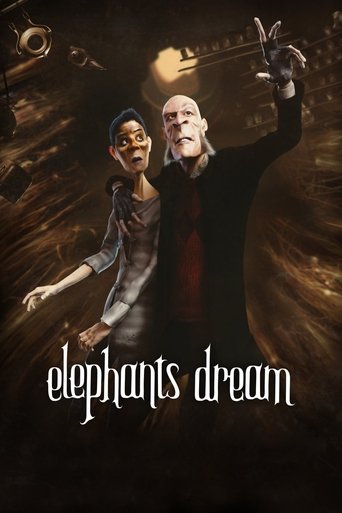
Follow a day of the life of Big Buck Bunny when he meets three bullying rodents: Frank, Rinky, and Gamera. The rodents amuse themselves by harassing helpless creatures by throwing fruits, nuts and rocks at them. After the deaths of two of Bunny's favorite butterflies, and an offe Like the foundation's previous film, Elephants Dream, the film was made using Blender, a free and open-source software application for 3D computer modeling and animation developed by the same foundation.
Cast & crew
More films like this
More Animation films
View all →



More about this film
About the production
Release dateApril 10, 2008
Budget€40,000 (approximately $60,000 USD at the time)
Box officeNot applicable - released for free online under Creative Commons license
ProductionBlender Foundation
Filmed inNo physical filming - entirely CGI animation created in Amsterdam, Netherlands
Created as the second open movie project by the Blender Foundation following 'Elephants Dream.' The film was produced to demonstrate and improve Blender's capabilities, particularly for fur, hair, and particle effects. Six artists and two developers worked full-time for seven months to complete the project. All production files, models, textures, and animations were released under Creative Commons, making it transparent film productions ever created.
Themes
Bullying and its consequencesTransformation from gentleness to assertivenessCreative problem-solvingRevenge and justiceThe power of intelligence over brute force
Themes & topics
Historical background
Made in 2008, in Netherlands, under Sacha Goedegebure, Big Buck Bunny belongs to silent filmmaking in a period of shifting exhibition and production models. Big Buck Bunny is a 2008 animated comedy short film featuring animals of the forest, made by the Blender Institute, part of the Blender Foundation.
Why this film matters
Within silent history, Sacha Goedegebure's name attaches to the work; 2008 computer-animated comedy short film; Like the foundation's previous film, Elephants Dream, the film was made using Blender, a free and open-source software application for 3D computer modeling and animation developed by the same foundation..
Making of
The production of Big Buck Bunny was in its approach to transparency and open-source development. The Blender Foundation assembled a small team of international artists who worked together in Amsterdam, documenting their entire process through daily video blogs and tutorials. The team faced significant technical challenges, particularly in creating realistic fur and grass effects, which led to major improvements in Blender's particle systems. Character design went through numerous iterations, with Big Buck Bunny evolving from a more realistic rabbit to his final stylized appearance to better convey emotions. The revenge sequence required complex physics simulations and rigging, pushing the boundaries of what was possible with open-source software at the time. The entire production philosophy centered around creating high-quality content while giving back to the community through shared knowledge and tools.
What critics said
Contemporary reviews of Big Buck Bunny are sparse in open sources; later catalog entries chiefly summarize plot and credits.
Did you know?
- Created entirely using open-source software, primarily Blender 3D, making it a landmark achievement in open-source animation
- All production assets, including character models, textures, and animation files, were released for free public use under Creative Commons Attribution 3.0 license
- The three rodents were named after famous turtles: Frank (Franklin), Rinky (from 'Rinky-Dink'), and Gamera (the Japanese kaiju turtle)
- The film's production team intentionally chose to create a family-friendly story to contrast with their previous darker project 'Elephants Dream'
- S fur was created using a new particle system developed specifically for this film, which became a standard feature in Blender
- Been downloaded millions of times and is included as a demo file with many Linux distributions
- A video game adaptation called 'Yo Frankie!' was created using the same characters and assets from the film
- The butterfly death scene was particularly challenging to animate, requiring careful timing to convey emotion without dialogue
- Rendered on a cluster of computers using a custom-built render farm management system
- Director Sacha Goedegebure was only 24 years old when he directed this internationally acclaimed short film
Awards & recognition
- Best Animation - Bangalore Short Film Festival 2009
- Audience Award - Anima Mundi Animation Festival 2008
- Best Short Film - Animafest Zagreb 2008
- Jury Award - Seoul International Cartoon and Animation Festival 2008
- Best Animation - International Short Film Festival of Cyprus 2008
Visual style
The film's visual style employs a vibrant, saturated color palette that creates an inviting forest environment. Camera work utilizes dynamic movement and strategic angles to emphasize the scale difference between Bunny and the rodents. The cinematography makes effective use of depth of field to focus attention on character emotions and actions. Lighting plays a crucial role in establishing mood, with warm, dappled sunlight for peaceful scenes transitioning to more dramatic shadows during conflict sequences. The film employs classic animation principles including squash and stretch, anticipation, and follow-through to enhance the physical comedy. Wide shots establish the lush forest setting, while close-ups capture subtle character expressions. The revenge sequence features complex camera movements that follow the chain reactions of Bunny's traps, creating visual excitement and tension.
Innovations
Pioneered numerous technical advancements in open-source 3D animation. The film featured breakthrough implementations of realistic fur and hair rendering using particle systems, which became a standard feature in subsequent Blender versions. Advanced physics simulations were used for the revenge sequence's complex chain reactions and trap mechanisms. The project developed new tools for vegetation and grass generation, creating lush forest environments efficiently. Character rigging innovations allowed for expressive facial animation despite the stylized designs. The production pipeline included custom render farm management software that optimized rendering times across multiple computers. The film's lighting system employed global illumination techniques previously unavailable in open-source software. These technical achievements were all documented and released to the public, significantly advancing the capabilities of open-source 3D animation tools.
Music
The musical score for Big Buck Bunny was composed by Jan Morgenstern, who created a whimsical orchestral soundtrack that perfectly complements the film's visual style. The music employs playful woodwinds and strings for lighter moments, transitioning to more dramatic percussion and brass during the revenge sequence. The score was designed to enhance emotional storytelling without dialogue, using leitmotifs for different characters. Sound effects were carefully crafted to emphasize the physical comedy, with exaggerated impacts and squishes adding to the cartoonish charm. The audio mix creates a rich forest atmosphere with ambient nature sounds. Notably, the entire soundtrack was also released under Creative Commons, allowing others to use and remix the music. The sound design demonstrates sophisticated use of spatial audio to track character movements and create immersion.
Famous quotes
(No dialogue - all communication through visual storytelling and expression)
Memorable scenes
- The opening sequence establishing Bunny's peaceful nature as he admires butterflies
- The heartbreaking moment when the rodents crush the butterflies
- Bunny's transformation from gentle to determined as he plans his revenge
- The elaborate chain reaction of traps Bunny sets up for the rodents
- The final scene where peace is restored to the forest with all animals living harmoniously
What audiences thought
Audiences embraced Big Buck Bunny enthusiastically, with the film accumulating millions of downloads across various platforms. Viewers particularly appreciated the accessible story and endearing characters, with Big Buck Bunny becoming an beloved figure in the animation community. The lack of language barriers made it universally accessible, contributing to its global popularity. Many viewers reported being inspired to try Blender themselves after seeing what was possible with the software. The film's family-friendly content made it popular for sharing with children, while adults appreciated the technical craftsmanship. Online communities formed around the film, with fans creating their own animations using the released assets. The revenge storyline resonated with audiences who found satisfaction in seeing the gentle protagonist triumph over bullies through cleverness rather than violence.
Film connections
Influenced by
- Classic Looney Tunes cartoons
- Tom and Jerry chase sequences
- Walt Disney's nature documentaries
- Aesop's Fables
- The Three Stooges physical comedy
This film influenced
- Sintel
- Blender Foundation's next project)
- Yo Frankie!
- video game adaptation, Numerous independent Blender animations
- Tears of Steel
- Blender Foundation)
- Caminandes
- series (2012-2016)
Film restoration
Permanently preserved and available through multiple channels including the Blender Foundation's website, Internet Archive, and countless mirror sites. As an open-source project, the film exists in multiple formats and resolutions, ensuring its preservation for future generations. All original production files are archived and publicly accessible.
Where to watch
- Official Blender Foundation website (blender.org)
- YouTube (official Blender channel)
- Internet Archive
- Vimeo
- Included as demo file with Blender software downloads
- Various Linux distribution repositories
- Creative Commons media archives