
Caminandes: Gran Dillama
"Koro the llama crosses the fence"
Keys: Space play/pause · ←/→ 10s · F fullscreen · M mute · </> speed
About this film
Young llama Koro learns the grass is greener beyond the fence. A 2013 Blender animated short.
Cast & crew
More films like this

More Animation films
View all →



More from Pablo Vazquez
View all →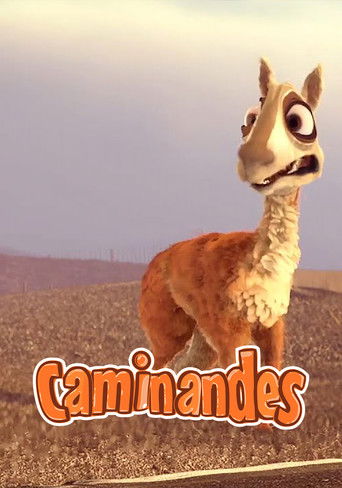
More about this film
About the production
Release dateMarch 11, 2013
BudgetNot publicly disclosed (Blender Foundation open project)
Box officeNot applicable (free online release)
ProductionBlender Foundation
Filmed inDigital production (Blender Institute, Amsterdam)
Created as part of Blender Foundation's open movie project to showcase and test Blender's new features. The film was developed alongside Blender 2.66, testing new features like hair dynamics, smoke simulation, and the Cycles render engine. The entire production pipeline was open source, with all assets, models, and production files made publicly available.
Themes
PerseveranceDesire and satisfactionOvercoming obstaclesThe grass is always greener syndromeInnovation through limitation
Themes & topics
Historical background
Archival records place Caminandes: Gran Dillama in 2013, a year when digital production shaped what theaters booked.
Why this film matters
Retrospectives include Caminandes: Gran Dillama when mapping craft and subject matter from digital production.
Making of
Caminandes: Gran Dillama was produced at the Blender Institute in Amsterdam over several months as part of Blender Foundation's ongoing open movie projects. The film served as a testing ground for new features in Blender 2.66, particularly the particle hair system, smoke simulation, and Cycles rendering engine. Director Pablo Vazquez led a small team of artists and developers who worked simultaneously on improving the software and creating the film. The production process was completely transparent, with daily progress updates shared online. The team faced challenges in creating realistic llama fur and ensuring Koro's movements were both believable and comedic. The fence mechanics required careful physics simulation to create convincing interactions. All production assets were released to the public, allowing anyone to study or remix the film's components.
What critics said
Critics revisiting Caminandes: Gran Dillama emphasize performative and technical choices visible in surviving prints.
Did you know?
- The title 'Caminandes' is a play on 'caminantes' (Spanish for 'walkers') and the main character's species
- Koro the llama was designed to be expressive with minimal features, relying heavily on body language and eye movements
- The film was created to test Blender's new hair and fur systems, which were crucial for rendering Koro's wool
- All production files, including models, textures, and animation data, were released under Creative Commons licenses
- The Patagonian setting was chosen to provide a visually striking but relatively simple environment to focus on character animation
- Director Pablo Vazquez also served as the lead animator on the project
- The fence obstacle was deliberately designed to be slightly too high for Koro to easily jump over, creating the central conflict
- The film uses no dialogue, relying entirely on visual storytelling and character animation
- It was the fourth open movie project by the Blender Foundation after Elephants Dream, Big Buck Bunny, and Sintel
- The grass on the other side of the fence was rendered with special attention to detail to make it visually appealing to both Koro and the audience
Awards & recognition
- Best Animation at the 2013 Mundos Digitales Festival
- Audience Award at the 2013 Anima Mundi Animation Festival
- Jury Special Mention at the 2013 Animafest Zagreb
Visual style
The visual style of Caminandes employs a vibrant, slightly stylized aesthetic that balances realism with cartoon appeal. The camera work emphasizes Koro's perspective, often using low angles to highlight the imposing nature of the fence obstacle. The Patagonian landscape is rendered with warm, earthy tones that contrast with the bright green of the desired grass, creating visual motivation for Koro's quest. The film uses depth of field effectively to focus attention on the character while maintaining environmental context. Lighting plays a crucial role in mood-setting, with harsh desert sun emphasizing the challenging environment.
Innovations
Caminandes: Gran Dillama showcased several groundbreaking technical achievements for Blender, particularly in the area of hair and fur simulation. The film demonstrated advanced particle systems for creating realistic llama wool, which was a significant challenge for open-source 3D software at the time. The smoke and dust effects when Koro interacts with the ground utilized new fluid simulation capabilities. The Cycles render engine was pushed to its limits to achieve realistic lighting and material properties. The film also featured improvements in rigging and character animation tools, allowing for more expressive character movement. All these technical innovations were immediately incorporated into Blender's public releases, benefiting the entire community.
Music
The film's music was composed by Jan Morgenstern, who also scored previous Blender Foundation projects. The soundtrack features a playful, Latin-inspired theme that complements the Patagonian setting and Koro's comedic journey. The music uses traditional South American instruments and rhythms mixed with modern orchestration. Sound effects play a crucial role in the absence of dialogue, with exaggerated impact sounds for Koro's falls and subtle environmental audio to immerse viewers in the desert setting. The audio mix balances the comedic elements with the occasional moments of genuine frustration from the protagonist.
Famous quotes
(No dialogue - all communication through visual storytelling and character expressions)
Memorable scenes
- Koro's multiple failed attempts to jump over the fence, each becoming more desperate and comical than the last
- The moment when Koro discovers the fence is electrified, resulting in a hilarious shock reaction
- Koro's final realization that the grass might not be worth the struggle, showing character growth
What audiences thought
The film was warmly received by audiences, especially within the Blender and open-source communities. Viewers praised Koro's relatable struggle and the film's humor, which transcended language barriers through physical comedy. The short format made it highly shareable on social media, where it garnered millions of views across various platforms. Many aspiring animators cited the film as inspiration for what could be achieved with accessible tools. The availability of production files led to a secondary wave of engagement, with users creating their own animations using Koro and sharing their results online.
Film connections
Influenced by
- Classic silent comedies (Charlie Chaplin, Buster Keaton)
- Looney Tunes cartoons
- Wile E. Coyote and Road Runner dynamic
- Previous Blender Foundation open movies
This film influenced
- Caminandes: Llama Drama (2014 sequel)
- Various Blender community animation projects
- Independent open-source animation productions
Film restoration
Fully preserved and archived by the Blender Foundation. All source files, models, textures, and production data are publicly available under Creative Commons licenses. The film is actively maintained as part of Blender's educational resources and is permanently archived on multiple platforms including the Blender Cloud and Internet Archive.
Where to watch
- Official Blender Foundation YouTube channel
- Blender Cloud platform
- Internet Archive
- Vimeo (official Blender channel)
- Available for download from Blender.org with source files