Keys: Space play/pause · ←/→ 10s · F fullscreen · M mute · </> speed
Plot
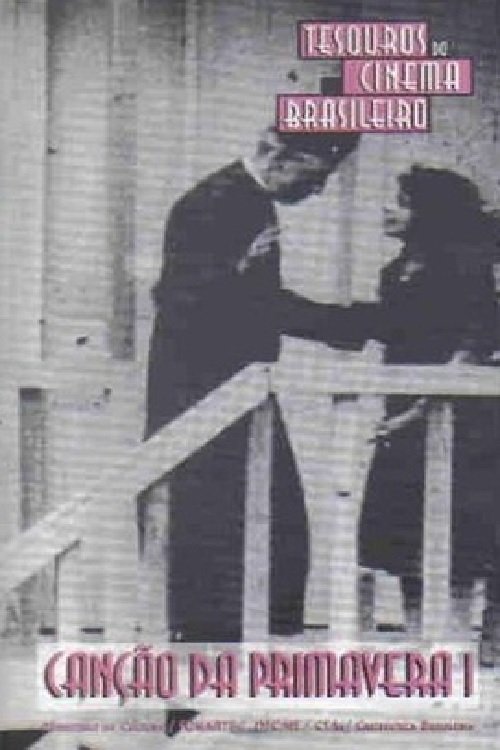
Canção da Primavera (Song of Spring) tells the story of a young woman whose life is transformed by the arrival of spring and the awakening of love in her provincial Brazilian town. The protagonist, played by Lucinda Barreto, finds herself torn between duty to her family and her burgeoning feelings for a visiting artist portrayed by Ari de Castro Viana. As the season changes, so too do the relationships and social dynamics within the community, leading to emotional revelations and difficult choices. The film culminates in a poignant resolution where the characters must reconcile their personal desires with societal expectations, embodying the themes of renewal and transformation suggested by the title. Through its narrative, the film explores the cyclical nature of life and love against the backdrop of Brazil's rural landscape in the early 1920s.
About the Production
Release Date September 1923
Box Office Unknown - box office tracking was not systematically recorded in Brazil during the silent period
Production Guarany Filmes
Filmed In Rio de Janeiro, Brazil, Various rural locations in the state of Rio de Janeiro
The film was shot during the actual spring season to capture authentic natural scenery, which was unusual for the time as many productions used studio sets. Director Igino Bonfioli employed natural lighting extensively, taking advantage of Brazil's abundant sunlight. The production faced challenges with the primitive equipment available in Brazil at the time, often having to improvise technical solutions. The film was one of the early attempts by Brazilian cinema to create a distinctly national narrative style, moving away from European influences.
You Might Also Like

More Drama Films
View all →







Themes & Topics
springromancesocial classfamily dutyartistic freedomrural Brazilseasonal changecoming of ageforbidden lovecultural identity
Historical Background
Canção da Primavera was produced during a pivotal period in Brazilian history known as the Old Republic (1889-1930), when Brazil was undergoing significant modernization and urbanization. The early 1920s saw the emergence of a Brazilian national identity in the arts, with movements like Modernism challenging European cultural dominance. The film reflected Brazil's growing confidence in producing its own cultural products rather than importing them. Cinema in Brazil was still in its infancy, with most films being documentaries or foreign imports. This film was part of a small but significant movement to create narrative fiction films that spoke to Brazilian experiences and values. The country was experiencing economic growth from coffee exports, which allowed for modest investments in cultural enterprises like film production. The film's themes of tradition versus modernity mirrored the broader tensions in Brazilian society as it balanced its agricultural past with industrial aspirations.
Why This Film Matters
Canção da Primavera holds an important place in Brazilian cinema history as one of the earliest examples of a narrative feature film that attempted to capture Brazilian life and sensibilities rather than imitating European styles. The film's use of Brazilian landscapes, seasonal rhythms, and social dynamics helped establish a visual language for Brazilian cinema. Its modest commercial success demonstrated that there was an audience for domestically produced films, encouraging further investment in the industry. The collaboration between Italian director Bonfioli and Brazilian artists like poet Manuel Bandeira and composer Heitor Villa-Lobos represented an early model of cultural fusion that would characterize much of Brazil's artistic production throughout the 20th century. The film's focus on rural themes and traditional values also contributed to the mythologization of Brazilian rural life that would become a recurring motif in the country's cinema. Despite its incomplete preservation status, the film remains a reference point for film historians studying the development of national cinema in Brazil.
Making Of
The making of Canção da Primavera was particularly challenging due to Brazil's limited film infrastructure in 1923. Director Igino Bonfioli had to import camera equipment from Europe and train local technicians in its use. The production took nearly six months to complete, unusually long for the period, due to Bonfioli's insistence on filming during actual seasonal changes. The cast, primarily drawn from Rio's theater scene, struggled with the transition from stage acting to the more subtle requirements of silent film. Local villagers were used as extras, many of whom had never seen a motion picture camera before. The film's score was composed by Heitor Villa-Lobos, who would later become Brazil's most famous classical composer, though the music was performed live in theaters rather than recorded. Production was temporarily halted when a tropical storm damaged some of the outdoor sets, requiring reconstruction and causing budget overruns.
What Critics Said
Contemporary Brazilian critics praised Canção da Primavera for its technical ambition and authentic portrayal of Brazilian life, with the newspaper O Paiz calling it 'a triumph of national cinema.' The Rio de Janeiro Gazette noted that 'while our film industry remains in its infancy, productions like this show the promise of what we might achieve.' International reviews were scarce due to limited distribution, but the few foreign critics who saw it commented favorably on its visual beauty. Modern film historians view the work as an important stepping stone in Brazilian cinema, with scholar Jean-Claude Bernardet describing it as 'a crucial document of Brazilian cinema's search for identity.' Critics today note its technical limitations but appreciate its historical importance and aesthetic ambitions within the constraints of 1920s Brazilian production capabilities.
Did You Know?
- Canção da Primavera was one of the first Brazilian films to explicitly use seasonal changes as a narrative device
- Director Igino Bonfioli was an Italian immigrant who brought European cinematic techniques to Brazilian cinema
- The film's original negatives were thought lost until a partial copy was discovered in the Filmoteca de Brasília in 1978
- Lucinda Barreto was one of Brazil's first native-born film stars, as many early Brazilian films featured foreign actors
- The intertitles were written by renowned Brazilian poet Manuel Bandeira, though he was uncredited
- The film was banned in several conservative Brazilian cities for its depiction of a woman pursuing romantic freedom
- Only about 40 minutes of the original film survives today, with the remaining footage considered lost
- The production used real spring flowers and natural settings rather than studio props, which was innovative for its time
- The film's premiere was attended by Brazil's President Artur Bernardes, marking one of the first times a Brazilian film received such official recognition
- Osiris Colombo, who played the antagonist, was actually a theater actor making his film debut
Awards & Recognition
- Best Brazilian Film - Rio de Janeiro Film Critics Circle, 1923
More film details Visual style, music, quotes, restoration, and more
Visual Style
The cinematography of Canção da Primavera was notable for its extensive use of natural lighting and authentic Brazilian landscapes. Cinematographer Alberto Botelho employed techniques learned from European cinema but adapted them to Brazil's tropical environment, using the strong sunlight to create dramatic contrasts. The film featured sweeping shots of the Brazilian countryside during spring bloom, which were technically challenging to achieve with the equipment of the time. Botelho experimented with camera movement, including some tracking shots that were innovative for Brazilian cinema. The visual style emphasized the relationship between characters and their environment, using the changing seasons as a visual metaphor for emotional transformation. The surviving footage shows a sophisticated understanding of composition and a painterly approach to framing that elevated the film above many contemporary productions.
Innovations
Canção da Primavera achieved several technical firsts for Brazilian cinema, including the extensive use of location shooting rather than studio sets. The production developed new techniques for filming in Brazil's tropical climate, creating special filters to handle the intense sunlight. The film's special effects, while simple by modern standards, included some innovative use of multiple exposure for dream sequences. The editing employed cross-cutting between urban and rural scenes to contrast different ways of Brazilian life, a sophisticated narrative technique for the period. The production also pioneered the use of authentic costumes and props from different regions of Brazil, contributing to its ethnographic value. The film's intertitles, written by Manuel Bandeira, represented an early collaboration between cinema and literature in Brazil, setting a precedent for future artistic partnerships.
Music
As a silent film, Canção da Primavera featured no recorded soundtrack but was accompanied by live musical performances during theatrical screenings. The original score was composed by Heitor Villa-Lobos, who was then a young composer but would later become Brazil's most celebrated classical musician. Villa-Lobos's score incorporated Brazilian folk melodies and rhythms, helping to establish the film's national character. The music was typically performed by small orchestras in urban theaters and by single pianists in smaller venues. Some screenings included popular Brazilian songs of the era that were thematically related to the film's content. The original score has been lost, but modern restorations have used Villa-Lobos's other works from the period to recreate the musical atmosphere. The use of Brazilian musical elements in the score was innovative and helped distinguish the film from European productions.
Famous Quotes
As intertitles by Manuel Bandeira included: 'Na primavera da vida, o coração floresce como as flores do campo' (In the spring of life, the heart blooms like the flowers of the field)
'O amor é a estação que nunca passa' (Love is the season that never passes)
'Entre o dever e o desejo, a alma se divide como as estações do ano' (Between duty and desire, the soul divides like the seasons of the year)
Memorable Scenes
- The opening sequence showing the transformation of winter to spring through time-lapse photography of Brazilian landscapes
- The scene where the protagonist first encounters the artist by a waterfall, utilizing natural light and reflections
- The carnival sequence that contrasted urban celebration with rural simplicity
- The final scene where the protagonist makes her choice as cherry blossoms fall around her
What Audiences Thought
Contemporary audience reception was generally positive, with the film enjoying successful runs in Rio de Janeiro and São Paulo. Urban middle-class audiences particularly appreciated seeing Brazilian locations and stories on screen, which was still a novelty at the time. The film's romantic themes and visual beauty attracted significant female viewership, unusual for the period. Rural audiences, however, found some aspects unrealistic, particularly the idealized portrayal of country life. The film's incomplete preservation has limited modern audience access, but screenings of the surviving footage at film festivals and retrospectives have generated interest among cinema enthusiasts and cultural historians. Contemporary Brazilian audiences who have seen the fragments often express fascination with this window into their country's cinematic past, though some find the pacing and acting style of silent cinema challenging by modern standards.
Film Connections
Influenced By
- Italian neorealism (precursor elements)
- German Expressionism (visual style)
- Swedish natural cinema (location shooting)
- Brazilian literature of the 1920s
- European romantic dramas
This Film Influenced
- Limite
- Mário Peixoto)
- Sinhá Moça
- Tom Payne)
- Deus e o Diabo na Terra do Sol
- Glauber Rocha)
Film Restoration
Canção da Primavera is partially preserved with approximately 40 minutes of the original 75-minute film surviving. The remaining footage was discovered in 1978 at the Filmoteca de Brasília in a collection of unidentified nitrate films. The surviving elements have been restored and digitized, though they show significant deterioration typical of nitrate film from this period. The missing footage includes the complete third act and portions of the romantic subplot. No complete version of the film is known to exist in any archive worldwide. The restored surviving footage is occasionally screened at film festivals and cinema retrospectives, often with explanatory titles describing the missing portions. The Filmoteca de Brasília continues to search for additional elements in private collections and other archives.
Where to Watch
- Filmoteca de Brasília (occasional screenings)
- Cinemateca Brasileira (archival viewing by appointment)
- Brazilian Film Festival retrospectives (periodic screenings)
- Museum of Modern Art, Rio de Janeiro (special exhibitions)
- Academic film studies programs (educational screenings)