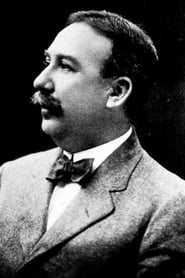
Cohen’s Fire Sale
"Shopkeeper turns disaster into a fire sale"
Keys: Space play/pause · ←/→ 10s · F fullscreen · M mute · </> speed
About this film
A shopkeeper suffers the loss of some valuable merchandise, and thinks of a way to regain his losses.
Cast & crew
More films like this

More Comedy films
View all →







More from Edwin S. Porter
View all →

More about this film
About the production
Release dateOctober 1907
Box officeNot documented - box office records were not systematically kept for films of this period
ProductionEdison Manufacturing Company
Filmed inNew York City, New York, Edison Studio, Bronx, New York
Filmed on a single indoor set representing Cohen's shop. The production utilized Edison's innovative indoor lighting techniques to create the fire effect. Like many Porter films of this period, it was likely shot in one or two takes with minimal rehearsal due to the straightforward nature of early film production.
Themes
Financial hardshipDeception and fraudImmigrant experienceSmall business strugglesCleverness and ingenuity
Themes & topics
Historical background
Made during the nickelodeon years around 1907, Cohen’s Fire Sale reached audiences through theatrical programs, fairground booths, or specialized distribution channels typical of its generation. A shopkeeper suffers the loss of some valuable merchandise, and thinks of a way to regain his. Historians now read such works for what they reveal about production methods, national taste, and the expanding vocabulary of screen narrative.
Why this film matters
Archivists and programmers still screen Cohen’s Fire Sale when tracing how popular entertainment evolved. Its subject—a shopkeeper suffers the loss of some valuable merchandise, and thinks of a way to regain his—gives later viewers tangible evidence of what drew crowds in the silent period. Home video, restorations, and festival sidebars keep the title circulating among students of film history.
Making of
Edwin S. Porter, already established as one of America's pioneering directors following his success with 'The Great Train Robbery' (1903), was experimenting with different genres by 1907. 'Cohen's Fire Sale' was produced during a period when Porter was pushing the boundaries of narrative storytelling in cinema. The film was made at Edison's Bronx studio, which had been specifically designed for indoor filming with advanced lighting capabilities. The production team used innovative techniques for creating the fire illusion, including colored filters and smoke effects. The cast consisted primarily of Edison stock company actors, many of whom appeared regularly in Porter's films. The film was shot quickly, as was typical for the era, with most scenes completed in just one or two takes. Porter's direction focused on clear visual storytelling since intertitles were still relatively rare and expensive to produce.
What critics said
Original trade coverage treated Cohen’s Fire Sale as routine program filler rather than a landmark production—common for shorts. Later criticism emphasizes preservation, stylistic comparison with contemporaries, and whatever cast or crew names later gained prominence. Contemporary writing is mostly historical: assessing completeness, influence, and place in a director's or studio's catalog.
Did you know?
- This film is part of Edwin S. Porter's series of comedies featuring Jewish characters, which were popular in early cinema
- The film represents an early example of the 'crime comedy' genre that would become more prevalent in later decades
- Edison Studios marketed this film as 'A Laughable Comedy' in their trade catalogs
- The fire effects were created using hand-colored frames and smoke machines, innovative techniques for 1907
- This was one of the last films Porter directed for Edison before leaving to form his own company
- The film was shot on 35mm film at approximately 16 frames per second, the standard speed of the era
- Like many Edison productions, it was likely shown with live musical accompaniment featuring popular songs of the period
- The film's title was sometimes listed as 'Cohen's Fire Sale' and other times as 'The Cohen Fire Sale' in different Edison catalogs
- This film was part of a double bill with another Porter comedy, 'The Miller's Daughter'
- The shop set was reused from several other Edison productions, a common cost-saving practice of the time
Visual style
The cinematography, typical of Edison Studio productions of 1907, was functional and clear, designed to ensure audiences could easily follow the narrative. The film was shot with a static camera positioned to capture the entire shop set, allowing for clear visibility of all the action. The lighting was carefully controlled to create the illusion of fire, using Edison's innovative studio lighting system. The camera work was straightforward without the complex movements that would become common in later years. The visual composition emphasized the shop's interior and the interactions between characters, following Porter's preference for clear spatial relationships in his narrative films.
Innovations
While not technically groundbreaking like some of Porter's earlier work, 'Cohen's Fire Sale' demonstrated the maturation of narrative film techniques. The film used sophisticated editing for its time, with clear scene transitions and logical progression of action. The fire effects were created using innovative combination of practical effects (smoke machines) and post-production techniques (hand coloring of frames). The production utilized Edison's advanced studio lighting system, which allowed for more controlled and dramatic lighting than was possible with natural light. The film also demonstrated the effective use of a single set to tell a complete story, showing how filmmakers were learning to work within the technical limitations of the period to create engaging narratives.
Music
As a silent film, 'Cohen's Fire Sale' would have been accompanied by live musical performance during exhibition. The typical accompaniment would have included popular songs of 1907, possibly including comic or Jewish-themed melodies that complemented the on-screen action. Many nickelodeons used piano or small organ accompaniment, with musicians improvising or using stock music appropriate to the mood of each scene. The fire scenes would likely have been accompanied by dramatic, fast-paced music to enhance the excitement. Edison sometimes provided suggested musical cues with their film prints, though specific recommendations for this film have not survived in the historical record.
Famous quotes
No dialogue survives from this silent film
Memorable scenes
- The scene where Cohen discovers his merchandise has been stolen, conveying his despair through exaggerated gestures typical of early silent acting
- The elaborate fire sequence where smoke and colored effects create the illusion of a devastating shop fire
- The chaotic fire sale scene with customers scrambling for bargains, showcasing early ensemble comedy techniques
What audiences thought
The film was well-received by nickelodeon audiences of 1907, who appreciated its straightforward humor and relatable story of a small businessman trying to overcome adversity. Contemporary audience reports indicate that the film generated laughter and applause during its exhibition. The character of Cohen was familiar to urban audiences, many of whom were Jewish immigrants or lived in diverse ethnic neighborhoods. The film's themes of financial struggle and clever problem-solving resonated with working-class viewers facing similar economic challenges. Like many of Porter's films of this period, it was popular enough to be included in Edison's regular distribution catalogs for several years after its initial release.
Film connections
Influenced by
- The Great Train Robbery (1903) - Porter's earlier work in narrative storytelling
- Georges Méliès' trick films - for the special effects techniques
- European comedies featuring ethnic characters
- Stage melodramas and vaudeville routines
This film influenced
- Later Porter comedies featuring ethnic characters
- Early crime comedies of the 1910s
- Films featuring small business protagonists
- Early American narrative shorts
Film restoration
The film is believed to be lost. Like approximately 75% of American silent films, no complete copy of 'Cohen's Fire Sale' is known to exist in any film archive or collection. The Library of Congress, the Museum of Modern Art, and other major film preservation institutions have no record of surviving prints. Only written descriptions and promotional materials from Edison catalogs remain to document the film's existence.
Where to watch
- No known viewing options exist as the film is considered lost. Only written descriptions and promotional materials survive in film history archives and specialized cinema libraries.