
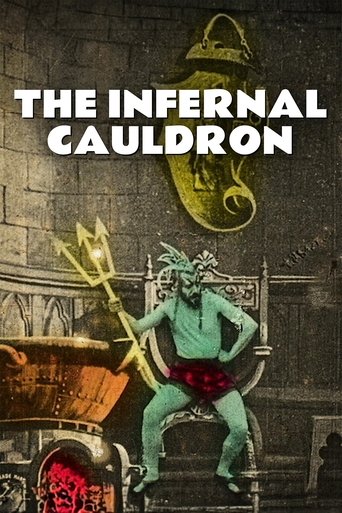
Comical Conjuring
"Comical Conjuring (1903)"
Keys: Space play/pause · ←/→ 10s · F fullscreen · M mute · </> speed
About this film
In a room filled with jugglers' properties of enormous size a prestidigitateur dressed in eccentric costume enters with his assistant. The servant, believing that he would be comfortable in an armchair, sits down in it, but finds that it conceals a bucket of water, in which he falls. The juggler brings a large empty cask and puts it upon a table and fills it up with several pails of water.
Cast & crew
More films like this
More Comedy films
View all →







More from Georges Méliès
View all →



More about this film
About the production
Release date1903
BudgetLikely minimal, perhaps a few hundred francs, typical for Méliès' short films of this period
Box officeNot documented for individual Méliès films of this era
ProductionStar Film Company
Filmed inMéliès' glass studio in Montreuil-sous-Bois, France
The film was shot in Méliès' custom-built studio with theatrical sets and lighting, using his signature substitution splice technique for the magical effects. The oversized props were created specifically for this film to enhance the visual comedy and magical transformations.
Themes
Transformation of the impossible into the possible through magicComic potential of everyday situationsRelationship between performer and audienceAuthority and rebellionHuman mastery over nature through technology and artifice
Themes & topics
magiccomedyillusionwatertransformationmagicianassistantpropstrick filmphysical comedysubstitution splicespecial effectstheatrical performancevisual gagsearly cinemasilent filmshort filmFrench cinema
Historical background
Made in 1903, Comical Conjuring reflects production norms of the earliest years of projected motion pictures—shorter runtimes, regional audiences, and limited preservation infrastructure.
Why this film matters
Historians reference Comical Conjuring (1903) when discussing 1903 French film.
Making of
The film was created during what many consider the peak of Méliès' creative period (1902-1904), when he was producing his most technically sophisticated and imaginative works. The glass studio in Montreuil allowed Méliès to control lighting precisely, essential for the multiple exposures and substitution splices used throughout the film. The water effects required careful timing and coordination, as each substitution splice had to be perfectly executed to maintain the illusion of continuous action. The oversized props were constructed in Méliès' workshop, where he maintained an extensive collection of theatrical equipment and set pieces. The film was likely shot in one or two takes, with the magical effects created through in-camera techniques rather than post-production editing, which was not yet developed. Méliès himself often performed in his films, and it's possible he plays the magician role, drawing on his years of experience as a stage performer at the Théâtre Robert-Houdin in Paris.
What critics said
Modern write-ups on Comical Conjuring (1903) tend to focus on preservation status, stylistic choices, and placement within director or studio filmographies.
Did you know?
- Comical Conjuring" is known in French as "La Prestidigitation" and was cataloged as Star Film #446 in Méliès' production catalog.
- The film showcases Méliès' background as a professional magician before entering filmmaking, incorporating actual magic tricks with cinematic effects.
- The water effects were achieved using multiple substitution splices, a technique Méliès pioneered where the camera would be stopped, elements changed, and filming resumed to create the illusion of transformation.
- Like many of Méliès' films, it was hand-colored frame by frame for special screenings, though most surviving copies are black and white.
- The film was part of Méliès' extensive series of magic-themed films that made up the bulk of his output between 1896 and 1913.
- The oversized props were a deliberate choice to enhance the comedic effect and make the magical transformations more visually impressive.
- The assistant character was likely played by one of Méliès' regular performers from his theater troupe.
- The film demonstrates Méliès' mastery of both theatrical staging and cinematic techniques, bridging traditional stage magic with the new medium of film.
- The water bucket gag was a classic comedy routine that Méliès adapted for the screen, showing his ability to translate popular stage entertainment to film.
- The film was distributed internationally by the Star Film Company, with English titles created for the American market.
Visual style
The cinematography in "Comical Conjuring" reflects Méliès' theatrical background, with the camera positioned as if from the perspective of a theater audience member watching a stage performance. The single, static camera position was typical of the era but also served Méliès' technical needs, as substitution splices and other effects required a consistent frame. The lighting in Méliès' glass studio was carefully controlled to ensure even illumination across the set, essential for the multiple exposures used to create the magical effects. The composition of each shot was meticulously planned, with the oversized props and actors positioned to maximize visual impact and clarity for the effects.
Innovations
"Comical Conjuring" showcases several of Méliès' pioneering technical innovations, most notably the substitution splice technique, which he developed and perfected. This technique involved stopping the camera, changing elements in the frame, and then resuming filming to create the illusion of instantaneous transformation. The film also demonstrates Méliès' mastery of multiple exposures, allowing him to create effects that would not be possible with a single exposure. The use of oversized props and forced perspective shows Méliès' understanding of visual manipulation within the cinematic frame. The water effects required careful timing and coordination between the camera operator and performers to maintain the illusion of continuous action.
Music
As was standard for films of 1903, "Comical Conjuring" was produced as a silent film with no synchronized soundtrack. During exhibition, the film would have been accompanied by live music, typically a pianist or small ensemble in theaters, or a phonograph recording in smaller venues. The musical accompaniment would have been selected to match the action on screen, with lively, whimsical music appropriate for the comedic and magical elements. Some exhibitors may have used sound effects, particularly for the water splashes, to enhance the viewing experience.
Memorable scenes
- The moment when the assistant sits in the armchair, only to discover it conceals a bucket of water, resulting in his comical fall. This sequence demonstrates Méliès' mastery of physical comedy and visual timing.
- The magical filling of the cask with water, showcasing the technical wizardry that made Méliès famous through his innovative use of substitution splices.
- The entrance of the magician with his eccentric costume, establishing the theatrical tone of the performance and setting up the magical elements to follow.
What audiences thought
Early audiences were reportedly delighted by Méliès' magic films, which offered a unique combination of familiar stage entertainment and novel cinematic effects. The combination of comedy and magical illusion proved particularly popular with viewers of all ages. The water gag and other physical comedy elements would have been easily understood and appreciated by audiences across different cultures and languages. Méliès' films were regularly featured in programs at fairgrounds, music halls, and the first dedicated movie theaters, where they attracted repeat viewers fascinated by the magical effects. Contemporary accounts suggest that audiences often returned multiple times to see his films, attempting to understand how the visual effects were achieved.
Film connections
Influenced by
- Stage magic traditions from Théâtre Robert-Houdin
- French music hall and variety entertainment
- Magic lantern shows
- Work of the Lumière brothers
- Thomas Edison's early films
- Jean-Eugène Robert-Houdin's illusion techniques
This film influenced
- Later fantasy and special effects films
- Physical comedy films
- Science fiction cinema
- Contemporary magic-themed films
- Works of special effects pioneers like Willis O'Brien and Ray Harryhausen
Film restoration
"Comical Conjuring" is among the fortunate Méliès films that have survived to the present day, though many of his works were lost due to neglect, destruction, or the decomposition of early nitrate film stock. The film exists in the archives of several institutions, including the Cinémathèque Française and the Museum of Modern Art. Some surviving copies show the hand-coloring that was applied to certain prints for special presentations. The film has been digitized as part of various Méliès restoration projects.
Where to watch
- YouTube (through archives like the British Film Institute and Cinémathèque Française)
- DVD collections of Méliès' work released by companies like Flicker Alley and Kino Lorber
- University libraries and film archives
- Film festivals and special events celebrating early cinema
- Websites of major film archives and museums with online collections