Dickson Greeting
"Edison's first public film: Dickson nods at the camera."
Keys: Space play/pause · ←/→ 10s · F fullscreen · M mute · </> speed
About this film
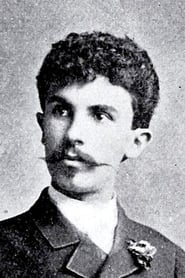
Edison photographer Dickson brings his hat from his one hand to the other and moves his head slightly, as a small nod toward the audience. This was the first film produced by the Edison Manufacturing Company to be shown to public audiences and the press.
Cast & crew
More films like this
More Documentary films
View all →


More from William K.L. Dickson
View all →
More about this film
About the production
Release dateMay 1891
ProductionEdison Manufacturing Company
Filmed inEdison Laboratory, West Orange, New Jersey, USA
Filmed in Edison's Black Maria studio, which was the world's first motion picture production studio. The studio was built on a turntable to allow it to rotate and follow the sun's natural light throughout the day. Dickson had to perform multiple takes to get the brief sequence right, as the early film technology was extremely sensitive and unforgiving. The film was shot on 35mm film using an early version of what would become the standard film gauge.
Themes
Themes & topics
Historical background
The 1891 premiere placed Dickson Greeting alongside contemporaneous releases that were collectively teaching viewers how to read cinematic time and space.
Why this film matters
Collectors prize surviving prints of Dickson Greeting as evidence of how 1891-era filmmakers solved storytelling problems with limited means.
Making of
The creation of 'Dickson Greeting' was part of Thomas Edison's ambitious project to develop motion picture technology. William K.L. Dickson, Edison's Scottish-born assistant, had been working since 1888 to perfect a system for recording and reproducing moving images. The film was shot in the Black Maria, Edison's innovative film studio which featured a retractable roof and could rotate to capture optimal sunlight. Dickson had to perform the simple gesture repeatedly to ensure the primitive camera equipment captured the movement adequately. The filming process was extremely challenging by modern standards - the camera had to be hand-cranked at a consistent speed, the early film stock was highly sensitive to light, and there was no way to review the footage immediately. The decision to have Dickson himself perform was practical - as the project's lead, he was readily available and understood exactly what movements would best demonstrate the new technology's capabilities.
What critics said
Press clipping files from 1891 rarely give Dickson Greeting headline space; mentions appear in roundup columns listing what played that week.
Did you know?
- This is widely considered the first motion picture shown to a public audience in the United States
- The film was demonstrated to members of the National Federation of Women's Clubs on May 20, 1891
- William K.L. Dickson was not only the director but also the star of this film
- The film was created as a test for Edison's Kinetoscope, an early motion picture device
- Only three seconds of footage survive today, though it may have been slightly longer originally
- This was one of the first films to feature a person intentionally performing for the camera
- The film was shot at approximately 16 frames per second, the standard speed for early motion pictures
- Dickson was Thomas Edison's primary assistant in developing motion picture technology
- The film was shown individually through peep-hole viewing machines rather than projected to an audience
- This film predates what many consider the first commercial motion pictures by several years
Visual style
The cinematography of 'Dickson Greeting' represents the absolute beginning of motion picture photography. The film was shot using a single stationary camera positioned to capture Dickson from the waist up. The lighting was entirely natural, coming through the open roof of the Black Maria studio. The composition is straightforward and functional, designed simply to clearly show the subject's movements. The camera used an early version of the 35mm film format that Dickson helped standardize, running at approximately 16 frames per second. The image quality was grainy and contrasty by modern standards, but remarkable for its time. The cinematography prioritized clarity of movement over artistic composition, serving primarily as a technical demonstration rather than an artistic statement.
Innovations
'Dickson Greeting' represents several groundbreaking technical achievements. It was the first successful use of Edison's Kinetoscope camera system, which Dickson had developed over several years. The film established 35mm as the standard gauge for motion pictures, a format that would dominate the industry for over a century. The perforations along the edges of the film, another Dickson innovation, allowed for smooth mechanical transport through the camera and projector. The film demonstrated that continuous motion could be captured and reproduced, solving the fundamental challenge of motion picture technology. The Black Maria studio itself was a technical innovation, designed specifically for optimal film lighting conditions. The synchronization of the camera's shutter with the film advance mechanism was another critical technical breakthrough that made smooth motion possible.
Memorable scenes
- The entire film consists of a single memorable scene: William K.L. Dickson, dressed formally in a suit and hat, deliberately transferring his hat from one hand to the other while giving a slight nod to the camera. This simple gesture, lasting only seconds, represents the birth of cinematic performance and the first intentional communication between a film subject and the viewing audience.
What audiences thought
The first public demonstrations of 'Dickson Greeting' in May 1891 created a sensation among the small groups invited to view it. Audiences were reportedly mesmerized by the sight of a moving image, with many describing it as magical or miraculous. The film was shown individually through Kinetoscope viewing machines, creating an intimate and personal viewing experience that added to the wonder. Early viewers often tried to reach through the viewing slot to touch the image, not understanding that they were watching a recording. The simple, direct nature of Dickson's greeting made it particularly effective - it felt like a personal acknowledgment from the figure on screen. This positive reception encouraged Edison and Dickson to continue developing their motion picture technology and creating more films.
Film connections
This film influenced
- Fred Ott's Sneeze (1894)
- Blacksmith Scene (1893)
- Edison Kinetoscopic Record of a Sneeze (1894)
- The Kiss (1896)
- Arrival of a Train (1895)
Film restoration
The film has been preserved and is available through various film archives. A copy is held by the Library of Congress and has been digitally restored. The surviving footage is approximately 3 seconds long, though it may have been slightly longer when originally created. The film is part of the National Film Registry's collection of historically significant American films.
Where to watch
- Library of Congress National Screening Room
- YouTube (various archive channels)
- Museum of Modern Art (MoMA) film collection
- British Film Institute (BFI) Player
- Edison National Historic Site archives