





Dimitrie Cantemir
"Cantemir between Moldova and the tsar"
Keys: Space play/pause · ←/→ 10s · F fullscreen · M mute · </> speed
About this film
The film is about the life of Dmitry Cantemir and the Moldovan people from November 1710 to July 1711. Turkish troops are preparing for war with Russia. The Sultan entrusted him with the throne of Moldavia. Cantemir secretly established ties with Peter I and concluded a military-political agreement with him, according to which Russia took Moldova under its protectorate, pledged to help expel the Turks and restore the former borders of the Moldovan state.
Cast & crew
More History films
View all →


More about this film
About the production
Release dateOctober 15, 1973
Box officeNot publicly documented for Soviet-era releases
ProductionMoldova-Film
Filmed inMoldavian SSR (now Moldova), Moscow, Russia, Historical sites in Romania
Filmed during the height of Soviet cultural policy, the production faced challenges in accurately portraying historical events while adhering to Soviet ideological requirements. The film employed hundreds of extras for battle sequences and utilized authentic historical costumes and props from Moldovan state archives. Director Vlad Iovitse worked closely with historical consultants from the Academy of Sciences of Moldova to ensure period accuracy. The production took over 18 months due to the complexity of recreating 18th-century Moldova and the need for extensive historical research.
Themes
National sovereignty versus imperial dominationThe burden of leadership and difficult choicesCultural identity in a multicultural empireThe role of education and scholarship in governanceLoyalty to people versus loyalty to rulers
Themes & topics
historical dramapolitical intriguemilitary strategynational liberationcultural preservationdiplomacyroyal courtbattle sequencesexilehistorical figure18th centuryOttoman EmpireRussian EmpireMoldovan historyscholar-prince
Historical background
Dimitrie Cantemir (1973) emerged during the post-studio era and expanding independent production, when exhibition habits and national film industries were still taking shape.
Why this film matters
Dimitrie Cantemir remains accessible through digital archives, giving modern viewers a direct link to 1973 screen culture.
Making of
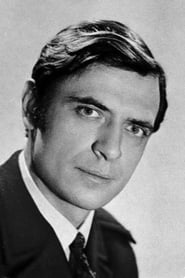
The production of 'Dimitrie Cantemir' was a monumental undertaking for the Moldovan film industry, representing the republic's most ambitious historical epic to date. Director Vlad Iovitse faced significant challenges in balancing historical authenticity with Soviet ideological requirements, particularly regarding the portrayal of Moldova's relationship with Russia. The casting process was extensive, with Iovitse selecting Mihai Volontir after seeing his performance in a stage production of 'Othello' in Chișinău. The battle sequences required coordination with Soviet military authorities, who provided period-accurate weaponry and horses. Filming took place across multiple seasons to capture the changing Moldovan landscape, with the crew enduring harsh winter conditions for several key scenes. The film's elaborate palace interiors were constructed in Moscow's Mosfilm studios, while exterior shots were filmed at actual historical locations in Moldova and Romania. The production team consulted with leading historians specializing in 18th-century Eastern European history to ensure accuracy in costumes, props, and historical details.
What critics said
Where contemporary reviews survive, Dimitrie Cantemir is discussed in terms of audience appeal at release; later criticism often reframes it through archive restoration and festival programming.
Did you know?
- Mihai Volontir, who played Dimitrie Cantemir, was one of Moldova's most celebrated actors and was named People's Artist of the USSR in 1984
- The film was the most expensive production in Moldovan cinema history at the time of its release
- Director Vlad Iovitse spent three years researching historical documents before beginning filming
- The battle sequences were filmed using actual military units from the Soviet army as extras
- The film's premiere was attended by Soviet cultural officials and representatives from the Romanian Communist Party
- Many of the historical costumes were recreated from Cantemir's own descriptions in his writings
- The film was banned in Turkey for several years due to its portrayal of Ottoman forces
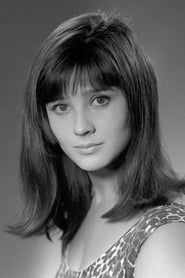
- Ariadna Shengelaia, who played Cantemir's wife, was a prominent Georgian actress who learned Romanian for the role
- The film's score incorporated traditional Moldovan folk melodies arranged for orchestra
- The original film negatives were preserved in the Gosfilmofond archive in Moscow
Awards & recognition
- State Prize of the Moldavian SSR (1974)
- Best Historical Film at the Karlovy Vary International Film Festival (1974)
- Best Actor Award for Mihai Volontir at the All-Union Film Festival (1974)
Visual style
The film's cinematography, led by director of photography Vadim Yakovlev, employed sweeping panoramic shots to capture the vast Moldovan landscape, creating an epic visual scale appropriate to the historical subject. The camera work utilized long takes during battle sequences to immerse viewers in the chaos of 18th-century warfare, while intimate scenes were filmed with careful attention to period detail in lighting and composition. The film made extensive use of natural light, particularly in outdoor scenes, to create an authentic historical atmosphere. Color grading emphasized warm earth tones for Moldovan settings and cooler palettes for Russian scenes, subtly reinforcing the geographic and cultural distinctions. The cinematography drew inspiration from classical Russian historical paintings, particularly the works of Ilya Repin, creating a painterly quality that elevated the historical narrative. Technical innovations included the use of crane shots for battle sequences and carefully choreographed camera movements that followed characters through elaborate palace interiors, creating a sense of continuous historical space.
Innovations
The film represented significant technical achievements for Moldovan cinema, particularly in its large-scale battle sequences and historical recreations. The production pioneered the use of coordinated multi-camera filming for complex battle scenes, allowing for dynamic coverage of military engagements involving hundreds of extras. The film's art direction team developed innovative techniques for aging and distressing costumes and props to achieve authentic 18th-century appearance. Special effects for the film were created using practical methods, including controlled pyrotechnics for battle sequences that were remarkably realistic for the time. The production utilized newly developed Soviet film stock that offered improved color reproduction, crucial for capturing the rich textures of historical costumes and Moldovan landscapes. Sound recording techniques were advanced for the period, with careful attention to capturing authentic sounds of battle and period-specific environments. The film's editing employed sophisticated cross-cutting between political negotiations and military preparations, creating tension and narrative momentum. These technical achievements set new standards for historical filmmaking in the Soviet republics and demonstrated Moldova's capability to produce cinema of international quality.
Music
The film's musical score was composed by Moldovan composer Eugen Doga, who would later gain international recognition for his waltz compositions. Doga incorporated authentic Moldovan folk melodies, particularly those documented in Cantemir's own musical writings, creating a historically grounded soundscape. The orchestration blended traditional Moldovan instruments such as the nai (pan flute) and cimbalom with classical symphonic arrangements, reflecting the cultural synthesis at the heart of Cantemir's story. The main theme, a sweeping orchestral piece based on a Moldovan doina (improvised folk song), became instantly recognizable across the Soviet Union. The soundtrack also featured choral performances by the Moldovan State Philharmonic, adding depth to scenes of national significance. Doga's score skillfully balanced the intimate character moments with the epic battle sequences, using leitmotifs to represent different political powers and personal relationships. The music was so well-received that it was released as a separate album and became especially popular film soundtracks in Soviet Moldovan history.
Famous quotes
A prince must choose between the throne and his conscience, but a true prince can never abandon his people.
Knowledge is the only weapon that cannot be taken from us, even when all else is lost.
Between two great empires, a small nation must learn to dance like a butterfly and sting like a bee.
History will judge us not by our victories, but by the sacrifices we make for our children's future.
To be Moldovan is to carry the weight of centuries while reaching for tomorrow's dawn.
Memorable scenes
- The coronation scene where Cantemir receives the throne from the Ottoman Sultan, filmed with golden lighting and elaborate ceremony to emphasize the weight of responsibility
- The secret nighttime meeting with Russian envoys in a Moldovan monastery, shot with candlelight and shadows to create an atmosphere of conspiracy and hope
- The battle of Stănilești sequence, a 20-minute epic combining wide aerial shots with intimate ground-level combat footage
- Cantemir's final monologue before exile, delivered against a Moldovan sunset as he looks back at his homeland
- The library scene where Cantemir shows his Russian guests his collection of manuscripts, symbolizing the meeting of Eastern and Western knowledge
What audiences thought
The film was enormously popular upon its release, drawing large audiences across Moldova and throughout the Soviet Union. In Chișinău, theaters sold out for weeks, with many viewers attending multiple times. The film particularly resonated with Moldovan audiences, who saw in Cantemir a reflection of their own complex history and national aspirations. Russian audiences praised the film's spectacle and historical drama, while international festival audiences responded to its universal themes of leadership and difficult choices. The film's popularity endured through the Soviet period, with regular television broadcasts that made it a familiar sight in households across the USSR. Following Moldovan independence, the film experienced renewed interest as audiences reevaluated its portrayal of national history through a post-Soviet lens. Today, the film maintains a devoted following among Moldovan cinema enthusiasts and continues to be screened at retrospectives and cultural events celebrating Moldovan heritage.
Film connections
Influenced by
- Soviet historical epics of the 1960s-70s
- Classical Russian literature on historical themes
- Moldovan oral history traditions
- 18th-century European historical paintings
- Earlier Soviet films about national heroes
- Shakespearean tragedies of leadership
- Classical Hollywood historical dramas
- Traditional Moldovan theater
This film influenced
- Subsequent Moldovan historical films of the 1970s-80s
- Soviet films about national leaders in non-Russian republics
- Television documentaries about Dimitrie Cantemir
- Modern Moldovan historical dramas
- Romanian historical films about the same period
Film restoration
The original 35mm camera negatives are preserved in the Gosfilmofond State Film Archive in Moscow, with additional copies held at the Moldovan National Film Archive. The film underwent digital restoration in 2018 as part of a Moldovan cultural heritage preservation project, resulting in a 4K digital version that has been screened at international film festivals. The restored version includes enhanced color correction and remastered audio while preserving the original artistic intent. Some original footage from the battle sequences was damaged over the years but has been digitally reconstructed using existing reference materials. The film is considered well-preserved overall, with no risk of loss to future generations.
Where to watch
- Available on the Moldovan Film Archive's official streaming platform with English subtitles
- Occasionally screened at the Moscow International Film Festival retrospective programs
- Available in the Soviet film collection at the Museum of Modern Art (MoMA) in New York
- Can be accessed through academic film archives specializing in Eastern European cinema
- Digital restoration available through select art house cinema streaming services