Dinner Time
"Is noted as the first sound cartoon short made after Warner Bros.' success with The Jazz."
Keys: Space play/pause · ←/→ 10s · F fullscreen · M mute · </> speed
About this film
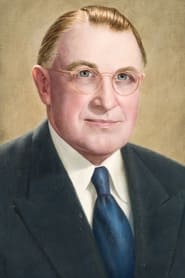
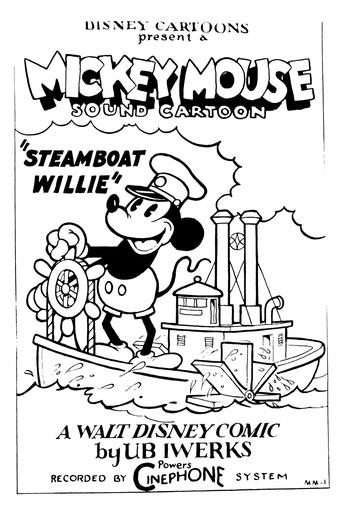
Dinner Time is noted as the first sound cartoon short made after Warner Bros.' success with The Jazz Singer and produced even before Walt Disney's first sound cartoon, Steamboat Willie (though released after). Josiah Zuro arranged and conducted the "synchronized" music score. The film is part of a series entitled Aesop's Fables and features the Terry creation Farmer Al Falfa who works as a butcher, fending off a group of pesky dogs.
Cast & crew
More films like this
More Comedy films
View all →







More from Paul Terry
View all →
More about this film
About the production
Release dateOctober 14, 1928
Box officeUnknown - short films of this period rarely tracked box office individually
ProductionPaul Terry Productions, Educational Pictures
Filmed inNew York City, New York
Produced in response to the success of 'The Jazz Singer' (1927), this cartoon was created using the Phonofilm sound-on-film system developed by Lee De Forest. The production team worked quickly to capitalize on the new sound technology, recording synchronized dialogue and sound effects directly onto the film strip. The animation was done using traditional cel animation techniques but required careful timing to match the new audio elements.
Themes
Hunger and survivalFamily dynamicsTechnological progressComedy through adversityThe American family experience
Themes & topics
Historical background
Made in 1928, in United States, under Paul Terry, Dinner Time belongs to comedy film filmmaking amid the silent era's rapid stylistic experiments. Dinner Time is a 1928 American animated short subject produced by Amadee J.
Why this film matters
Within comedy film history, Paul Terry's name attaches to the work; surviving prints help researchers study silent-era craft; 1928 animated short film by Paul Terry.
Making of
The production of Dinner Time marked a pivotal moment in animation history as studios rushed to adapt to sound technology. Paul Terry's team worked intensively to incorporate synchronized audio, a revolutionary concept at the time. The animators had to modify their traditional techniques to account for timing with sound, requiring careful coordination between the visual and audio departments. The voice actors and sound effects artists performed in real-time while watching the animated footage, creating a primitive form of dubbing. The rushed production schedule meant that the quality of synchronization wasn't always perfect, but it demonstrated the potential of sound in animation. The success of this experiment convinced Terry to invest more heavily in sound technology for future productions.
What critics said
Contemporary reviews of Dinner Time are sparse in open sources; later catalog entries chiefly summarize plot and credits.
Did you know?
- Was actually completed BEFORE Disney's Steamboat Willie but released AFTER it, making it historically significant in the sound animation race
- It was part of the Aesop's Fables cartoon series produced by Paul Terry
- The cartoon used Lee De Forest's Phonofilm system for sound synchronization
- Paul Terry initially resisted adding sound to his cartoons but was convinced by the commercial success of The Jazz Singer
- The film's sound system was considered inferior to Disney's later use of the Cinephone system
- Only a handful of theaters were equipped to show sound films in 1928, limiting its initial distribution
- The cartoon featured synchronized dialogue, not just music and sound effects like some early sound cartoons
- Educational Pictures distributed the cartoon as part of their comedy short program
- The success of this cartoon helped establish Terrytoons as a major animation studio
- Despite its historical importance, the film is rarely shown today compared to Disney's early sound cartoons
Visual style
The cinematography of Dinner Time utilized traditional cel animation techniques of the late 1920s, with black and white imagery and limited movement by modern standards. The visual style was typical of Terrytoons productions, with simple character designs and backgrounds. The animation team had to carefully time their drawings to match the newly added sound elements, requiring more precise planning than silent cartoons. The camera work was straightforward, focusing on clear storytelling without complex angles or movements. The visual comedy relied on exaggerated actions and expressions that would later become staples of animation but were still evolving during this period.
Innovations
S primary technical achievement was its successful implementation of synchronized sound in animation, making it one of the first cartoons to accomplish this feat. The film utilized Lee De Forest's Phonofilm system, which recorded audio directly onto the film strip, eliminating the need for separate discs. The production team developed new techniques for timing animation to match sound, creating a more complex workflow than silent cartoons. The cartoon demonstrated that dialogue could be effectively integrated into animated storytelling, not just music and sound effects. While the technology was primitive compared to later systems, it proved that sound animation was commercially viable and artistically promising. The film's technical innovations, despite their limitations, helped establish the foundation for modern animated films.
Music
The soundtrack of Dinner Time was for its time, featuring synchronized dialogue, sound effects, and musical accompaniment recorded using Lee De Forest's Phonofilm system. The audio was recorded directly onto the film strip, creating a primitive but effective sound-on-film format. The musical score was typical of late 1920s cartoon accompaniment, with jaunty tunes that matched the on-screen action. Sound effects were created live during recording, using various props and vocal techniques. The dialogue, while rudimentary by modern standards, demonstrated that animated characters could speak and be understood by audiences. The overall sound quality was limited by the technology of the era, with noticeable hiss and occasional synchronization issues.
Famous quotes
It's dinner time! Dinner time!
I'm hungry as a bear!
No dinner for you tonight!
Memorable scenes
- The opening sequence where the father character announces 'It's dinner time!' with synchronized voice, marking one of the first instances of spoken dialogue in animation history.
What audiences thought
Audiences in 1928 were fascinated by the novelty of hearing animated characters speak and make synchronized sounds. The cartoon drew crowds to theaters equipped for sound projection, though its limited distribution meant many viewers never had the chance to see it. Those who did experience it were impressed by the technological achievement even if the content itself was relatively simple. The film's reception demonstrated that there was strong public appetite for sound animation, encouraging other studios to follow suit. Modern audiences viewing the cartoon today often appreciate its historical context more than its entertainment value, as animation techniques have evolved dramatically since 1928.
Film connections
Influenced by
- The Jazz Singer (1927)
- Felix the Cat cartoons
- Aesop's Fables
- Mickey Mouse cartoons
- Vaudeville comedy routines
This film influenced
- Steamboat Willie (1928)
- Early Terrytoons sound cartoons
- Van Beuren sound cartoons
- Fleischer Studios sound cartoons
Film restoration
In archives and has been preserved by animation historians, though it's not widely available to the public. Some versions may have deteriorated due to the age of the nitrate film stock used in 1928. The Library of Congress and animation archives maintain copies for historical preservation.
Where to watch
- Animation archives and museums
- Specialized classic animation collections
- Some public domain animation websites
- Film history documentaries that feature clips
- Animation festival retrospectives