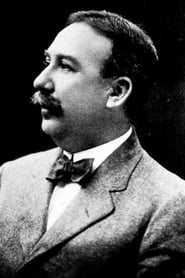
Execution of Czolgosz with Panorama of Auburn Prison
"Auburn Prison and the chair that ended an assassin"
Keys: Space play/pause · ←/→ 10s · F fullscreen · M mute · </> speed
About this film
Auburn Prison and recreates the electrocution of Leon Czolgosz, the assassin of President McKinley of the United States.
Cast & crew
More films like this

More Drama films
View all →







More from Edwin S. Porter
View all →

More about this film
About the production
Release dateNovember 1901
Box officeUnknown - Edison films were typically sold rather than rented, with this title likely generating significant revenue due to public interest in the McKinley assassination
ProductionEdison Manufacturing Company
Filmed inEdison Studio, Bronx, New York, Auburn Prison, New York (exterior footage)
The film was produced and released within weeks of Czolgosz's actual execution on October 29, 1901, demonstrating Edison's rapid response to current events. The production combined actual footage of Auburn Prison's exterior with a meticulously reconstructed death chamber built in Edison's studio. The electric chair used in the recreation was a detailed replica, and actors were hired to portray the prison guards and witnesses. This hybrid approach of documentary and staged elements was innovative for its time and established a template for future docudramas.
Themes
Justice and retributionCrime and punishmentPolitical violenceAnarchy versus orderDeath penalty
Themes & topics
executionelectric chairassassinationpresidentprisonrecreationdocumentarydeath penaltyanarchistMcKinleyCzolgoszcapital punishment
Historical background
Execution of Czolgosz with Panorama of Auburn Prison appeared in 1901, when the nickelodeon era and the birth of narrative film shaped how movies were financed, distributed, and discussed. Audiences of the day encountered the work amid shifting tastes in acting, pacing, and spectacle. Its focus on this early docudrama shows auburn prison and recreates the electrocution of leon czolgosz, the assassin of president mckinley of the united states mirrors themes circulating in popular culture of that moment.
Why this film matters
Execution of Czolgosz with Panorama of Auburn Prison (1901) belongs to the wider archive of world cinema, documenting this early docudrama shows auburn prison and recreates. Archivists and historians value such titles for what they reveal about craft, genre, and audience expectations. Restorations and festival screenings keep the work visible to viewers far beyond its first run.
Making of
The production of this film exemplified Edison Manufacturing Company's aggressive approach to capitalizing on current events. Edwin S. Porter, who would become one of early cinema's most important directors, was tasked with creating a visual representation of the highly publicized execution. The production team traveled to Auburn Prison to capture authentic exterior footage, then returned to Edison's Bronx studio to construct a detailed replica of the death chamber. The electric chair was meticulously recreated based on available descriptions and newspaper illustrations. Actors were cast to play the prison officials and witnesses, with careful attention to authentic uniforms and period details. The filming technique involved stationary camera positions typical of the era, with the action arranged to occur within the single frame. The simulated electrocution effects were achieved through dramatic lighting changes and the actor's performance, creating a convincing illusion for audiences of the time.
What critics said
Press coverage from 1901 is fragmentary for many titles of this vintage; surviving notices for Execution of Czolgosz with Panorama of Auburn Prison tend to stress novelty, star power, or topical appeal. Later writing places the picture within its national and generic context, weighing both period conventions and moments that still land for modern viewers. Streaming and disc releases have revived discussion among classic-film audiences.
Did you know?
- This was one of the first films to recreate a contemporary news event, establishing the docudrama genre
- The film was released just weeks after Czolgosz's actual execution, capitalizing on public fascination with the event
- Edison's company marketed it as 'educational' despite its sensational nature
- The film was so realistic that some viewers believed they were watching actual footage of the execution
- This was one of Edwin S. Porter's earliest directorial efforts before his landmark film 'The Great Train Robbery' (1903)
- The actual execution was not filmed, as cameras were forbidden in the death chamber
- The film's title was deliberately lengthy and descriptive, common for early cinema to attract audiences
- Auburn Prison was the site of the first execution by electric chair in history in 1890
- The film was part of Edison's strategy to produce 'actuality' films that brought current events to mass audiences
- Some theaters refused to show the film due to its graphic subject matter
Awards & recognition
- None - film awards did not exist in 1901
Visual style
The cinematography reflects the technical limitations and conventions of 1901 filmmaking. The camera remains stationary throughout, positioned to capture the entire scene in a single wide shot, typical of early cinema's theatrical influence. The exterior prison footage was shot in bright daylight, creating stark contrasts with the interior execution chamber scenes, which were lit dramatically to enhance the somber mood. The composition carefully arranges the action within the frame, with the electric chair positioned as the central focal point. The film demonstrates Edwin S. Porter's emerging skill in staging action for the camera, with careful attention to spatial relationships and blocking. The visual style emphasizes clarity and readability over artistic expression, as was common in early narrative films.
Innovations
This film represents several important technical innovations for its time. It pioneered the hybrid approach of combining actual documentary footage with staged recreation, a technique that would become fundamental to documentary and docudrama filmmaking. The production demonstrated advanced set design and construction capabilities for the period, creating a convincing replica of the prison death chamber. The film also showcased early special effects techniques in simulating the electrocution through lighting manipulation and performance. The seamless integration of location footage with studio work was technically sophisticated for 1901. Additionally, the film's rapid production timeline - from actual event to screen in just a few weeks - demonstrated the emerging efficiency of commercial film production.
Music
As a silent film from 1901, there was no synchronized soundtrack. The film would have been accompanied by live musical performance typical of the era, usually a pianist or small ensemble in the theater. The music would have been selected to match the solemn and dramatic nature of the subject matter, likely including classical pieces or popular songs of the period that evoked appropriate emotions. Some theaters might have used sound effects created manually, such as thunder sheets or other devices to simulate the electrical execution. The musical accompaniment would have varied significantly from venue to venue, as there was no standardized scoring for films of this period.
Famous quotes
No dialogue exists for this silent film - the title itself served as the primary descriptive text: 'Execution of Czolgosz with Panorama of Auburn Prison'
Memorable scenes
- The opening panoramic sweep of Auburn Prison's imposing exterior walls and guard towers, establishing the institutional setting. The dramatic recreation of Czolgosz being led to the electric chair by prison guards in period-accurate uniforms. The simulated electrocution sequence, achieved through dramatic lighting changes and the actor's convulsions, which was so convincing many viewers believed it authentic. The final scene showing the removal of the 'body' from the chair, completing the narrative arc of justice served.
What audiences thought
The film generated tremendous public interest and was a commercial success for Edison Manufacturing Company. Audiences were drawn by the morbid curiosity of seeing a recreation of the execution that had dominated newspaper headlines for weeks. Many viewers reportedly believed they were watching authentic footage of the actual execution, despite the impossibility of such filming. The film played to packed houses in vaudeville theaters and other venues that showed Edison pictures. Some audience members found the subject matter disturbing, and a few theaters reportedly refused to exhibit it on moral grounds. Nevertheless, the film's popularity demonstrated the public's appetite for visual representations of current events and helped establish cinema as a legitimate source for news and information.
Film connections
Influenced by
- Actualities and documentary films of the Lumière brothers
- Edison's earlier 'Execution of Mary, Queen of Scots' (1895)
- Contemporary newspaper journalism and illustrated news coverage
- Stage melodramas and theatrical executions
This film influenced
- The Great Train Robbery (1903) - also directed by Porter
- The Life of an American Fireman (1903) - another Porter docudrama
- The Electrocuting of an Elephant (1903) - another Edison execution film
- Future newsreels and current events programming
- The entire docudrama genre in cinema
Film restoration
The film is preserved in the Library of Congress and the Museum of Modern Art's film collection. It has been digitally restored and is available through various archival sources. The preservation quality is considered good for a film of this vintage, though some deterioration is evident. The film is part of the National Film Registry's collection of historically significant American films.
Where to watch
- Library of Congress National Screening Room
- Museum of Modern Art film collection
- Kino Video's 'The Movies Begin: A Treasury of Early Cinema' DVD collection
- Various online archives specializing in early cinema
- Educational film databases and university collections