
Farmer Al Falfa Sees New York
"At a restaurant."
Keys: Space play/pause · ←/→ 10s · F fullscreen · M mute · </> speed
About this film
Farmer Al Falfa goes to New York, money bag in hand. He is immediately spotted by a crook who dispatches a fetching lady to shake him down. At a restaurant, she gets him drunk and lays him out with knockout drops.
Cast & crew
More Animation films
View all →






More from Paul Terry
View all →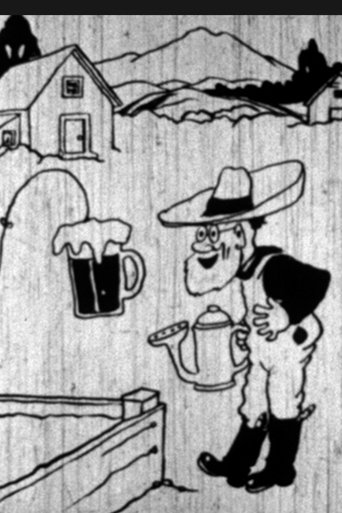
More about this film
About the production
Release date1916
ProductionBray Productions
Filmed inNew York, New York
was created during Paul Terry's tenure at Bray Studios, one of America's first dedicated animation studios. The animation was produced using traditional cel animation techniques, which were still innovative for the time. Farmer Al Falfa was one of Terry's earliest recurring characters, predating his famous Terrytoons studio. The film reflects the common theme of rural versus urban values prevalent in early 20th century American entertainment.
Themes
Rural versus urban valuesInnocence versus corruptionCountry wisdom versus city sophisticationTrust versus betrayalAppearances versus reality
Themes & topics
farmerNew York Citycon artistsdeceptionrevengeurban crimecountry versus citygamblingintoxicationfemme fatale
Historical background
Exhibitors around 1916 slotted Farmer Al Falfa Sees New York into mixed bills where shorts, newsreels, and features shared the same program.
Why this film matters
Historians treat Farmer Al Falfa Sees New York as evidence of what typical 1916 audiences could see in a program slot.
Making of
The production of 'Farmer Al Falfa Sees New York' took place during a pivotal period in animation history. Paul Terry was working at Bray Studios, which had pioneered assembly-line animation production. The film was created using the relatively new cel animation process, which allowed for more efficient production by separating moving characters from static backgrounds. Terry, who had previously worked as a newspaper cartoonist, brought his illustration skills to animation. The character of Farmer Al Falfa was designed to be a relatable everyman figure that audiences could root for. The urban setting of New York City allowed for more dynamic backgrounds and action sequences compared to the rural settings of many earlier Farmer Al Falfa cartoons. The film's production would have involved a small team of animators working under Terry's direction, with each animator handling different scenes or characters.
What critics said
Trade papers near 1916 listed Farmer Al Falfa Sees New York as program material rather than headline art cinema.
Did you know?
- Farmer Al Falfa was Paul Terry's first major animated character, created in 1915 and appearing in dozens of shorts through the 1920s
- was produced during Terry's time at Bray Studios, which was founded by J.R. Bray and considered the first animation studio with a systematic production process
- The character's name was sometimes spelled 'Farmer Al Falfa' and sometimes 'Farmer Alfalfa' in different releases
- Paul Terry would later go on to found Terrytoons in 1929, which created famous characters like Mighty Mouse and Heckle and Jeckle
- The film reflects the common silent era trope of the naive country boy outsmarting sophisticated city criminals
- Animation in 1916 was still largely a novelty, with most theaters showing animated shorts as filler before feature films
- The film's depiction of New York City as a dangerous place full of con artists was a common stereotype in early 20th century American media
- Farmer Al Falfa was one of the first animated characters to have a consistent personality across multiple films
- The animation technique used involved drawing characters on paper, tracing them onto clear celluloid sheets (cels), and photographing them against painted backgrounds
Visual style
The cinematography of this animated short utilized the standard techniques of early cel animation. Characters were drawn on paper, then traced onto clear celluloid sheets which were photographed against painted backgrounds. This allowed for smoother character movement and more efficient production compared to earlier methods that required redrawing entire scenes for each frame. The animation style was relatively simple by modern standards but sophisticated for its time, with clear silhouettes and exaggerated movements designed to be easily readable to silent film audiences. The urban setting of New York City provided opportunities for more complex background designs than typical rural settings, showing Terry's interest in expanding the visual scope of his animations.
Innovations
The film represents several technical achievements in early animation. The use of cel animation, while not invented by Terry, was implemented with increasing sophistication in . The character animation shows more fluid movement and personality than earlier animated shorts. The depiction of an urban environment with multiple moving elements demonstrated advances in background animation and layering techniques. The film also shows early examples of character consistency across scenes, an important technical challenge in early animation. While not groundbreaking in terms of technical innovation, the film demonstrates the refinement and professionalization of animation techniques that was occurring at Bray Studios during this period.
Music
As a silent film from 1916, 'Farmer Al Falfa Sees New York' would have been accompanied by live musical performance during theatrical exhibition. The typical accompaniment would have been a pianist or small theater orchestra providing background music and sound effects. The music would have been selected to match the mood of each scene - playful during Farmer Al Falfa's initial arrival, suspenseful during the criminal encounters, and triumphant during his eventual victory. Theater musicians often used popular songs of the era or classical pieces adapted for silent film accompaniment. No original composed score exists for , as was standard practice for shorts of this period.
Famous quotes
No dialogue exists for this silent film
Memorable scenes
- Farmer Al Falfa's arrival in bustling New York City with his money bag
- The seductive woman luring Farmer Al Falfa into the restaurant
- Farmer Al Falfa becoming intoxicated and dancing with the lamppost
- The card game scene where Farmer Al Falfa turns the tables on the criminals
- The reveal of the bag's unexpected contents
What audiences thought
Audiences in 1916 received Farmer Al Falfa cartoons enthusiastically, particularly the humor derived from the character's country wisdom overcoming urban sophistication. The character became popular enough to sustain a series of shorts throughout the late 1910s and 1920s. Theater owners valued these animated shorts as reliable crowd-pleasers that could attract families to their programs. The simple visual humor and clear storytelling made the films accessible to audiences of all ages and literacy levels, which was important for silent films. The recurring character of Farmer Al Falfa helped build audience loyalty, as viewers could follow his adventures across multiple films.
Film connections
Influenced by
- Earlier Farmer Al Falfa cartoons by Paul Terry
- Contemporary newspaper comic strips featuring country characters
- Silent era comedy films featuring rural protagonists
- Winsor McCay's early animation work
- Bray Studios' production methods
This film influenced
- Later Farmer Al Falfa cartoons
- Other Paul Terry animated shorts
- Early Terrytoons productions
- Rural-themed animated shorts of the 1920s
- Cartoons featuring country-versus-city themes
Film restoration
The preservation status of this specific 1916 Farmer Al Falfa cartoon is uncertain. Many silent era animated shorts have been lost due to the unstable nature of early film stock and the perceived lack of commercial value of animated shorts after their initial theatrical run. Some Farmer Al Falfa cartoons from this period survive in archives like the Library of Congress and the UCLA Film & Television Archive, but the survival of individual titles varies. Film preservation organizations continue to search for and restore surviving examples of early animation. The film may exist in incomplete form or as fragments in various archives.
Where to watch
- This specific 1916 Farmer Al Falfa cartoon is not readily available on modern streaming platforms. Some early Farmer Al Falfa cartoons can be found on public domain animation compilation DVDs, YouTube channels specializing in silent animation, or through film archive websites. The Library of Congress's National Screening Room may have digitized versions of surviving Farmer Al Falfa cartoons. Animation enthusiasts and researchers may be able to access the film through specialized film archives or university collections with strong animation holdings.