Flower Fairy
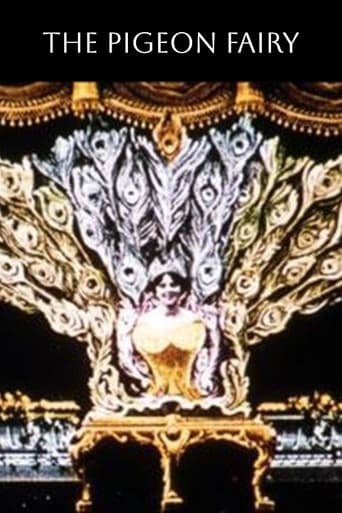
"A little flower film by Gaston Velle."
Keys: Space play/pause · ←/→ 10s · F fullscreen · M mute · </> speed
About this film
A little flower film by Gaston Velle.
Cast & crew
More films like this
More Fantasy films
View all →

More from Gaston Velle
View all →
More about this film
About the production
Release date1905
Box officeUnknown
ProductionPathé Frères
Filmed inParis, France
This film was created using multiple exposure techniques and hand-painted color frames, a labor-intensive process that required each frame to be individually colored by hand. The production utilized stage machinery and trapdoors to create the magical appearance and disappearance effects. Gaston Velle, a former magician, applied his knowledge of illusion to the film's special effects, creating seamless transformations that amazed contemporary audiences.
Themes
Transformation and metamorphosisThe magic of natureFeminine mystique and powerThe boundaries between reality and illusionThe innocence of childhood
Themes & topics
Historical background
Made in 1905, in France, under Gaston Velle, Flower Fairy belongs to silent filmmaking during early cinema when shorts dominated nickelodeon programs.
Why this film matters
Within silent history, Gaston Velle's name attaches to the work; surviving prints help researchers study silent-era craft; 1905 film by Gaston Velle.
Making of
Gaston Velle, transitioning from a career as a stage magician to filmmaker, brought his expertise in visual deception to the emerging medium of cinema. The production involved elaborate set design with oversized flowers and mechanical props to create the fairy world. The actress playing the flower fairy had to perform precise choreography while being rigged to wires for flying effects. The hand-coloring process required teams of women artists to carefully apply color to each frame using stencils, making each copy of the film a unique work of art. The film's special effects were achieved through in-camera techniques including multiple exposures, dissolves, and substitution splicing, all executed without the benefit of modern editing equipment.
What critics said
Contemporary reviews of Flower Fairy are sparse in open sources; later catalog entries chiefly summarize plot and credits.
Did you know?
- Gaston Velle was a former magician who brought his knowledge of stage illusions to filmmaking
- The film was hand-colored using the Pathécolor stencil process, one of the earliest colorization techniques
- Many of Velle's films from this period are considered lost, making surviving prints particularly valuable
- The flower fairy character was played by an anonymous actress who specialized in fantasy roles for Pathé
- The film was part of a series of magical films Velle created for Pathé between 1904-1907
- Contemporary audiences believed the transformations were real magic rather than camera tricks
- The film required multiple cameras and complex matte shots to achieve the visual effects
- Velle's background as an illusionist influenced his innovative use of substitution splicing
- The film was distributed internationally and helped establish Pathé as a leader in fantasy films
Visual style
The cinematography in Flower Fairy employed pioneering techniques including multiple exposure to create ghostly effects, matte photography for combining different shots, and substitution splicing for magical transformations. The film utilized stationary camera positions typical of the era, but compensated with elaborate set design and choreographed movement within the frame. The hand-coloring process added a dreamlike quality to the visuals, with each frame individually tinted using the Pathécolor stencil system. The lighting was designed to enhance the magical atmosphere, using theatrical techniques to create ethereal effects around the fairy character.
Innovations
Flower Fairy showcased several groundbreaking technical achievements for its time, including sophisticated use of multiple exposure to create magical apparitions and transformations. The film's hand-coloring using the Pathécolor stencil process represented one of the earliest attempts at color motion pictures. Velle's innovative use of substitution splicing allowed for seamless magical effects that appeared impossible to contemporary audiences. The production also demonstrated advanced matte photography techniques for combining different visual elements. The film's wire work and mechanical effects for the flying fairy scenes were particularly innovative for 1905, requiring custom-built apparatus.
Music
As a silent film, Flower Fairy would have been accompanied by live musical performance during its original screenings. Typical accompaniment would have included piano or small ensemble playing popular classical pieces or specially composed light fantasy music. The musical selections were chosen to enhance the magical atmosphere and often included works by composers like Chopin or contemporary French composers. Some theaters may have used phonograph recordings as accompaniment, particularly in larger urban cinemas. No original score survives, and modern screenings typically feature newly composed period-appropriate music.
Famous quotes
As a silent film, Flower Fairy contained no spoken dialogue. The narrative was conveyed through visual storytelling and intertitles, though specific intertitle text has not survived in available records.
Memorable scenes
- The opening sequence where the flower fairy emerges from a giant bud in a swirl of colored smoke, achieved through multiple exposure techniques and hand-coloring; The transformation scene where ordinary flowers spring to life and dance with the fairy, showcasing Velle's mastery of substitution splicing; The finale where multiple fairies appear in a choreographed display, creating a kaleidoscopic effect through careful camera work and colored filters.
What audiences thought
Audiences in 1905 were mesmerized by Flower Fairy's magical effects, with many believing they were witnessing actual magic rather than cinematic tricks. The film was a commercial success for Pathé and was screened extensively across Europe and America. Contemporary viewers particularly enjoyed the hand-colored sequences, which were a novelty at the time. The film's popularity contributed to the demand for more fantasy films featuring magical transformations and fairy characters. Modern audiences viewing the film in retrospectives and archives express fascination with its primitive charm and technical ingenuity, seeing it as an important step in cinema's evolution.
Film connections
Influenced by
- Georges Méliès's fantasy films
- Stage magic traditions
- French féerie theatrical productions
- Symbolist art movement
- Art Nouveau aesthetics
This film influenced
- Segundo de Chomón's fantasy shorts
- Georges Méliès's later fairy films
- Early Disney animated fairy sequences
- Contemporary fantasy short films
Film restoration
Flower Fairy is partially preserved with some elements surviving in film archives, though complete original prints are rare. The film exists in various archives including the Cinémathèque Française and the Library of Congress, though some versions may be incomplete or deteriorated. Some restored versions have been created from surviving fragments, with missing scenes reconstructed from production stills and contemporary descriptions. The hand-colored versions are particularly rare and valuable due to the delicate nature of early color film stock.
Where to watch
- Available on various streaming platforms specializing in classic cinema
- Can be viewed at film archives and museums including the Cinémathèque Française
- Included in some DVD collections of early French cinema
- Accessible through academic film databases and archives
- Screened occasionally at classic film festivals and retrospectives