Hadj Cheriff
"Hadji Cheriff dances for Edison"
Keys: Space play/pause · ←/→ 10s · F fullscreen · M mute · </> speed
About this film
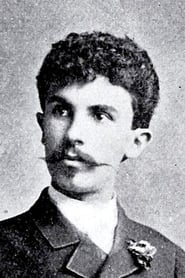
Hadji Cheriff, a performer known for a variety of unusual abilities, demonstrates part of his act in the Thomas Edison studio. He has a large knife in his hand at the opening of the act. He then hurls the knife away and begins a rapid series of dance-like motions, executing numerous cartwheels and whirling movements.
Cast & crew
More films like this
More from William K.L. Dickson
View all →
More about this film
About the production
Release date1894
ProductionEdison Manufacturing Company
Filmed inBlack Maria Studio, West Orange, New Jersey
Filmed in Edison's revolutionary Black Maria studio, which was designed with a retractable roof to allow natural sunlight for filming. The studio was built on a circular turntable that could be rotated to follow the sun's movement throughout the day. This was one of hundreds of short films produced by Edison's company to demonstrate the capabilities of the Kinetoscope. The performer Hadji Cheriff was likely part of a traveling vaudeville circuit that Edison recruited to showcase various talents for his new invention.
Themes
Performance art preservationCultural exhibitionTechnological demonstrationPhysical spectacleVaudeville entertainment
Themes & topics
acrobaticsknife throwingdanceperformancevaudevillephysical featstudio filmingsilent eraEdisonBlack Maria
Historical background
Contemporary records classify Hadj Cheriff (1894) as 1894 film by william kennedy dickson, placing it within the earliest years of projected motion pictures.
Why this film matters
Hadj Cheriff (1894) helps trace genre evolution, performer careers, and the material conditions of silent exhibition.
Making of
The filming of 'Hadj Cheriff' took place during a period of intense experimentation and innovation at Edison's laboratory. William K.L. Dickson, who had been working on motion picture technology since the late 1880s, was constantly seeking new subjects to demonstrate the capabilities of the Kinetograph camera and Kinetoscope viewer. Performers like Hadji Cheriff were recruited from traveling shows and vaudeville circuits to provide entertainment that would attract paying customers to the new Kinetoscope parlors. The filming process was physically demanding for both the performers and the camera operators, as the early cameras required constant manual cranking at a precise speed to ensure smooth motion. The Black Maria studio itself was an engineering marvel, with its tar-paper roof designed to open like a hatch to allow optimal sunlight, and the entire structure mounted on a circular track to follow the sun's path across the sky. Performers had to adapt their acts to the confined space of the studio and the technical limitations of the equipment, often performing multiple takes to achieve the desired results.
What critics said
Where contemporary reviews survive, Hadj Cheriff is discussed in terms of audience appeal at release; later criticism often reframes it through archive restoration and festival programming.
Did you know?
- This film was made for Edison's Kinetoscope, an early motion picture exhibition device that allowed individual viewers to watch films through a peephole.
- The Black Maria studio where this was filmed was the world's first movie production studio, costing $637 to build in 1893.
- William K.L. Dickson, who directed this film, was the primary inventor of the motion picture camera while working for Edison.
- Hadj Cheriff was likely of Middle Eastern or North African descent, capitalizing on Western fascination with 'exotic' performers during the Victorian era.
- The film was shot on 35mm film using Edison's Kinetograph camera, which could only shoot about 20-30 seconds at a time.
- This was one of the first films to capture acrobatic and dance movements on camera, demonstrating the new medium's ability to preserve physical performances.
- Edison's films from this period were not copyrighted, leading to widespread duplication and distribution by other companies.
- The knife in the opening of the performance was likely a theatrical prop designed to create visual impact rather than actual danger.
- This film was part of Edison's strategy to create a diverse catalog of subjects to appeal to various audiences at Kinetoscope parlors.
- The performer's rapid movements would have been particularly challenging to capture with the slow film speeds and manual cranking of early cameras.
Visual style
The cinematography of 'Hadj Cheriff' represents the state of the art in 1894, utilizing Edison's 35mm Kinetograph camera with its distinctive vertical film transport and intermittent motion mechanism. The camera was hand-cranked at approximately 16 frames per second, creating the flickering effect characteristic of early cinema. The lighting was entirely natural, coming through the retractable roof of the Black Maria studio, which could be adjusted to optimize illumination. The camera position was static, as movement of the camera was not yet technically feasible, forcing the composition to rely entirely on the performer's movement within the frame. The black background of the studio created a theatrical effect that emphasized the performer's movements and costumes. The film stock used was orthochromatic, which was sensitive to blue and green light but not red, affecting how colors were rendered in the final image. Despite these technical limitations, the cinematography successfully captured the dynamism of Cheriff's performance, demonstrating early cinema's ability to preserve physical movement with remarkable clarity.
Innovations
This film showcases several important technical achievements of early cinema, including the successful capture of rapid movement using Edison's Kinetograph camera. The ability to film complex physical performances like cartwheels and spinning movements demonstrated the camera's capacity to preserve motion with reasonable clarity. The film was shot on 35mm stock, which would become the industry standard for decades to come. The Black Maria studio's innovative design, with its adjustable lighting and rotating structure, represented a major advancement in controlled filming environments. The film's existence demonstrates the early development of film stock that could withstand the mechanical stress of high-speed movement capture. The successful preservation of this film for over 130 years also speaks to the relative stability of early celluloid film stock. While primitive by modern standards, the technical achievements represented in this film were revolutionary for their time and laid the groundwork for all subsequent developments in motion picture technology.
Music
Like all films from 1894, 'Hadj Cheriff' was produced as a silent film without synchronized sound. In Kinetoscope parlors, the viewing experience was enhanced by musical accompaniment provided by the establishment, typically a pianist or small ensemble playing popular tunes of the era. The music was chosen to match the mood and tempo of the film being shown, with lively pieces often selected for performance films like this one. Some parlors employed phonographs to provide musical accompaniment, creating a multi-sensory experience for viewers. The absence of recorded sound meant that audiences focused entirely on the visual spectacle, with the performer's movements and expressions carrying the entire narrative weight. The silence of these early films actually enhanced their mysterious quality, adding to the sense of wonder that audiences felt when viewing moving images for the first time. Modern screenings of the film are typically accompanied by period-appropriate music or contemporary scores composed specifically for silent film exhibitions.
Memorable scenes
- The dramatic opening where Hadji Cheriff wields a large knife, creating immediate visual tension and establishing his character as a skilled performer. The subsequent sequence where he discards the knife and transitions into fluid, dance-like movements showcases remarkable physical control and grace. The series of rapid cartwheels and spinning movements demonstrates the performer's extraordinary agility and represents some of the most dynamic motion captured in early cinema.
What audiences thought
Audiences in 1894 were fascinated by Edison's Kinetoscope films, which they viewed as magical demonstrations of modern technology. Viewers would pay 25 cents to watch films like 'Hadj Cheriff' through individual peepholes in Kinetoscope parlors, often lining up for hours to experience the novelty. The physical prowess and exotic appeal of performers like Cheriff were particularly popular attractions, drawing curious spectators eager to see real people captured in motion. Contemporary accounts describe audiences gasping at the lifelike quality of the images and expressing disbelief that such technology was possible. The films were often discussed in social circles as the latest wonder of the age, with many people returning multiple times to view different titles. While modern audiences might find such brief, simple films quaint, they were revolutionary experiences for 19th-century viewers, representing a completely new form of entertainment that blurred the line between reality and representation.
Film connections
Influenced by
- Vaudeville theater traditions
- Circus performance arts
- Middle Eastern dance forms
- Stage magic and spectacle
This film influenced
- Edison's Annabelle Serpentine Dance (1894)
- Edison's Sandow (1894)
- Lumière brothers' acrobatic films
- Georges Méliès' magical performances
Film restoration
The film is preserved and available through various archives, including the Library of Congress and the Museum of Modern Art's film collection. It has been digitized and is accessible through several online platforms dedicated to early cinema. The film exists as part of the extensive Edison Manufacturing Company catalog that has survived from the 1890s. While the original nitrate film stock has likely deteriorated, preservation copies on safety film and digital formats ensure the film's continued accessibility for researchers and the public.
Where to watch
- Library of Congress National Film Registry
- YouTube (Edison Film Collection)
- Internet Archive
- Museum of Modern Art Film Collection
- Kino Lorber's Edison: The Invention of the Movies DVD collection