How a French Nobleman Got a Wife Through the 'New York Herald' Personal Columns
"Advertisement and ruin"
Keys: Space play/pause · ←/→ 10s · F fullscreen · M mute · </> speed
About this film
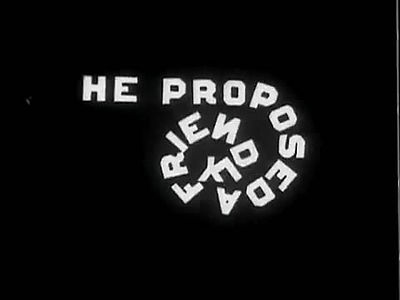
A French aristocrat, who has recently arrived in America, has placed a personal advertisement in the newspaper...
Cast & crew
More films like this
More Action films
View all →
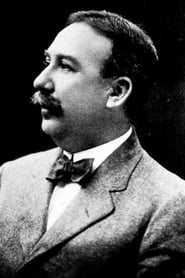
More from Edwin S. Porter
View all →

More about this film
About the production
Release dateOctober 1905
Box officeUnknown
ProductionEdison Manufacturing Company
Filmed inNew York, New York, Edison Studio - Bronx, New York
was produced during the peak of Edison's film production period, utilizing their innovative indoor studio facilities. The film was shot on 35mm film using Edison's own equipment. As with many Porter films, it featured elaborate sets and costumes to create the illusion of European aristocracy in an American setting. The production utilized actual newspaper props from the New York Herald to add authenticity to the personal advertisement premise.
Themes
Cross-cultural communicationModern courtship methodsCultural assimilationRomantic comedySocial class differences
Themes & topics
Historical background
Made in its country of production around 1905, How a French Nobleman Got a Wife Through the 'New York Herald' Personal Columns belongs to the first decade of projected film. Its story of a french aristocrat, who has recently arrived in america, has placed a personal advertisement in the newspaper spoke to audiences of the day through familiar genres and topical settings.
Why this film matters
Archivists and historians still cite How a French Nobleman Got a Wife Through the 'New York Herald' Personal Columns when tracing how the first decade of projected film filmmakers staged french and aristocrat on screen.
Making of
The film was created at Edison's Bronx studio, which was one of the first purpose-built film production facilities in America. Edwin S. Porter, who had previously worked as a projectionist and cameraman, brought his technical expertise to this production. The casting likely featured Edison stock company actors who appeared in multiple productions. The elaborate costumes and set design were typical of Porter's attention to visual detail. The film was shot in a single day or two, as was common for productions of this era. The newspaper props were authentic copies of the New York Herald, adding realism to the production. Porter's direction focused on clear visual storytelling, as intertitles were still relatively uncommon in 1905.
What critics said
Reviews from 1905 weighed How a French Nobleman Got a Wife Through the 'New York Herald' Personal Columns on pacing, performance, and novelty. Later criticism reads its emphasis on french, aristocrat, recently through modern standards of craft and representation.
Did you know?
- is one of the earliest examples of cinema exploring themes of personal advertisements and modern dating methods
- Director Edwin S. Porter was a pioneering filmmaker who also directed the famous 'The Great Train Robbery' (1903)
- The film was released during a period when personal columns in newspapers were becoming increasingly popular in American society
- The New York Herald was among the leading prominent newspapers of the era, making its inclusion particularly significant to contemporary audiences
- represents an early example of cross-cultural comedy in cinema, contrasting European and American customs
- The Edison Manufacturing Company was one of the dominant film producers in America before the rise of Hollywood
- Porter often used narrative structures that were innovative for the time, including clear cause-and-effect storytelling
- The film was likely accompanied by live musical accompaniment during its original theatrical screenings
- Personal advertisements in newspapers during this period were considered somewhat scandalous but were gaining social acceptance
- The film's title is exceptionally long for its era, reflecting early cinema's tendency toward descriptive, literal titles
Visual style
The cinematography was typical of Edison productions of 1905, utilizing stationary camera positions and careful composition within the frame. The film was shot in black and white on 35mm film using Edison's proprietary equipment. Lighting was natural or basic studio lighting, creating high contrast images suitable for projection equipment of the era. The camera work emphasized clarity and visibility of action, as subtlety was difficult to achieve with early film technology. Close-ups were rare, with most shots being medium or long takes that captured the entire scene. The visual style prioritized storytelling clarity over artistic experimentation, reflecting Porter's practical approach to filmmaking.
Innovations
While not technically groundbreaking like some of Porter's other works, the film demonstrated solid craftsmanship in narrative construction within the technical limitations of 1905. The use of multiple sets and location shooting showed advancing production capabilities. The film's clear storytelling structure represented progress in cinematic language development. The integration of newspaper props and realistic settings showed attention to production detail. The film's survival and preservation status indicate reasonable technical quality for its era. Porter's direction showed sophisticated understanding of visual storytelling techniques that would influence future filmmakers.
Music
As a silent film, it would have been accompanied by live musical performance during theatrical screenings. The accompaniment typically consisted of piano or organ music, with selections chosen to match the mood of each scene. Popular songs of the era might have been used for romantic moments, while more upbeat music would accompany comedic sequences. Edison sometimes provided suggested musical cues with their film prints, though specific documentation for 's musical accompaniment is not available. The music would have been performed live by theater musicians or, in larger venues, small orchestras.
Famous quotes
No dialogue available - silent film
Memorable scenes
- The French nobleman carefully composing his personal advertisement
- The nobleman reviewing numerous responses from interested women
- The first meeting between the nobleman and his chosen bride
- The comedic courtship scenes highlighting cultural misunderstandings
- The wedding ceremony blending French and American traditions
What audiences thought
Audiences in 1905 likely found the film entertaining and relatable, as personal advertisements were a novel and somewhat controversial topic of discussion. The humor derived from cultural differences would have resonated with America's immigrant population. The film's clear narrative and visual gags made it accessible to the diverse audiences of nickelodeon theaters. As part of Edison's output, it probably enjoyed good circulation through their distribution network. The romantic elements appealed to female audiences, while the comedy attracted broader viewership. Contemporary audience reactions are not well-documented, but the film's survival suggests it was considered valuable enough to preserve.
Film connections
Influenced by
- Stage comedies of the era
- Vaudeville traditions
- Literary romance narratives
- Newspaper culture
- European courtship stories
This film influenced
- Later romantic comedies featuring cross-cultural themes
- Films about newspaper-based romances
- Early narrative comedies
- Edison Company's subsequent romantic productions
Film restoration
The film is preserved in the Library of Congress collection and other film archives. It has been restored and is available for scholarly viewing. While some degradation may exist due to the film's age, it remains largely intact. The preservation status reflects its historical importance as an example of early American narrative cinema and Edwin S. Porter's work.
Where to watch
- Library of Congress National Film Registry
- Museum of Modern Art Film Collection
- George Eastman Museum
- UCLA Film & Television Archive
- Various film history websites and educational platforms