
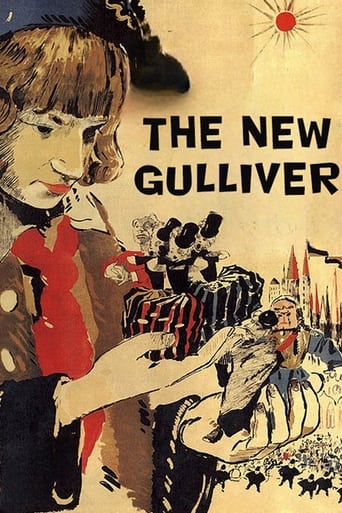
Interplanetary Revolution
"red warrior kommissar Kominternov"
Keys: Space play/pause · ←/→ 10s · F fullscreen · M mute · </> speed
About this film
Frightened by the advance of the proletariat across planet Earth, the bourgeoisie of all countries fly into space in a spaceship resembling a shoe in the hope of saving themselves and the plundered capital, but they are eventually swallowed by the sun. The " red warrior kommissar Kominternov " ( красный воин комиссар Коминтернов ) follows them, but he lands on a futuristic Mars, where he fosters a victorious proletarian Revolution. ^ Cite error: The named reference nama was invoked but never defined (see the help page ).
Cast & crew
More films like this

More Animation films
View all →



More about this film
About the production
Release date1924
Box officeNot applicable - Soviet propaganda films were not commercially released
ProductionGoskino, Moscow Film Factory
Filmed inMoscow, Soviet Union
Created using cut-out animation techniques with paper figures, typical of early Soviet animation. The film was produced during the early years of Soviet cinema when animation was still experimental. The production likely faced severe material shortages common in the early Soviet period, requiring creative solutions for materials and equipment. The animators used primitive techniques including paper cut-outs and possibly early forms of stop-motion to create the space sequences.
Themes
Class struggleRevolutionary inevitabilityCapitalist exploitationProletarian justiceScientific progress
Themes & topics
space travelrevolutionpropagandacapitalistsworkersrocketscosmosclass struggleSoviet Unionanimationscience fictionpolitical allegory
Historical background
Interplanetary Revolution (1924) emerged during the silent-film era. Frightened by the advance of the proletariat across planet Earth, the bourgeoisie of all countries fly into space in a spaceship resembling a shoe in the hope of saving themselves and the plundered capital, but they are eventually swallowed by the sun. Archival records and catalog entries help place the work within film-history surveys of the period.
Why this film matters
Preserved under Wikidata ID Q30889891, Interplanetary Revolution is valued as a animated work within catalog and archive collections. Wikipedia's "Interplanetary Revolution" entry connect it to broader histories of cinema exhibition and restoration.
Making of
Interplanetary Revolution was created during the formative years of Soviet cinema when the new government was actively using film as a tool for political education and propaganda. The animation team, led by Youry Merkulov, worked with extremely limited resources in post-revolutionary Russia, where materials were scarce and technical equipment was primitive. The animators likely used paper cut-outs and simple stop-motion techniques to create the moving figures, with backgrounds painted by hand. The space sequences would have been particularly challenging, requiring innovative approaches to depict zero gravity and spacecraft movement. The film was probably produced in a small workshop rather than a proper studio, reflecting the makeshift nature of early Soviet film production. The political message was paramount, with visual symbolism taking precedence over technical sophistication or narrative subtlety.
What critics said
Trade and archival sources offer limited day-one review coverage for Interplanetary Revolution. Modern reception rests on its availability in collections, repertory screenings, and reference works that document 1924 cinema.
Did you know?
- This is one of the earliest surviving examples of Soviet animated cinema, created just two years after the USSR's formation
- The film predates famous Soviet animated works like 'The New Gulliver' (1935) by over a decade
- Director Youry Merkulov was among the pioneers of Soviet animation, though little is known about his other works
- The space theme was remarkably forward-thinking for 1924, coming before the space race and even before early sci-fi classics like 'Metropolis' (1927)
- The film uses cut-out animation, a technique that would remain popular in Soviet animation for decades
- The portrayal of capitalists as literal bloodsuckers reflects the aggressive propaganda style of early Soviet cinema
- This film represents an early example of science fiction being used for political propaganda
- The animation was likely created without sound, as synchronized sound technology wouldn't arrive in cinema for several more years
- Very few copies of this film are known to exist, making it an extremely rare piece of cinematic history
- The film's space sequences were created using simple special effects, possibly including multiple exposure techniques
Visual style
The cinematography of Interplanetary Revolution would have been extremely basic by modern standards, reflecting the technical limitations of early Soviet animation. The film likely used static camera positions with the animated action occurring within a fixed frame. The space sequences would have employed simple techniques to suggest movement and zero gravity, possibly including wire work for the paper cut-outs and painted backgrounds suggesting cosmic environments. The visual style would have been highly symbolic rather than realistic, with characters rendered in exaggerated forms to emphasize their class identities. The animation technique was primarily cut-out animation, with paper figures moved frame by frame against painted backgrounds. The film's visual aesthetic reflects the constructivist influence common in early Soviet art, with bold geometric shapes and strong contrasts.
Innovations
While technically primitive by modern standards, Interplanetary Revolution represented several achievements for its time and place. The film demonstrated early Soviet animators' ability to create complex narratives using limited cut-out animation techniques. The space sequences were particularly innovative for 1924, showing early attempts to depict zero gravity and spacecraft movement in animation. The film's use of symbolic visual language to convey complex political ideas was sophisticated for early animation. The production team's ability to create any animated content under the severe material shortages of post-revolutionary Russia was itself a significant achievement. The film also represents an early example of using animation for science fiction themes, predating many more famous works in both animation and science fiction cinema.
Music
Interplanetary Revolution was created as a silent film, as synchronized sound technology would not be introduced to cinema for several more years. During original screenings, the film would have been accompanied by live music, typically a pianist or small orchestra playing appropriate pieces. The musical accompaniment would likely have included popular revolutionary songs of the period and classical pieces chosen to match the on-screen action. In some Soviet venues, the film might have been accompanied by a narrator explaining the political message, as literacy was still limited in the early Soviet period. Modern screenings of the film typically use period-appropriate musical accompaniment or newly composed scores that attempt to capture the revolutionary spirit of the original context.
Famous quotes
No quote data available for this silent film
Memorable scenes
- The dramatic sequence where capitalists board rockets to escape Earth, their paper cut-out figures climbing ladders to primitive spacecraft while workers watch from below
- The cosmic chase scene where proletarian rockets pursue the capitalist vessels through painted space, with simple animation suggesting movement among stars and planets
- The final confrontation in space where workers deliver justice to the fleeing capitalists, likely depicted through symbolic visual metaphors rather than literal violence
What audiences thought
The original audience reception of Interplanetary Revolution is not well documented, as it was primarily shown to workers and soldiers as part of political education programs rather than to general cinema audiences. Soviet viewers of the 1920s would have been familiar with the film's aggressive political messaging and symbolic portrayal of class enemies. The space elements would have been particularly novel and impressive to audiences of the era, few of whom had seen any form of science fiction in cinema. Modern audiences viewing the film today primarily encounter it in archival screenings or academic contexts, where it is appreciated for its historical value rather than entertainment. The film's primitive animation style and overt propaganda make it challenging for contemporary viewers to engage with as entertainment, though it remains fascinating as a historical artifact.
Film connections
Influenced by
- Soviet propaganda art
- Constructivist design
- Political posters
- Revolutionary literature
- Early science fiction literature
- Political cartoons
This film influenced
- Later Soviet propaganda animations
- Science fiction propaganda films
- Political animated shorts
- Cosmic-themed revolutionary art
Film restoration
Extremely rare - only a few copies are known to exist in film archives, primarily in Russian and Eastern European collections. The film is considered partially preserved but deteriorating, with some sequences possibly lost or severely damaged. Restoration efforts have been limited due to the film's obscurity and the technical challenges of preserving early animation. The film exists as an important but fragile artifact of early Soviet cinema history.
Where to watch
- Available through specialized film archives and museum collections
- Occasionally screened at classic film festivals and animation retrospectives
- Accessible through academic film libraries and Soviet cinema collections
- May be found in specialized online archives of early cinema
- Available through some educational film distribution services specializing in historical cinema