Monkeyshines, No. 2
"Edison’s second experiment in motion"
Keys: Space play/pause · ←/→ 10s · F fullscreen · M mute · </> speed
About this film
Edison Laboratory workers continue the Monkeyshines experiments in 1890, moving before the camera to test exposure and motion capture. The brief strip belongs to the earliest American attempts to record human movement for the Kinetoscope.
Cast & crew
More films like this
More Documentary films
View all →
More from William K.L. Dickson
View all →

More about this film
About the production
Release date1890
Box officeNot commercially released
ProductionEdison Manufacturing Company
Filmed inEdison Laboratory, West Orange, New Jersey
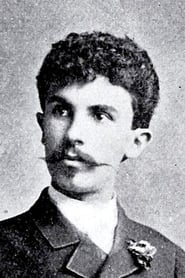
This film was shot using the horizontal-feed Kinetograph camera, an early prototype that used 1 3/8 inch wide film. The filming took place in the Black Maria studio or a similar darkened space at Edison's laboratory. The subject, Giuseppe Sacco Albanese, was an Edison employee who volunteered for these early motion picture experiments. The film was shot at approximately 16 frames per second, which was standard for early Edison productions. This was one of several test films created to perfect the motion picture process before Edison's public demonstrations began.
Themes
Themes & topics
experimental filmtest footageearly cinemamotion pictureEdisonsilent filmblack and whiteshort filmdocumentationtechnology
Historical background
Monkeyshines, No. 2 appeared in 1890, when the nickelodeon era and the birth of narrative film shaped how movies were financed, distributed, and discussed. Audiences of the day encountered the work amid shifting tastes in acting, pacing, and spectacle. Its focus on experimental film that follows up on the results of "monkeyshines, no mirrors themes circulating in popular culture of that moment.
Why this film matters
Monkeyshines, No. 2 (1890) belongs to the wider archive of world cinema, documenting experimental film that follows up on the results. Archivists and historians value such titles for what they reveal about craft, genre, and audience expectations. Restorations and festival screenings keep the work visible to viewers far beyond its first run.
Making of
The making of Monkeyshines, No. 2 represents a pivotal moment in cinema history, occurring during William K.L. Dickson's intensive experiments with motion picture technology at Thomas Edison's laboratory. Dickson, working under Edison's direction, had been developing the Kinetograph camera and Kinetoscope viewing system since the late 1880s. The filming process was rudimentary by modern standards - the camera was enormous and noisy, requiring the subject to remain relatively still while the mechanism operated. Giuseppe Sacco Albanese, an Edison employee of Italian descent, volunteered to be the subject for these crucial tests. The filming likely took place in a darkened room or the early version of what would become the Black Maria studio, with special lighting arrangements to compensate for the low sensitivity of early film stock. Each test required careful preparation and immediate processing to determine whether the motion had been successfully captured. These experiments were conducted without any audience in mind, purely as scientific and technical tests to advance the medium.
What critics said
Press coverage from 1890 is fragmentary for many titles of this vintage; surviving notices for Monkeyshines, No. 2 tend to stress novelty, star power, or topical appeal. Later writing places the picture within its national and generic context, weighing both period conventions and moments that still land for modern viewers. Streaming and disc releases have revived discussion among classic-film audiences.
Did you know?
- This is one of the earliest surviving motion pictures made in America, predating Edison's first public exhibitions by several years.
- The film was created as a technical test, not for entertainment, making it a crucial document in the development of cinema technology.
- Giuseppe Sacco Albanese, the subject, was one of the first people to ever be captured on motion picture film in the United States.
- The film was shot on 1 3/8 inch film stock, which was wider than the eventual 35mm standard that would dominate cinema.
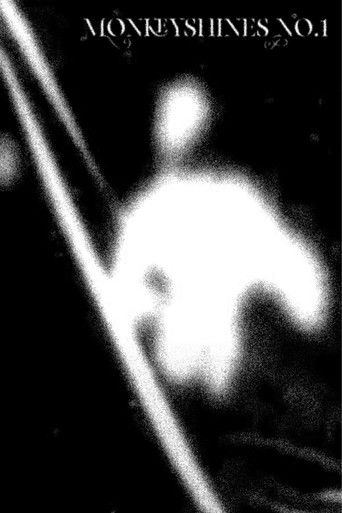
- Monkeyshines, No. 2 was part of a series of test films that also included Monkeyshines, No. 1 and No. 3, though not all have survived.
- The title 'Monkeyshines' was a common slang term in the 1890s meaning 'mischief' or 'playful antics'.
- These early experiments were conducted in secret as Edison and Dickson worked to perfect their motion picture system.
- The film shows Albanese wearing white clothing to ensure he would be clearly visible in the low-light conditions of early film.
- Unlike later Edison films, this was never intended for commercial distribution through Kinetoscope parlors.
- The surviving print is preserved at the Museum of Modern Art in New York.
Visual style
The cinematography of Monkeyshines, No. 2 represents the most basic form of motion picture photography, using the prototype horizontal-feed Kinetograph camera developed by William K.L. Dickson. The camera used a continuous film feed mechanism that was revolutionary for its time, allowing for longer sequences than earlier attempts at motion pictures. The film was shot on 1 3/8 inch celluloid stock at approximately 16 frames per second, which would become the standard for early silent films. The lighting was rudimentary, requiring bright illumination to compensate for the low sensitivity of early film emulsions. The framing is static, as the camera could not move during filming, and the composition centers on the subject to maximize visibility of the motion being tested. The visual quality shows the limitations of early film technology, with poor contrast and definition compared to later standards. Despite these technical limitations, the cinematography successfully captured clear movement, which was the primary objective of the test.
Innovations
Monkeyshines, No. 2 represents several significant technical achievements in the development of motion picture technology. The film successfully demonstrated the effectiveness of the horizontal-feed Kinetograph camera, which used a continuous loop of film rather than the stop-and-go mechanisms of earlier devices. The camera's ability to capture smooth motion at approximately 16 frames per second was a major breakthrough. The film also proved the viability of celluloid as a medium for recording moving images, establishing a foundation for the entire film industry. The successful processing and preservation of the footage demonstrated that motion pictures could be recorded, developed, and stored for future viewing. These experiments also helped establish optimal exposure times and lighting requirements for motion picture photography. The technical knowledge gained from creating Monkeyshines, No. 2 directly contributed to Edison's later commercial successes with the Kinetoscope system.
Music
Monkeyshines, No. 2 was created as a silent film during the era before synchronized sound technology existed. Like all films of this period, it was intended to be viewed without any accompanying soundtrack. The film predates Edison's experiments with sound film by several decades. When the film is shown today in museums or archives, it may be accompanied by period-appropriate music or silence, depending on the presentation context. The original viewing experience would have been completely silent, with only the mechanical noise of the Kinetoscope viewer during playback. No musical score or sound effects were ever created for this experimental footage, as its purpose was purely technical rather than entertainment.
Memorable scenes
- The opening sequence showing Giuseppe Sacco Albanese standing and moving his arms, demonstrating the camera's ability to capture human motion in one of the earliest American motion pictures.
What audiences thought
Monkeyshines, No. 2 was never shown to audiences during its time, as it was an internal technical test film created before Edison had developed his commercial exhibition systems. The film predates the invention of the Kinetoscope viewer and the opening of the first motion picture theaters by several years. Modern audiences can view the film through archives and museums, where it is typically presented with educational context about its historical significance. Contemporary viewers often express fascination with seeing one of the earliest moving images ever created, though the content itself is simple by modern standards. The film serves as a time capsule, allowing modern audiences to witness the very first steps in the development of cinema technology.
Film connections
Influenced by
- Eadweard Muybridge's motion studies
- Étienne-Jules Marey's chronophotography
- Thomas Edison's previous inventions
This film influenced
- Monkeyshines, No. 1
- Monkeyshines, No. 3
- Edison Kinetoscope recordings
- Blacksmith Scene (1893)
- Carmencita (1894)
Film restoration
Monkeyshines, No. 2 is preserved in the film archives of the Museum of Modern Art in New York. The film survives as a crucial historical document of early cinema, though like many films from this era, it shows signs of age and deterioration. The preservation status is considered stable, with the film being stored under archival conditions to prevent further degradation. Digital copies have been made for study and exhibition purposes, ensuring the content will remain accessible even as the original film continues to age. The film is recognized as an important cultural artifact and has been included in various collections and archives dedicated to early cinema history.
Where to watch
- Museum of Modern Art film archives
- Library of Congress digital collections
- Early cinema documentary compilations
- Academic film history collections
- Online archives specializing in early cinema