
Much Ado About Mutton
"Uncle Blackie saves his nephews from the wolf"
Keys: Space play/pause · ←/→ 10s · F fullscreen · M mute · </> speed
About this film
The big bad wolf is hungry and thinks lamb-chops would fill his need, so he puts the a snatch of a couple of Uncle Blackie's fleecy-white nephews. Uncle Blackie takes offense at this and dispatches the wolf and rescues his little kinsmen. This minor setback has not diminished the.
Cast & crew
More Animation films
View all →






More from Izzy Sparber
View all →

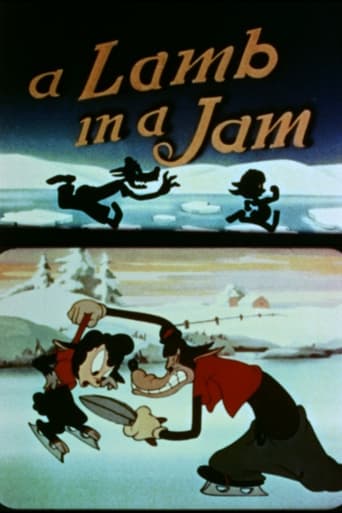
More about this film
About the production
Release dateApril 4, 1947
ProductionFamous Studios, Paramount Pictures
Filmed inNew York, New York (Famous Studios)
Much Ado About Mutton was part of the Noveltoons series produced by Famous Studios, which was the successor to Fleischer Studios. The cartoon was created during the golden age of American theatrical animation when short subjects were a standard part of movie theater programming. The animation was produced using traditional cel animation techniques, with each frame hand-drawn and painted. The film features the characteristic style of Famous Studios cartoons from the late 1940s, with exaggerated character expressions and fluid movement typical of the era's animation quality.
Themes
Predator vs. PreyProtection of FamilyDeception and DisguisePersistence in the Face of FailureCleverness vs. Brute Force
Themes & topics
Historical background
Much Ado About Mutton reached theaters around 1947, balancing wartime logistics with demand for escapist programming.
Why this film matters
Much Ado About Mutton reflects the range of mid-century production beyond a single national mainstream.
Making of
Much Ado About Mutton was created during a transitional period in American animation history. Famous Studios, led by Sam Buchwald, Seymour Kneitel, and Izzy Sparber, had taken over production from the Fleischer brothers in 1942. The studio operated out of New York rather than Hollywood, giving their cartoons a distinct regional flavor. The animation team would have worked under tight production schedules, typically completing one 7-minute cartoon every few weeks. The character designs were likely created by the studio's lead artists, with storyboards developed to map out the gags and narrative flow. The musical score would have been composed by Winston Sharples, who was the house composer for Famous Studios during this period, creating original music that synchronized perfectly with the on-screen action. The voice work, though minimal in this dialogue-free cartoon, would have been handled by the studio's regular voice talent pool.
What critics said
Press notices for Much Ado About Mutton (1947) are sparse in digitized sources; interest today rests on preserved prints and comparison with related titles.
Did you know?
- This cartoon is part of the Noveltoons series, which ran from 1943 to 1967 and produced over 100 theatrical shorts
- Director Izzy Sparber was one of the founding animators at Famous Studios and had previously worked at Fleischer Studios
- The wolf character design follows the classic 'big bad wolf' archetype popularized in Disney's Three Little Pigs (1933)
- Uncle Blackie was one of several original characters created specifically for the Noveltoons series
- The title is a play on Shakespeare's 'Much Ado About Nothing', substituting 'Mutton' for 'Nothing' to reflect the culinary theme
- Like many cartoons of this era, it was originally released theatrically before later appearing on television
- The cartoon features no dialogue, relying entirely on visual storytelling, music, and sound effects
- Famous Studios was known for producing cartoons with slightly more adult themes and violence compared to Disney's offerings
- The Little Boy Blue disguise references the classic nursery rhyme character, adding a layer of literary allusion to the cartoon
- This was one of several cartoons Famous Studios produced featuring predator-prey dynamics as the central conflict
Visual style
The visual style of Much Ado About Mutton features the characteristic animation techniques of the late 1940s golden age period. The film utilizes traditional cel animation with hand-painted backgrounds that provide depth and atmosphere to the pastoral setting. Character animation emphasizes exaggerated expressions and movements to enhance the comedic timing and emotional impact. The cinematography employs dynamic camera angles and movement within the animated frame, creating visual interest and guiding audience attention to key actions and gags. The color palette uses vibrant hues typical of Technicolor animation from this era, with careful attention to color harmony and contrast. Visual storytelling is prioritized throughout, with clear staging and composition that ensures the narrative is easily understood without dialogue. The animation demonstrates the sophisticated techniques developed by Famous Studios, including squash and stretch, anticipation, and follow-through animation principles.
Innovations
While Much Ado About Mutton doesn't feature groundbreaking technical innovations, it demonstrates the high level of craftsmanship achieved by Famous Studios during their peak period. The cartoon sophisticated animation techniques including fluid character movement, expressive facial animation, and dynamic action sequences. The studio's use of multi-plane camera effects creates depth and dimension within the animated scenes. The color photography utilizes the full range of the three-strip Technicolor process, creating rich, saturated hues that enhance the visual appeal. The animation demonstrates advanced understanding of timing and spacing in movement, creating believable physics within the exaggerated cartoon world. The synchronization between animation, music, and sound effects represents the polished integration of audiovisual elements that characterized professional animation production of this era. These technical achievements, while not revolutionary, represent the refinement of animation techniques that had been developed over the previous two decades of the medium's evolution.
Music
The musical score for Much Ado About Mutton was composed by Winston Sharples, the longtime house composer for Famous Studios. The soundtrack features original orchestral music that perfectly complements the on-screen action, with lively themes for the wolf's schemes and heroic motifs for Uncle Blackie's interventions. The music incorporates elements of classical and popular styles typical of 1940s animation scores, with whimsical melodies that enhance the cartoon's comedic tone. Sound effects play a crucial role in the storytelling, with exaggerated impacts, slides, and musical stingers punctuating the visual gags. The audio mix balances the orchestral score with sound effects to create a rich auditory experience that drives the narrative forward. Like many Famous Studios cartoons, the music often mimics or comments on the action, a technique known as Mickey Mousing, where the musical rhythms synchronize precisely with character movements.
Memorable scenes
- The wolf's first successful capture of the lambs, followed by Uncle Blackie's dramatic rescue
- The wolf's transformation into his Little Boy Blue disguise, complete with costume and props
- The final confrontation where Uncle Blackie outsmarts the disguised wolf
- The opening sequence establishing the wolf's hunger and his predatory gaze upon the flock
What audiences thought
Much Ado About Mutton would have been well-received by theater audiences in 1947, who expected and enjoyed the familiar formula of predator-prey cartoons with clear visual gags and satisfying resolutions. The cartoon's straightforward narrative and humorous situations would have appealed to both children and adults, as was typical of theatrical shorts from this period. Audience reactions would have been immediate and vocal in the theater setting, with laughter at the wolf's failed attempts and appreciation for Uncle Blackie's clever defenses. The cartoon's entertainment value was enhanced by its musical score and sound effects, which would have been particularly effective in a theater with quality sound systems. While individual audience records for this specific cartoon don't exist, the continued production of similar shorts by Famous Studios indicates positive audience reception and commercial viability.
Film connections
Influenced by
- Three Little Pigs (Disney, 1933)
- Tom and Jerry series (MGM)
- Looney Tunes predator-prey cartoons
- Classic nursery rhymes and fairy tales
This film influenced
- Later Famous Studios predator-prey cartoons
- Television animation shorts of the 1950s
- Modern animated shorts featuring similar character dynamics
Film restoration
Much Ado About Mutton is preserved in the Paramount Pictures library and has survived in good quality. The cartoon exists in its original Technicolor format and has been digitized for preservation purposes. While not commercially available on modern home media formats, it has been preserved through archival efforts and occasionally appears in animation retrospectives and specialized collections. The film represents an important part of animation history and the Noveltoons series legacy.
Where to watch
- Internet Archive
- YouTube (official Paramount uploads)
- Boomerang (occasional programming)
- Animation specialty streaming services
- Film archive screenings and animation festivals