Rector's to Claremont
"A late diner chases his carriage through New York."
Keys: Space play/pause · ←/→ 10s · F fullscreen · M mute · </> speed
About this film
When a group of diners boards a carriage, one man is left behind and chases after them on foot.
Cast & crew
More films like this
More Comedy films
View all →







More from Edwin S. Porter
View all →

More about this film
About the production
Release dateMarch 1904
Box officeUnknown - Edison films were rented rather than sold, with typical daily rates of $10-15 for exhibition
ProductionEdison Manufacturing Company
Filmed inNew York City, New York (likely filmed on location near Rector's restaurant and on studio sets)
the production was produced during Edison's peak period of comedy production, utilizing the company's innovative indoor/outdoor filming capabilities. The chase sequence required careful coordination between the carriage and the running actor, demonstrating Porter's growing expertise in narrative continuity. The film likely used natural lighting for exterior shots and Edison's studio lighting for any interior scenes. The production would have been completed in a single day, as was typical for Edison shorts of this period.
Themes
Physical comedyUrban lifeSocial embarrassmentPursuit and chaseClass and dining culture
Themes & topics
Historical background
Rector's to Claremont (1904) reached screens through Edison Manufacturing Company. Exhibitors of the time built nickelodeon-era programs that mixed shorts, features, and live acts, so a clear premise helped Rector's to Claremont travel between cities and exchange markets.
Why this film matters
Archivists and revival programmers still cite Rector's to Claremont (1904) when tracing studio habits, casting pools, and the visual rhetoric audiences once took for granted. Even modest surviving prints help map how Rector's to Claremont fit beside competing releases of its day.
Making of
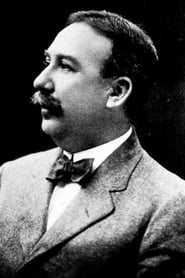
Edwin S. Porter, working as chief director for the Edison Manufacturing Company, was at the height of his creative powers when he made this comedy short. The film was likely shot in a single day using Edison's studio in the Bronx and on location in Manhattan. Porter was known for his innovative approach to storytelling, and the production demonstrates his early understanding of visual comedy and narrative continuity. The chase sequence required careful blocking and timing, as the actor had to maintain a believable pursuit while the camera captured the action. The film was processed at Edison's laboratory in West Orange, New Jersey, where the company maintained strict quality control over their products. Porter often worked with a small crew of technicians who were skilled in the demanding process of early film production, which required careful handling of flammable nitrate film stock and primitive camera equipment.
What critics said
Trade coverage around 1904 discussed Rector's to Claremont for pacing, clarity, and program fit rather than blockbuster grosses. Later writers value it as evidence of period style and as a reference point beside other films from the same era.
Did you know?
- the production was part of Edison's popular 'chase' comedy series, which helped establish the chase sequence as a staple of cinematic comedy
- Rector's was a famous high-end restaurant in New York City's Broadway theater district, making the film's location recognizable to contemporary audiences
- The film demonstrates Edwin S. Porter's early experiments with narrative continuity and spatial relationships in cinema
- Edison Manufacturing Company produced over 1,200 films between 1893 and 1918, with comedies like this being among their most profitable
- The film was shot on 35mm film using Edison's own patented equipment, including the Edison Vitascope for projection
- Porter was one of the first directors to recognize the comedic potential of chase sequences, which would later be perfected by Mack Sennett and Charlie Chaplin
- The film was likely accompanied by live musical accompaniment during exhibition, typically piano or small orchestra
- Edison films of this era were often rented to exhibitors for $10-15 per day, making them accessible to small theaters
- The film's title reflects the practice of naming films after their locations or actions, common in early cinema
- This short was produced during the same period as Porter's more famous works like 'The Great Train Robbery' (1903)
Visual style
The cinematography in 'Rector's to Claremont' reflects the state of the art in 1904, utilizing fixed camera positions typical of the era. The film was likely shot using Edison's own cameras, which were based on designs by William Kennedy Laurie Dickson. The cinematographer would have used natural lighting for exterior scenes and artificial lighting for any interior shots, employing the techniques available at the time to ensure adequate exposure. The camera work emphasizes clarity of action over artistic composition, as the primary goal was to clearly communicate the narrative to the audience. The chase sequence would have required careful framing to maintain visual continuity, demonstrating the growing sophistication of cinematic techniques in Porter's hands.
Innovations
While 'Rector's to Claremont' may not appear technically sophisticated by modern standards, it incorporated several important innovations for its time. The film demonstrates Porter's growing mastery of continuity editing, maintaining spatial and temporal relationships across different shots. The chase sequence required careful coordination between camera movement and actor performance, showing an understanding of cinematic space that was still developing in 1904. The film also utilized location shooting in New York City, which was becoming more common as equipment became more portable. Edison's proprietary film stock and processing techniques ensured relatively high image quality for the period, allowing the details of the actors' performances and the urban setting to be clearly visible to audiences.
Music
As with all films of this era, 'Rector's to Claremont' was produced as a silent work intended to be accompanied by live musical performance during exhibition. The typical accompaniment would have been provided by a pianist or small ensemble in the theater, who would select appropriate music to match the on-screen action. For a comedy like this, the accompanist might have chosen popular marches or light classical pieces to underscore the chase sequence, with more sedate music for the opening restaurant scene. The music was often improvised or drawn from published collections of 'photoplay music' that were beginning to appear for theater musicians. The choice of music could significantly affect the audience's experience, adding emotional depth and comedic timing to the visual narrative.
Famous quotes
No dialogue - silent film
Memorable scenes
- The opening scene showing well-dressed patrons leaving Rector's restaurant, the moment when the distracted gentleman realizes he's been left behind, the frantic chase through New York streets with the man running after the departing carriage, the exhausted arrival at the destination
What audiences thought
Early 20th-century audiences responded enthusiastically to chase comedies like 'Rector's to Claremont,' finding them both amusing and technically impressive. The film's simple premise and visual humor made it accessible to viewers of all backgrounds and literacy levels, which was crucial for cinema's appeal as a mass entertainment medium. The recognizable New York setting would have added to the film's appeal for urban audiences, while the universal theme of being left behind resonated with viewers across different social classes. Edison comedies were known to draw repeat business, as audiences enjoyed the predictable pleasure of well-executed physical comedy. The film likely played well in both vaudeville theaters, where it might have been part of a mixed bill, and dedicated nickelodeons that were beginning to appear in American cities.
Film connections
Influenced by
- Georges Méliès's trick films
- Edison's own earlier comedies
- British chase films
- Music hall comedy traditions
- Vaudeville physical comedy
This film influenced
- Later Edison chase comedies
- Biograph comedy shorts
- Mack Sennett's Keystone comedies
- Charlie Chaplin's chase sequences
- Harold Lloyd's urban comedies
Film restoration
The preservation status of 'Rector's to Claremont' is uncertain, as many Edison films from this period have been lost due to the deterioration of nitrate film stock. However, the Library of Congress and other film archives hold extensive collections of Edison films, and it's possible that copies or fragments may exist in these collections. The Museum of Modern Art's film archive also maintains a significant collection of early American films, including works by Edwin S. Porter. Film historians continue to search for lost films from this era in private collections and international archives.
Where to watch
- If preserved, the film may be available through the Library of Congress's digital collections
- The Museum of Modern Art's film study center may have viewing access
- Early cinema collections at university film archives
- Potential inclusion in DVD collections of Edison films or Edwin S. Porter's works
- Online archives specializing in early cinema such as the Internet Archive or European Film Gateway