Sioux Ghost Dance
"According Edison film historian."
Keys: Space play/pause · ←/→ 10s · F fullscreen · M mute · </> speed
About this film
According to Edison film historian C.
Cast & crew
More films like this

More Documentary films
View all →
More from William K.L. Dickson
View all →
More about this film
About the production
Release dateNovember 1894
ProductionEdison Manufacturing Company
Filmed inEdison's Black Maria Studio, West Orange, New Jersey
Filmed on September 24, 1894, at Edison's Black Maria studio using the Kinetograph camera. The performers were members of Buffalo Bill's Wild West Show who were brought to the studio specifically for this filming. The Black Maria, Edison's first film studio, was designed with a retractable roof to allow natural sunlight to illuminate the subjects, as electric lighting was not yet sufficient for film exposure. The camera was hand-cranked, and the entire film was shot in one continuous take, typical of early Edison productions.
Themes
Cultural DocumentationEthnographyNative American CultureSpiritual RitualsColonial Representation
Themes & topics
Ghost DanceSiouxNative AmericanCeremonyRitual DanceTraditional CostumeWar PaintEthnographic FilmSilent FilmDocumentary
Historical background
The 1894 premiere of Sioux Ghost Dance belongs to the broader shift toward narrative features and recognizable genres.
Why this film matters
Reference works on 1894 cinema cite Sioux Ghost Dance when tracing genre habits and studio economics.
Making of
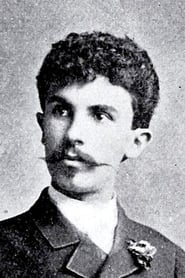
The production of 'Sioux Ghost Dance' took place during the early days of commercial filmmaking at Edison's revolutionary Black Maria studio. William K.L. Dickson, Edison's primary assistant in developing motion picture technology, personally operated the Kinetograph camera. The Native American performers were recruited from Buffalo Bill's Wild West Show, which was extremely popular at the time and employed numerous Native American actors. The studio had to be rotated on a circular track to follow the sun's movement across the sky, ensuring consistent lighting throughout the filming day. The performers wore authentic ceremonial costumes brought specifically for the filming, though historians note that the dance was likely adapted for the camera and may not have been a completely authentic representation of the Ghost Dance ceremony. The entire filming process would have been extremely challenging for the performers, who had to maintain their positions and movements under the hot studio lights and while being filmed by the noisy, bulky Kinetograph camera.
What critics said
Modern retrospectives screen Sioux Ghost Dance for craft context—pacing, performance, and camera choices of 1894.
Did you know?
- This film represents the first appearance of Native Americans in motion picture history
- The Ghost Dance was a religious movement that emerged in 1889 and was believed to restore Native American lands and ways of life
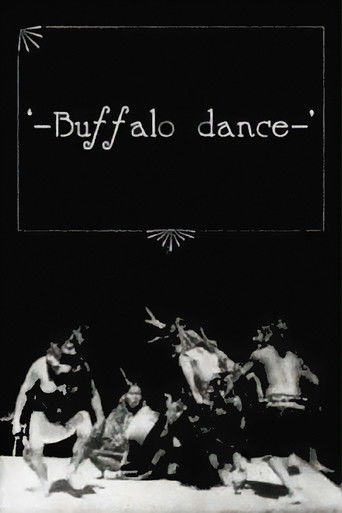
- The film was shot on the same day as 'Buffalo Dance,' another Edison short featuring Native American performers
- The performers were not actually Sioux but likely members of various tribes employed by Buffalo Bill's Wild West Show
- The original film was 40 feet long, which at Edison's standard 16 frames per foot would run approximately 16 seconds at 16 fps
- The film was part of Edison's 'Indian Pictures' series, which included several shorts featuring Native American performers
- The Ghost Dance movement was associated with the Wounded Knee Massacre in 1890, making this film historically significant
- Edison catalog listed the film at $7.50, a substantial price for the time
- The Black Maria studio was nicknamed the 'Doghouse' by Edison employees due to its appearance
- This film is preserved in the Library of Congress's paper print collection
Visual style
The cinematography of 'Sioux Ghost Dance' represents the state of the art in 1894 motion picture technology. Shot using Edison's Kinetograph camera, the film was captured on 35mm film using a continuous feed mechanism that Dickson had developed. The camera was hand-cranked, typically running at approximately 16 frames per second, though the exact speed could vary based on the operator. The entire film consists of a single static wide shot, with the camera positioned to capture the full group of dancers. The lighting was natural sunlight, directed into the Black Maria studio through its retractable roof and white-painted interior walls. The composition follows the conventions of early Edison films, with subjects positioned centrally in the frame to maximize visibility for Kinetoscope viewers. The visual style is characterized by its stark simplicity and the high contrast typical of early film emulsions. While technically primitive by modern standards, the cinematography successfully preserves the movements and costumes of the performers with remarkable clarity for the period.
Innovations
The film represents several significant technical achievements in early cinema history. It was produced using Edison's Kinetograph, one of the first practical motion picture cameras, which employed an intermittent mechanism to advance the film frame by frame. The Black Maria studio itself was an innovation, designed specifically for film production with its rotating base and retractable roof system to optimize natural lighting conditions. The film showcases the early use of 35mm film, which would become the industry standard for the next century. The synchronization of multiple performers in a single continuous take demonstrated the growing sophistication of early film production techniques. The preservation of the film through the Library of Congress's paper print collection also represents an important archival achievement, as early films were often lost due to the unstable nature of nitrate film stock. The film's existence today shows both the durability of early motion picture technology and the importance of systematic film preservation efforts.
Memorable scenes
- The opening shot reveals a group of Native American performers standing in formation, their bodies adorned in elaborate traditional costumes and distinctive war paint patterns. As the dance begins, the performers move in synchronized patterns, their bodies swaying and stepping in rhythm while maintaining the ceremonial poses characteristic of the Ghost Dance ritual. The camera captures the full spectacle of their movements, with feathers and traditional accessories creating dynamic visual patterns as they dance. The scene culminates with the performers completing the ceremonial sequence, their bodies frozen in final poses that showcase the intricate details of their ceremonial attire against the simple backdrop of Edison's studio.
What audiences thought
Original audience reception of 'Sioux Ghost Dance' would have been experienced through individual Kinetoscope viewing machines rather than collective theater screenings. Viewers in 1894 would have been fascinated by the novelty of seeing moving images, particularly of subjects they might have only read about or seen in photographs. The film appealed to the Victorian-era fascination with 'exotic' cultures and the popular interest in Native American life fueled by Buffalo Bill's Wild West Show. Contemporary audiences viewing the film today often express a mix of fascination at seeing such early footage and critical awareness of the colonial context in which it was made. The film has become an important historical document for Native American communities, providing rare visual evidence of their ancestors' cultural practices. Modern viewers frequently comment on the poignancy of seeing these performers preserved in motion picture history, knowing the challenges their communities would face in the decades that followed.
Film connections
Influenced by
- Edison's earlier experimental films
- Eadweard Muybridge's motion studies
- Étienne-Jules Marey's chronophotography
- Buffalo Bill's Wild West Show performances
- 19th-century ethnographic photography
This film influenced
- Buffalo Dance (1894)
- Indian Day School (1898)
- A Trip to the Moon (1902) - in its depiction of 'exotic' cultures
- Nanook of the North (1922) - as ethnographic documentary
- The Silent Enemy (1930) - early Native American narrative film
Film restoration
The film is preserved and available for viewing. It was saved through the Library of Congress's paper print collection, a process where early films were printed on paper for copyright registration purposes. These paper prints have been digitally restored and transferred back to film format. The film is part of the National Film Registry's collection of historically significant American films. Multiple copies exist in various archives, including the Library of Congress, the Museum of Modern Art's film collection, and several university film archives. The preservation quality is remarkably good considering the film's age, with clear images and stable framing throughout the 16-second runtime.
Where to watch
- Library of Congress website (loc.gov)
- YouTube (official Library of Congress channel)
- Internet Archive
- Museum of Modern Art film screenings
- Various educational film databases
- Kino Lorber's 'The Movies Begin' DVD collection
- Flicker Alley's 'Edison: The Invention of the Movies' DVD set