



Sita Sings the Blues
"Sita sings the blues across millennia."
Keys: Space play/pause · ←/→ 10s · F fullscreen · M mute · </> speed
About this film
Nina Paley braids the Ramayana exile of Sita, her own divorce, and commentary from three shadow-puppet narrators, scoring Sita's songs with 1920s jazz vocalist Annette Hanshaw. Animation styles shift between mythic watercolor, photo collage, and puppetry.
Cast & crew
More Animation films
View all →


More from Nina Paley
View all →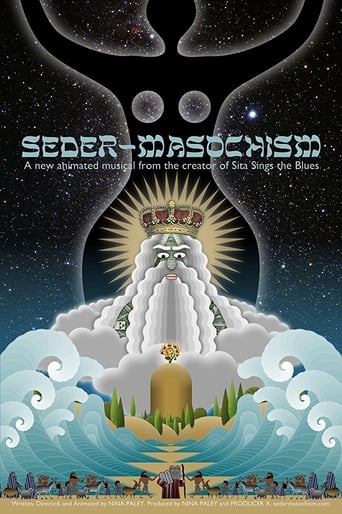
More about this film
About the production
Release dateFebruary 11, 2008 (Berlin International Film Festival premiere)
BudgetApproximately $50,000-$60,000, primarily self-funded by Nina Paley following her divorce
Box officeLimited theatrical release, but significant viewership through free online distribution
ProductionNina Paley's personal production
Filmed inCreated digitally from Nina Paley's home studio in New York
The film took five years to complete, with Paley working mostly alone and teaching herself Flash animation. The production faced significant copyright challenges with the Annette Hanshaw recordings, which ultimately led to Paley becoming an advocate for copyright reform and releasing the film under a Creative Commons Share-Alike license. The animation combines multiple distinct styles: colorful 2D animation for the Ramayana segments, photo collage for the contemporary narrative, and shadow puppet techniques for the narrators.
Themes
Love and betrayal across time and culturesFemale suffering and resilienceThe universality of human experienceArt as healing and transformationMythology as metaphor for personal experience
Themes & topics
Historical background
Paley self-financed the 2008 feature across five years, then released it under Creative Commons after costly music licensing battles.
Why this film matters
Sita Sings the Blues became a case study in independent animation and copyright reform advocacy.
Making of
Nina Paley created Sita Sings the Blues as a deeply personal project following her own divorce, during which she discovered the Ramayana and was struck by the parallels between Sita's story and her own experience. Working primarily from her home studio in New York, Paley taught herself Flash animation and spent five years crafting the film almost entirely by herself. The production process was marked by significant challenges, particularly regarding the music rights for Annette Hanshaw's 1920s jazz recordings. After spending considerable money on licensing fees and facing ongoing copyright complications, Paley made the revolutionary decision to release the film for free online under a Creative Commons license. This decision not only solved her distribution problems but also made her a prominent advocate for copyright reform. The film's innovative structure - weaving together three distinct visual and narrative styles - was developed organically as Paley sought to find the most effective way to tell her complex, multi-layered story.
What critics said
Berlin and Slamdance juries awarded the film; critics praised its wit even as some questioned its handling of Indian source material.
Did you know?
- Nina Paley created the entire film almost entirely by herself over five years while dealing with her divorce
- The film was inspired when Paley read the Ramayana while traveling in India and discovered parallels to her own marriage breakdown
- Paley had to pay over $50,000 in synchronization licensing fees for the Annette Hanshaw songs before deciding to release the film for free
- The three shadow puppet narrators were voiced by Aseem Chhabra, Bhavana Nagulapally, and Manish Acharya
- Paley learned Flash animation specifically to make , creating it on consumer-grade equipment
- The film's copyright struggles made Paley an activist for copyright reform and fair use in filmmaking
- The animation style changes between narrative threads - 2D animation for the myth, photo collage for the contemporary story, and shadow puppets for commentary
- Annette Hanshaw's recordings are from the 1920s but her estate initially demanded high licensing fees
- The film was released under a Creative Commons Attribution-Share Alike license, making it free to share and remix
- Paley initially couldn't find distributors willing to take on the film's copyright complications
Awards & recognition
- Grand Jury Prize for Best Animated Feature - Slamdance Film Festival 2008
- Special Jury Prize - Annecy International Animated Film Festival 2008
- Best Animated Feature - Gotham Awards 2008
- Excellence in Animation Award - RiverRun International Film Festival 2008
- Audience Award - Baltimore Women's Film Festival 2008
- Best Animation - Athens International Film Festival 2008
- Best Feature Animation - Fargo Film Festival 2008
- Jury Award for Best Animation - Oxford Film Festival 2008
Visual style
The film employs a sophisticated multi-style visual approach that distinguishes its three narrative threads while maintaining overall cohesion. The Ramayana segments feature vibrant, stylized 2D animation influenced by Indian miniature paintings and traditional art, with rich colors and fluid character movement. The contemporary autobiographical story uses photo collage techniques combined with simpler, more direct animation, creating an intimate documentary feel. The shadow puppet narrators utilize actual shadow puppet techniques adapted for animation, providing a traditional Indian storytelling aesthetic. These visual shifts are not merely stylistic choices but serve to help audiences navigate between different time periods and narrative perspectives. The animation, created primarily using Flash software, demonstrates remarkable technical skill and artistic vision, particularly considering it was mostly created by one person. The visual transitions between styles are seamless and purposeful, enhancing the film's thematic exploration of connections across time and culture.
Innovations
Sita Sings the Blues represents remarkable technical achievements, particularly considering it was created almost entirely by one person using consumer-grade software. Paley's innovative use of Flash animation allowed her to create professional-quality animation without the resources of a major studio. The film pioneered new techniques for seamlessly integrating archival audio with new animation, maintaining the authentic quality of 1920s recordings while synchronizing them perfectly with newly created visuals. The multi-style animation approach was technically challenging, requiring Paley to master different animation techniques and ensure they worked cohesively within a single narrative. Perhaps most significantly, the film's distribution model - releasing for free online under Creative Commons licensing - was groundbreaking and influenced many subsequent independent filmmakers. The technical solutions Paley developed for combining photo collage, traditional animation, and shadow puppet techniques within a digital workflow demonstrated new possibilities for independent animation production.
Music
The soundtrack of Sita Sings the Blues is built around the 1920s jazz recordings of Annette Hanshaw, whose songs provide the voice for Sita throughout the film. These recordings, primarily from 1927-1929, include songs like 'Who's That Knocking?', 'Moanin' Low,' and 'Mean to Me,' which Paley discovered perfectly matched Sita's emotional journey. The soundtrack also features original music composed by Todd Michaelsen, who collaborated with Paley on the score. Additional tracks include traditional Indian music and contemporary compositions that bridge the cultural divide. The innovative use of Hanshaw's recordings creates a unique temporal collision, placing 1920s American jazz in ancient India, yet somehow making it feel perfectly natural. The sound design effectively integrates the archival audio with the new animation, maintaining the vintage quality of the recordings while ensuring clarity. The soundtrack became so integral to the film's identity that the copyright struggles over these recordings nearly prevented the film's distribution.
Famous quotes
I'm a woman in love, and I'd do anything for you - I'm a woman in love, and I'll do anything for you.
Sita (singing via Annette Hanshaw)
The stories we tell ourselves about ourselves are the most powerful stories of all.
Shadow puppet narrator
Mythology is not a lie, mythology is metaphor. We need metaphors to help us understand things we can't understand literally.
Every woman has a story like Sita's - maybe not exactly the same, but something similar.
Nina Paley
The past is never dead. It's not even past.
When you're in love, you'll do anything. When you're not in love anymore, you'll do anything to get out.
Culture is not your property. It belongs to everyone.
Nina Paley (in interviews about the film)
Animation is just another way of drawing, and drawing is just another way of thinking.
Memorable scenes
- Sita's trial by fire (Agni Pariksha) animated in brilliant oranges and reds while Annette Hanshaw's 'Who's That Knocking' plays, creating a powerful fusion of ancient ritual and jazz-age emotion
- The three shadow puppet narrators explaining the cultural context of the Ramayana with humor and insight, breaking down complex mythological concepts for modern audiences
- The contemporary breakup scenes using photo collage of Nina Paley's actual emails and memories, creating an intimate documentary feel within the animated narrative
- Sita's exile into the forest with her two sons, animated in gentle greens and blues while Hanshaw's 'Moanin' Low' provides the emotional soundtrack
- The final sequence bringing all three narratives together in a powerful synthesis showing how personal pain connects to universal mythic patterns
- The opening sequence establishing the three parallel stories with different animation styles immediately showing the film's innovative approach
- The scene where Sita sings 'Mean to Me' to Rama, using 1920s jazz to express ancient emotions with surprising perfect fit
- The shadow puppets' explanation of why Rama exiled Sita, providing cultural context that Western audiences might miss
What audiences thought
Audiences embraced Sita Sings the Blues with enthusiasm, particularly after Paley made it available for free online. The film developed a strong cult following and has been viewed millions of times through various online platforms. Many viewers reported being deeply moved by the parallels between Sita's ancient story and Paley's contemporary experience, finding universal themes of love, betrayal, and resilience. The use of Annette Hanshaw's jazz vocals was particularly praised by audiences, with many discovering the singer for the first time through the film. Viewers appreciated how the animation made the complex Ramayana accessible and relevant to modern audiences. The film's open distribution model generated significant goodwill among audiences, who admired Paley's commitment to artistic freedom over commercial gain. Online communities formed around the film, with fans creating remixes, translations, and educational materials based on the work.
Film connections
Influenced by
- The Ramayana (ancient Indian epic)
- Annette Hanshaw's 1920s jazz recordings
- Disney animation techniques
- Indian miniature painting
- Traditional shadow puppet theater
- Personal documentary filmmaking
- Flash animation pioneers
- Feminist retellings of classic myths
- Creative Commons licensing movement
- Independent animation movements
This film influenced
- Various independent animated features using similar narrative structures
- Films released under Creative Commons licensing
- Works blending mythology with contemporary narratives
- Personal animation documentaries
- Cross-cultural animated projects
- Films addressing copyright issues in art
- Animated works with multiple visual styles
- Feminist animated features
Film restoration
Sita Sings the Blues has been excellently preserved through its digital distribution under Creative Commons licensing. Multiple high-quality versions exist online through the official website, Internet Archive, YouTube, and various other platforms. The film's open distribution model ensures its long-term preservation and accessibility, with numerous copies maintained by archives, libraries, and fans worldwide. Nina Paley continues to maintain and distribute high-quality versions of the film, ensuring its preservation for future generations. The Creative Commons licensing has also led to the creation of derivative works and translations, further ensuring the film's cultural preservation.
Where to watch
- Official website: sitasingstheblues.com
- Internet Archive (high-quality download)
- YouTube (official upload by Nina Paley)
- Vimeo (official upload)
- Various educational streaming platforms
- Available for free download under Creative Commons license
- Included in animation and film studies curricula at many universities