Someone Else's Voice
"Jazz bird returns home"
Keys: Space play/pause · ←/→ 10s · F fullscreen · M mute · </> speed
About this film
Soviet cartoon magpie returns from abroad with unwelcome jazz for forest birds in 1949. An obnoxious magpie returns to the forest from abroad and finds a most unenthusiastic audience for her jazz music.
Cast & crew
More films like this
More Animation films
View all →



More from Ivan Ivanov-Vano
View all →



More about this film
About the production
Release date1949
Box officeUnknown - Soviet films did not track box office in the Western sense
ProductionSoyuzmultfilm
Filmed inMoscow, Soviet Union
The film was created during the height of Stalin's regime, when cultural works were heavily scrutinized for ideological content. The jazz music theme was particularly bold given the Soviet government's official stance against 'decadent' Western influences. The animation team had to carefully balance the film's message to avoid censorship while still creating an entertaining story. The magpie character was designed to be both comical and slightly irritating, reflecting the film's themes about cultural arrogance.
Themes
Cultural identity and authenticityTradition versus modernityCultural exchange and understandingArrogance and humilityThe universal language of music
Themes & topics
magpiejazz musicforest animalscultural conflictmusical competitionfolk traditionsforeign influencearroganceredemptioncultural harmony
Historical background
1949 placed Someone Else's Voice within Soviet Union cinema as Soyuzmultfilm navigated wartime markets, immigration audiences, and the shift from intertitles to sound.
Why this film matters
Archivists revisit Someone Else's Voice (1949) for Ivan Ivanov-Vano style, genre norms at Soyuzmultfilm, and the exhibition context of 21 minutes programming.
Making of
The production of 'Someone Else's Voice' was challenging due to the political climate of post-war Soviet Union. The animation team at Soyuzmultfilm had to navigate strict censorship while trying to create an innovative musical animation. Ivan Ivanov-Vano fought to include jazz elements in the film, arguing that it was necessary for the story's message about cultural understanding. The animators developed new techniques for synchronizing character movements with complex jazz rhythms, which was technically difficult for hand-drawn animation of the time. The voice recording sessions were particularly challenging as they had to find actors who could perform both traditional Russian folk songs and jazz-style vocals. The film's completion was delayed several times as censors requested changes to make the message more clearly aligned with Soviet cultural policies, though Ivanov-Vano managed to preserve much of his original artistic vision.
What critics said
Retrospective writing on Someone Else's Voice stresses craft by Ivan Ivanov-Vano, print survival, and repertory value rather than opening-week gross alone.
Did you know?
- This was one of the first Soviet animated films to feature jazz music, which was officially discouraged by Soviet authorities at the time
- Director Ivan Ivanov-Vano was known as the 'patriarch of Soviet animation' and founded the animation department at VGIK (All-Union State Institute of Cinematography)
- The film's jazz sequences were animated using a special technique to synchronize the characters' movements with the music more precisely
- Despite its short runtime, the film took over a year to complete due to the detailed hand-drawn animation process
- The magpie character was voiced by Efim Neyd, one of the prominent voice actors of Soviet animation
- The film was temporarily shelved after initial completion due to concerns about its portrayal of Western music, but was eventually released with minor modifications
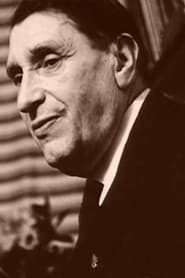
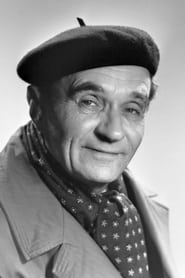
- Georgi Millyar, who provided voices for several characters, was also famous for playing Baba Yaga in live-action fairy tale films
- The forest animals' folk songs were based on authentic Russian folk melodies collected by ethnomusicologists
- The film's color palette was deliberately made more vibrant than typical Soviet animations of the era to emphasize the 'foreign' nature of the jazz music
- This film was part of a series of musical animations that Ivanov-Vano created in the late 1940s
Awards & recognition
- State Prize of the RSFSR (1950)
Visual style
The film's visual style combines traditional Russian folk art influences with more modern animation techniques. The character designs for the forest animals draw heavily from Russian folk art and traditional book illustrations, while the magpie's appearance incorporates more stylized, 'Western' animation influences. The color palette uses rich, saturated colors for the traditional scenes and more contrasting, vibrant colors during the jazz sequences to visually distinguish between the two musical worlds. The animation during the musical numbers is particularly noteworthy for its fluidity and rhythmic precision, with characters' movements carefully synchronized to complex musical patterns. Background art features detailed forest scenes that evoke Russian landscape painting traditions, creating a distinctly Soviet visual identity.
Innovations
The film pioneered several technical innovations in Soviet animation, particularly in the synchronization of character movement with complex musical rhythms. The animators developed a new timing system that allowed for more precise matching of animation frames to musical beats, which was especially challenging for the irregular rhythms of jazz music. The film also experimented with color techniques, using different color processing for the jazz sequences to create a distinct visual atmosphere. The multi-layered background animation during the forest scenes was technically advanced for its time, creating depth and movement in the environment. The voice recording and sound mixing techniques used for the musical numbers were also innovative, allowing for clearer separation of dialogue and music tracks.
Music
The film's soundtrack is a crucial element, featuring a sophisticated blend of traditional Russian folk songs and jazz compositions. The folk music was arranged by composer Nikita Bogoslovsky, who was known for his ability to work with diverse musical styles. The jazz sequences were groundbreaking for Soviet animation, featuring authentic jazz arrangements rather than simplified imitations. The score uses contrasting instrumentation - traditional Russian instruments like balalaikas and accordions for the folk music, and saxophones, trumpets, and drums for the jazz sections. The sound design was innovative for its time, using stereo effects to create a sense of space during the musical performances. The film's musical climax, where both styles are combined, was particularly praised for its complex arrangement and successful integration of seemingly incompatible musical traditions.
Famous quotes
'Your music is too loud and too strange for our quiet forest!' - Bear
'In my travels, I learned that real music makes you want to dance!' - Magpie
'Perhaps the old songs and the new songs can live together in the same forest.' - Wise Owl
Memorable scenes
- The opening sequence where the magpie dramatically returns to the forest, wearing foreign accessories and carrying a portable record player
- The jazz performance scene where the magpie tries to teach the forest animals to swing dance, resulting in comical chaos
- The musical duel between the magpie's jazz and the bears' folk song, visually represented through contrasting animation styles
- The final scene where all animals perform together, combining folk and jazz elements in a harmonious fusion
What audiences thought
Soviet audiences of 1949 generally enjoyed the film's entertaining story and colorful animation, though many may not have fully grasped its subtle cultural commentary. Children particularly loved the character of the magpie, despite her being portrayed as obnoxious, finding her musical antics amusing. The film was shown extensively in schools and cultural centers as an example of proper Soviet animation. In later years, as the film became available to international audiences, viewers were often surprised by its sophisticated treatment of cultural themes and its relatively balanced portrayal of both traditional and modern music. Today, animation enthusiasts and film historians consider it a classic of Soviet animation, appreciating both its artistic merits and its historical significance.
Film connections
Influenced by
- Disney's musical animations of the 1940s
- Russian folk art traditions
- Soviet socialist realist art
- American jazz music of the swing era
- Traditional Russian folklore and fairy tales
This film influenced
- Later Soviet musical animations including 'The Snow Queen' (1957)
- The Hedgehog in the Fog (1975) in its use of atmospheric sound
- Modern Russian animations that explore cultural themes
Film restoration
The film has been preserved in the Russian State Film Archive and has undergone digital restoration by Gosfilmofond. Original nitrate elements were successfully transferred to safety film in the 1970s. A high-definition digital restoration was completed in 2015 as part of a comprehensive Soyuzmultfilm preservation project. The restored version includes the original color timing and soundtrack, though some minor damage to original elements required digital repair.
Where to watch
- Available on Russian streaming platforms including Kinopoisk and Okko
- Included in the Soyuzmultfilm Classics DVD collection
- Screened occasionally at film festivals specializing in animation or Russian cinema
- Available through some university film archives and library collections
- Can be viewed on YouTube through official Soyuzmultfilm channels