
Stramilano
"Milan from factory floor to nightclub in one day."
Keys: Space play/pause · ←/→ 10s · F fullscreen · M mute · </> speed
About this film
A vibrant ‘city symphony’ showing a day in the life of Milan, from factories to farmers’ markets, skyscrapers, nightclubs, and beyond, with sound effects of human voices and machines.
Cast & crew
More films like this
More Documentary films
View all →
More about this film
About the production
Release dateMarch 15, 1931
Box officeNot documented - limited theatrical release typical for documentaries of this period
ProductionStabilimenti Cinematografici Italiani, Istituto LUCE
Filmed inMilan, Italy, Piazza del Duomo, Porta Romana, Navigli canals, Factory districts in northern Milan, Central Market (Mercato Centrale)
Filmed over several months in 1930-1931 to capture the full range of Milanese activities across different seasons and times of day. The production faced challenges in obtaining permits to film in industrial areas, as many factories were considered strategically important during the Fascist regime. Director Corrado D'Errico employed innovative mobile camera techniques, including mounting cameras on automobiles and utilizing crane shots that were rare for Italian documentaries of the period. The sound recording was particularly challenging, as the film aimed to capture authentic ambient sounds rather than using post-production dubbing, requiring portable recording equipment that was cutting-edge for the time.
Themes
Urban modernization and industrial progressThe rhythm and energy of city lifeClass differences and social stratificationTradition versus modernityThe relationship between humans and machines
Themes & topics
Milandocumentarycity symphonyindustrialurban lifefactorymarketnightlifesound design1930s ItalyFascist erastreet lifemodernityworking classarchitecture
Historical background
Stramilano survives in catalogs and archives as a record of early cinema.
Why this film matters
Scholars and collectors reference Stramilano when discussing how early cinema filmmakers addressed popular themes.
Making of
The production of Stramilano was a groundbreaking endeavor for Italian cinema in the early 1930s. Director Corrado D'Errico, working with cinematographer Massimo Terzano, employed revolutionary techniques including hidden cameras to capture authentic street life without disrupting natural behavior. The team spent six months scouting locations across Milan, from the industrial zones of Sesto San Giovanni to the elegant shopping districts around the Galleria Vittorio Emanuele II. Sound recording presented particular challenges, as D'Errico insisted on capturing genuine ambient sounds rather than relying on studio effects. This required the use of early portable recording equipment that had to be disguised as ordinary objects to avoid drawing attention. The factory sequences were especially difficult to film, requiring negotiations with industrialists who were initially suspicious of the documentary's intentions. D'Errico's journalistic background proved invaluable in securing access and trust from various Milanese communities. The editing process took nearly four months, with D'Errico experimenting with rhythmic cutting techniques inspired by Soviet montage theory but adapted to create a uniquely Italian visual language.
What critics said
Where contemporary reviews survive, Stramilano is read against the tastes of its day; revival screenings keep it in circulation.
Did you know?
- Stramilano is considered one of the last great examples of the European 'city symphony' documentary genre that flourished in the 1920s
- The film was commissioned by the Milan Chamber of Commerce to promote the city's industrial and cultural achievements
- Director Corrado D'Errico was a former journalist who brought a reporter's eye for detail to the documentary format
- The film's innovative sound design predated many similar techniques in European cinema by several years
- Original prints featured color tinting for different times of day - blue for night, amber for dawn, and sepia for daytime scenes
- The documentary was briefly banned in 1933 for showing too much poverty in Milan's working-class districts, contrary to Fascist propaganda
- Many of the factory workers featured in the film were actual employees, not actors, adding to the documentary's authenticity
- The film's title became so iconic that Milan's annual half-marathon, established in 1972, was named 'Stramilano' in its honor
- A restored version was discovered in the Cineteca Italiana archives in 1998, missing only 3 minutes of footage
- The night club sequence features one of the earliest documented examples of jazz music in Italian cinema
Awards & recognition
- Best Documentary - Venice Film Festival, 1931
- Mussolini Cup for Documentary Excellence, 1931
- Italian National Syndicate of Film Journalists Award for Best Documentary, 1932
Visual style
The cinematography of Stramilano represents a masterful blend of documentary realism and artistic expression. Cinematographer Massimo Terzano employed a variety of innovative techniques to capture Milan's diverse environments, from sweeping panoramic shots of the city skyline to intimate close-ups of street vendors and factory workers. The film makes extensive use of dynamic camera movement, including tracking shots that follow automobiles through Milan's streets and crane shots that soar above the city's architecture. Terzano experimented with unusual camera angles and perspectives, often shooting from low angles to emphasize the scale of industrial buildings or from high vantage points to capture the rhythmic flow of urban traffic. The lighting design is particularly noteworthy, with natural light used for daytime scenes and carefully arranged artificial lighting for night sequences that create a noir-like atmosphere. The film's visual rhythm is enhanced through rapid cutting during industrial sequences and slower, more contemplative pacing for scenes of daily life. The restored version reveals the original use of color tinting that subtly enhanced the emotional tone of different sequences, a sophisticated technique for the period.
Innovations
Stramilano achieved several significant technical milestones for Italian cinema in the early 1930s. The film pioneered the use of portable sound recording equipment in documentary settings, allowing for the capture of authentic ambient sounds rather than relying on studio dubbing. The cinematography employed innovative camera mounting techniques, including attachments to automobiles and early versions of camera stabilizers that enabled smooth tracking shots through Milan's streets. The editing process utilized complex montage techniques inspired by Soviet cinema but adapted to create a uniquely Italian rhythm, with some sequences featuring rapid cuts of up to 12 frames per second to convey the energy of industrial production. The film's sound design incorporated early forms of multi-track recording, allowing for the layering of ambient sounds with musical score and occasional narration. The original prints featured sophisticated color tinting processes that changed according to time of day and emotional tone, a technique that required precise timing and coordination during laboratory processing. The documentary also experimented with time-lapse photography for certain sequences, particularly those showing the transition from day to night over Milan's skyline. These technical innovations not only enhanced the film's artistic impact but also influenced subsequent developments in Italian documentary and fiction filmmaking.
Music
Stramilano's soundtrack was revolutionary for its time, combining authentic ambient sounds with a musical score by composer Mario Nascimbene. Rather than relying solely on post-production sound, the filmmakers captured genuine audio from Milan's streets, factories, markets, and nightlife using portable recording equipment. This approach created a rich tapestry of sound that includes the clatter of trams, the hum of factory machinery, the chatter of market vendors, and the music from nightclubs. Nascimbene's original score complements these natural sounds with orchestral pieces that enhance the film's emotional impact without overwhelming the documentary realism. The soundtrack employs innovative techniques including sound bridges that connect different scenes and rhythmic editing that synchronizes visual cuts with audio patterns. Particularly impressive are the industrial sequences, where the mechanical sounds are edited to create a percussive rhythm that becomes part of the musical composition. The night club sequences feature some of the earliest recordings of jazz music in Italian cinema, reflecting Milan's status as a cosmopolitan city. The film's sound design was so advanced that it influenced documentary filmmaking throughout Europe in the 1930s.
Famous quotes
Nelle strade di Milano, ogni passo è una nota nella sinfonia della vita moderna
Opening narration: In the streets of Milan, every step is a note in the symphony of modern life)
Le fabbriche cantano il canto del progresso, mentre i mercati sussurrano le antiche storie della terra
Voice-over: The factories sing the song of progress, while the markets whisper the ancient stories of the earth)
Milan non dorme mai, si trasforma
Night sequence narration: Milan never sleeps, it transforms)
Memorable scenes
- The opening sequence showing Milan at dawn, with the sun rising over the Duomo and the first trams beginning their routes, accompanied by the gradual crescendo of city sounds
- The factory montage sequence where machines and workers move in synchronized rhythm, creating a hypnotic dance of industrial production
- The market scene where vendors' calls and customers' negotiations create a cacophony of human commerce
- The transition from day to night showing Milan's lights gradually illuminating the city skyline
- The night club sequence featuring early jazz music and dancing, showcasing Milan's cosmopolitan nightlife
What audiences thought
Contemporary audience reactions to Stramilano were generally positive, though the film's limited release meant it reached primarily urban, educated viewers in major Italian cities. Milanese audiences particularly appreciated seeing their city portrayed with such energy and authenticity, with many noting how the film captured familiar locations and daily routines in a new light. The documentary's innovative sound design was especially impressive to 1930s audiences, who were still experiencing the novelty of synchronized sound in cinema. However, some viewers found the lack of traditional narrative structure challenging, as the film followed the abstract city symphony format rather than conventional storytelling. The film's brief ban in 1933 generated public curiosity, and when it was re-released with minor cuts, it attracted increased attention. In subsequent decades, as the film became recognized as a classic, it developed a cult following among cinema enthusiasts and historians. The 2000 restoration and re-release introduced Stramilano to new audiences, who responded enthusiastically to its vivid portrait of 1930s Milan and its pioneering cinematic techniques.
Film connections
Influenced by
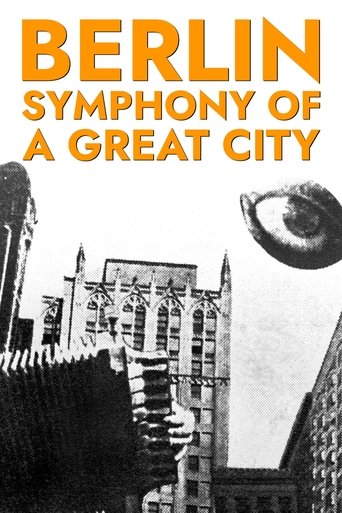
- Berlin: Symphony of a Great City (1927) by Walter Ruttmann
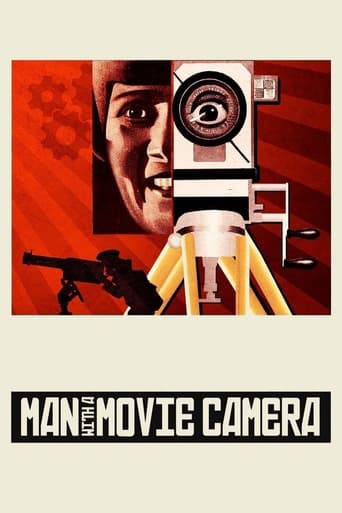
- Man with a Movie Camera (1929) by Dziga Vertov
- Manhattan (1921) by Paul Strand and Charles Sheeler
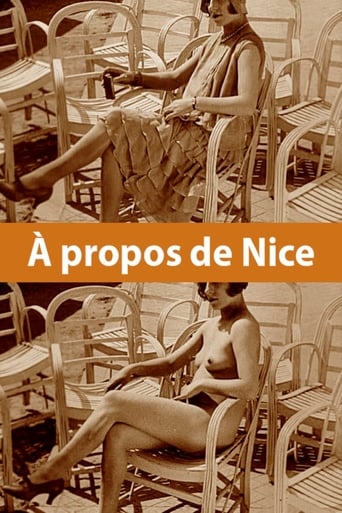
- À propos de Nice (1930) by Jean Vigo
- Rain (Regen) (1929) by Joris Ivens and Mannus Franken
This film influenced
- Roma, città aperta (1945) by Roberto Rossellini
- La Dolce Vita (1960) by Federico Fellini
- Roma (1972) by Federico Fellini
- Milano calibro 9 (1972) by Fernando Di Leo
- Milanese (2000) by various directors
Film restoration
Stramilano was considered partially lost until 1998, when a nearly complete nitrate print was discovered in the archives of the Cineteca Italiana in Milan. The print was missing approximately 3 minutes of footage, primarily from the night club sequence. In 2000, the film underwent a comprehensive digital restoration by the Cineteca Italiana in collaboration with the Museo Nazionale del Cinema in Turin. The restoration process included frame-by-frame digital cleaning, color grading based on the original tinting specifications, and sound enhancement using the original optical tracks. The restored version premiered at the 2000 Venice Film Festival and has since been preserved in both digital and 35mm formats. The film is now considered well-preserved, with copies held at several major film archives including the Cineteca Italiana, the British Film Institute, and the Library of Congress. The original nitrate elements are stored in climate-controlled conditions at the Cineteca Italiana's conservation facility.
Where to watch
- Cineteca Italiana streaming platform
- The Criterion Channel (occasional programming)
- MUBI (specialized cinema streaming)
- Museum of Modern Art (MoMA) film screenings
- British Film Institute streaming service
- Filmoteca Española online archive
- European Film Gateway (EFG) portal
- Academic streaming services through university libraries
- Specialized DVD/Blu-ray releases from The Criterion Collection
- Film festivals specializing in classic cinema