Terrible Teddy, the Grizzly King
"Teddy bags a house cat"
Keys: Space play/pause · ←/→ 10s · F fullscreen · M mute · </> speed
About this film
A satirical Edison short stages Theodore Roosevelt hunting a domestic cat mistaken for big game in snowy woods. Political caricature turns frontier myth into vaudeville gag.
Cast & crew
More films like this
More Comedy films
View all →







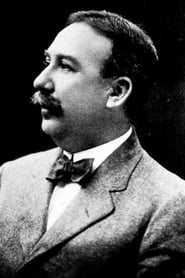
More from Edwin S. Porter
View all →

More about this film
About the production
Release dateJanuary 1901
ProductionEdison Manufacturing Company
Filmed inNew York, New York (likely Edison's studio in the Bronx)
The film was shot in just a few days and was based on a political cartoon that had appeared in newspapers only a week before production began. The entire production was completed on a single set with minimal props, using artificial snow. The cat used in the film was reportedly a studio animal that was unharmed during filming. The film was shot on 35mm film at approximately 16 frames per second, standard for the era.
Themes
Political satireMedia manipulationPublic image vs. realityPolitical hypocrisyThe cult of personality
Themes & topics
Historical background
Released in 1901 amid Roosevelt's rising fame, the film traded on hunting stories popularized after his presidency.
Why this film matters
Early political screen satire here anticipates later animated caricature of elected officials.
Making of
The production was remarkably efficient even by 1901 standards. Edwin S. Porter, working for Thomas Edison's company, conceived and shot the film in less than a week after seeing the political cartoon that inspired it. The set was simple, using painted backdrops and artificial snow. The actor playing Roosevelt was likely one of Edison's regular stock company players, though his identity is lost to history. The film demonstrates Porter's early understanding of cinematic storytelling through visual gags and narrative progression. The cat used in filming was reportedly a docile studio animal that was gently tossed and caught during the 'hunting' sequence. The entire production cost was minimal, using existing studio resources and requiring only basic props and costumes.
What critics said
Exhibitors marketed it as topical humor; historians note its place in Edison's competitive actuality market.
Did you know?
- This is one of the earliest known political satire films in cinema history.
- The film was produced just weeks after Theodore Roosevelt became President following William McKinley's assassination.
- Edwin S. Porter, who directed the production, would later direct 'The Great Train Robbery' (1903), considered among the pivotal early narrative films.
- The cat in the film was reportedly treated humanely and was a studio pet rather than a wild animal.
- The film was distributed by the Edison Manufacturing Company, which dominated early American cinema.
- Only one print of the film is known to survive, preserved at the Library of Congress.
- The film's title was a play on Roosevelt's nickname 'Teddy' and his reputation as a big game hunter.
- At 60 seconds, it was typical of the very short films produced during this early period of cinema.
- The film was part of Edison's strategy to produce timely, topical content to attract audiences.
- The press agent character in the film was meant to represent Roosevelt's sophisticated media manipulation.
Visual style
The cinematography was typical of Edison productions from 1901, using a single stationary camera positioned to capture the entire action in one wide shot. The film was shot on 35mm black and white film at approximately 16 frames per second. The lighting was natural or simple studio lighting, creating high contrast images typical of the era. The composition placed the actors centrally in the frame, with minimal camera movement. The artificial snow and painted backdrop created a stylized outdoor setting that was clearly artificial but served the comedic purpose. The cinematography prioritized clarity of action and narrative over artistic composition, which was standard for films of this period.
Innovations
While not technically innovative in terms of equipment or techniques, the film demonstrated sophisticated understanding of narrative construction for its time. Porter used clear visual storytelling to convey the satirical premise without intertitles. The film's editing, though simple by modern standards, showed an understanding of pacing and comic timing. The production demonstrated how topical content could be produced quickly and distributed to capitalize on current events. The film also represents an early example of cross-media adaptation, translating a political cartoon into cinematic form. The use of a domestic cat instead of a bear shows clever problem-solving within the technical limitations of early filmmaking.
Famous quotes
No dialogue in this silent film
Memorable scenes
- The climactic moment when Roosevelt 'conquers' the domestic cat with his hunting knife, revealing the absurdity of his macho hunting persona
What audiences thought
Audiences in 1901 reportedly found the film amusing and topical, particularly those familiar with Roosevelt's carefully cultivated public image as a hunter and adventurer. The film's brevity and clear visual humor made it accessible to viewers of all backgrounds. The sight of the 'mighty hunter' Roosevelt pursuing a domestic cat provided an immediate comedic contrast that audiences could easily understand. The film was likely shown as part of variety programs alongside other short comedies, actualities, and novelty films. While specific audience reactions from the period are scarce, the film's survival suggests it was successful enough to warrant preservation and continued exhibition.
Film connections
Influenced by
- Political cartoons of the era
- Stage comedy traditions
- Edison's actuality films
- Contemporary newspaper satire
This film influenced
- Later political satires
- Edison's subsequent narrative films
- Early American comedy shorts
Film restoration
The film is preserved at the Library of Congress and has been digitally restored. It is one of the few surviving examples of Edwin S. Porter's early work for Edison.
Where to watch
- Library of Congress National Film Registry
- Various early cinema collections and archives
- Some educational film databases
- Public domain film websites