The Battle of San Pietro
"San Pietro — paid in blood"
Keys: Space play/pause · ←/→ 10s · F fullscreen · M mute · </> speed
About this film
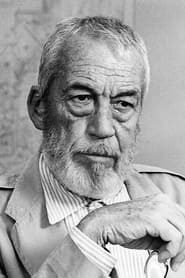
John Huston documents the 1943 battle for San Pietro, Italy, where over 1,100 Americans died securing a village road. Army Signal Corps footage became a frank combat documentary after censorship fights.
Cast & crew
More films like this
More War films
View all →

More from John Huston
View all →
More about this film
About the production
Release dateApril 23, 1945 (New York premiere)
Box officeNot applicable (government-produced documentary)
ProductionU.S. Army Signal Corps, War Department
Filmed inSan Pietro Infine, Italy, Monte Cassino area, Italy, Southern Italy
Filmed during actual combat operations in December 1943 using combat cameramen. Huston and his crew took extraordinary risks, filming under fire from both sides. The original footage was so graphic that the Army initially suppressed it for domestic distribution. The film used actual combat footage combined with staged scenes shot after the battle for clarity. Production faced challenges including equipment damage from shellfire and the constant danger of filming in active combat zones.
Themes
The brutal reality of warHuman cost of military conflictSacrifice and lossThe futility of combatMilitary leadership and responsibility
Themes & topics
World War IIItalian CampaignCombat documentaryMilitary strategyCasualtiesVillage destructionAllied forcesGerman resistanceMountain warfareArmy infantry
Historical background
The Battle of San Pietro (1945) released as Allies entered final push and public demanded war truth.
Why this film matters
Huston's realism influenced postwar combat documentary and his own fiction war films.
Making of
John Huston, already an established Hollywood director before the war, was commissioned as a major in the Army Signal Corps. He and his combat camera crew arrived at San Pietro during the actual battle and filmed under extreme danger, often within yards of enemy positions. The production involved six camera operators who risked their lives to capture the footage. After the battle, Huston returned to film additional scenes with the 143rd Infantry Regiment to clarify tactical movements. The Army's initial rejection of the film led to a contentious battle between Huston and military officials. Eventually, with support from General George Marshall, the film was approved for limited release. Huston had to fight to keep his original cut intact, resisting pressure to make it more propagandistic.
What critics said
Military censors initially balked; critics later hailed its unflinching editing. Academy preserved it in 2005.
Did you know?
- The film was initially banned by the U.S. Army for being too depressing and potentially harmful to morale
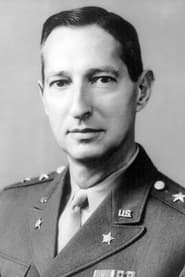
- General Mark Clark, who appears in the film, initially opposed its release but later changed his stance
- John Huston was serving as a major in the U.S. Army Signal Corps when he directed the film
- The documentary was shown to troops in Europe but not to American civilians until after the war
- Huston used multiple cameras to capture different angles of the same combat sequences
- Some scenes were recreated after the battle using actual soldiers who participated in the fighting
- The film's graphic content was unprecedented for American audiences at the time
- Frank Capra, head of the Army's film unit, initially rejected the film for domestic release
- The Italian village shown was completely destroyed and never rebuilt in its original location
- Huston later said this was the best film he ever made
Awards & recognition
- Added to the National Film Registry in 1991
- Academy Honorary Award nomination (though not officially nominated, recognized for its historical significance)
- New York Film Critics Circle Award for Best Documentary (1945)
Visual style
The cinematography was groundbreaking for its time, featuring handheld camera work in active combat zones. The film used multiple 35mm cameras to capture different perspectives of the same events. Cinematographers employed wide-angle lenses to convey the scale of destruction and close-ups to show human suffering. The black-and-white photography emphasized the stark reality of battle, with high contrast creating dramatic impact. The camera work often appears shaky and chaotic, reflecting the dangerous conditions under which it was filmed. The visual style influenced subsequent war documentaries with its emphasis on authenticity over polished composition.
Innovations
The film pioneered several technical innovations in documentary filmmaking. It was among the first to use synchronous sound recording in combat situations, capturing both visual and audio reality simultaneously. The production developed portable camera equipment that could withstand battlefield conditions. Multiple camera coverage of the same events allowed for more comprehensive documentary storytelling. The film's editing techniques, particularly its use of long takes and minimal cutting, created a sense of immediacy and authenticity. These technical achievements established new standards for combat photography and influenced documentary filmmaking for decades.
Music
The film features a minimalist score composed by Dimitri Tiomkin, who also contributed to other wartime documentaries. The music is sparse and somber, used primarily to underscore emotional moments rather than drive the narrative. Much of the soundtrack consists of natural sounds recorded on location: artillery fire, rifle shots, military commands, and the cries of wounded soldiers. The sound design was revolutionary for its time, capturing authentic combat audio that had never been heard by civilian audiences. The limited musical accompaniment enhances the documentary's realism and emotional impact.
Famous quotes
This is not a picture of glory, for there is no glory in battle. There is only tragedy.
The dead we honor, but the living we must help.
War is not a game. It is a business of killing.
The price of victory is sometimes higher than we imagine.
Memorable scenes
- The opening sequence showing the devastated village landscape with ruins and abandoned military equipment
- The real combat footage of soldiers advancing under fire across open fields
- The medical evacuation scenes showing wounded soldiers being carried to aid stations
- The final shots of the village's complete destruction and the few surviving civilians returning
- The scenes of military chaplains conducting funeral services for fallen soldiers
What audiences thought
Initial audience reception was mixed due to the film's graphic content, which shocked many Americans accustomed to sanitized war news. Some viewers found it too depressing and questioned whether such realism was appropriate during wartime. However, veterans and military families often praised its authenticity. Over time, as the generation that lived through World War II passed, the film gained appreciation as an important historical document. Modern audiences viewing it in historical context generally receive it as a powerful anti-war statement and invaluable record of combat reality.
Film connections
Influenced by
- The Spanish Earth (1937)
- Why We Fight series (1942-1945)
- London Can Take It! (1940)
- Target for Tonight (1941)
- With the Marines at Tarawa (1944)
This film influenced
- The Anderson Platoon (1966)
- Hearts and Minds (1974)
- The Fog of War (2003)
- Restrepo (2010)
- Korengal (2014)
- Armstrong (2019)
Film restoration
Preserved by the Academy Film Archive in 2005. The film is part of the National Film Registry, selected for preservation in the United States National Film Registry by the Library of Congress as being 'culturally, historically, or aesthetically significant.' Original 35mm elements are maintained at the Academy Film Archive and the National Archives. Digital restoration completed in 2010 by the National Film Preservation Foundation.
Where to watch
- Available on The Criterion Channel
- Streaming on Kanopy (with library card)
- Included in the Criterion Collection DVD/Blu-ray 'John Huston: The War Years'
- Available on YouTube via the National Archives
- Accessible through the Library of Congress's digital collections
- Streaming on Amazon Prime Video
- Available for educational viewing through various university film archives