The Burglar's Slide for Life
"A burglar escapes from the apartment he's robbing by sliding down."
Keys: Space play/pause · ←/→ 10s · F fullscreen · M mute · </> speed
About this film
A burglar escapes from the apartment he's robbing by sliding down the clothesline, but in the end he's caught by the family dog.
Cast & crew
More films like this
More Comedy films
View all →







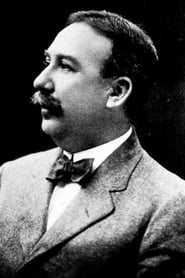
More from Edwin S. Porter
View all →


More about this film
About the production
Release dateFebruary 1905
ProductionEdison Manufacturing Company
Filmed inNew York, New York, Edison Studio, Bronx, New York
Filmed during Edison's peak production period, this short comedy utilized practical effects and stunt work typical of Porter's innovative approach. The clothesline slide sequence required careful setup and timing, representing an early example of action-comedy in cinema. The production likely used Edison's own studio facilities with constructed sets to simulate the apartment building exterior.
Themes
Crime and punishmentUrban anxietyComic justiceIngenious escapesDomestic security
Themes & topics
Historical background
Viewers in 1905 encountered The Burglar's Slide for Life alongside competing releases that were collectively teaching new cinematic grammar.
Why this film matters
Restorations and festival bookings keep The Burglar's Slide for Life visible among classic-film communities.
Making of
Edwin S. Porter, who had recently achieved fame with 'The Great Train Robbery' (1903), continued his exploration of crime-themed narratives with this short comedy. The production utilized Edison's indoor studio facilities with constructed exterior sets, a common practice to control lighting and weather conditions. The clothesline slide sequence required careful engineering to ensure the performer's safety while creating a convincing visual spectacle. The film was shot quickly, as was typical for Edison productions of this era, with minimal takes and straightforward camera setups. Porter's experience as a cameraman and projectionist informed his practical approach to filmmaking, focusing on clear visual storytelling that would play well to audiences of all backgrounds.
What critics said
Specialist critics today emphasize preservation when a viewable copy of The Burglar's Slide for Life survives.
Did you know?
- This film was part of Edwin S. Porter's prolific 1905 output, during which he directed approximately 50 films for Edison
- The clothesline slide effect was achieved using a real performer sliding down a rigged line, one of the earliest examples of stunt work in American cinema
- The film was shot on 35mm film using Edison's own proprietary equipment and film stock
- Like many Edison films of this era, it was likely accompanied by live music or sound effects during exhibition
- The dog in the film represents one of the earliest uses of an animal character as a plot device in American cinema
- This film was distributed through Edison's network of exchanges and licensed exhibitors across the United States
- The original film was tinted by hand in some copies, a common practice for Edison productions to add visual appeal
- Porter often used burglary themes in his comedies, reflecting contemporary urban anxieties about crime in growing cities
Visual style
The film was photographed using Edison's own 35mm cameras with fixed positioning typical of the era. The cinematography employed static wide shots to capture the full action, particularly important for the clothesline slide sequence. The lighting was natural or studio-lit to ensure clear visibility of the action. The composition followed Porter's characteristic approach of staging action within the frame for maximum clarity and impact. The camera work was straightforward but effective, allowing audiences to clearly follow the narrative progression from burglary to escape to capture.
Innovations
The film's clothesline slide sequence represents an early example of stunt work in American cinema, requiring careful rigging and performer coordination. The production utilized Edison's improved film stock and camera equipment, benefiting from the company's continuous technical innovations. The film demonstrates Porter's growing mastery of narrative construction within the constraints of early cinema technology. The seamless integration of interior and exterior scenes (even when shot on studio sets) showed advancing techniques in continuity and spatial relationships in film.
Music
As a silent film, it would have been accompanied by live musical performance during exhibition. Typical accompaniment might have included piano or organ music, with popular tunes of the era or improvisation to match the on-screen action. Sound effects might have been provided by theater staff, particularly during the escape sequence. No specific musical score was composed for the film, as was standard practice for Edison productions of this period.
Memorable scenes
- The climatic clothesline slide sequence where the burglar dramatically escapes down the line between buildings, only to be thwarted by the alert family dog - an early example of action-comedy spectacle in American cinema
What audiences thought
The film was well-received by contemporary audiences who appreciated its blend of crime, comedy, and spectacle. The clothesline slide sequence was particularly popular with viewers, representing the kind of thrilling visual entertainment that early cinema audiences sought. The film's clear narrative and satisfying resolution where the criminal is caught aligned with the moral expectations of the time. Like many Edison productions of this era, it circulated widely through the company's distribution network and was a reliable attraction for vaudeville theaters and dedicated nickelodeons that were beginning to emerge in 1905.
Film connections
Influenced by
- The Great Train Robbery (1903)
- European chase comedies
- Stage melodramas
- Vaudeville routines
This film influenced
- Later chase comedies
- Keystone comedies
- Slapstick films of the 1910s
- Burglar-themed comedies
Film restoration
The film survives in archives, with copies held at the Library of Congress and the Museum of Modern Art. Some versions exist as paper prints deposited for copyright purposes, which have been transferred back to film. The preservation status is considered good for a film of this era, though original camera negatives are likely lost.
Where to watch
- Library of Congress National Screening Room
- Museum of Modern Art film collection
- Various early cinema compilation DVDs
- Online archives specializing in public domain films
- Academic film collections