
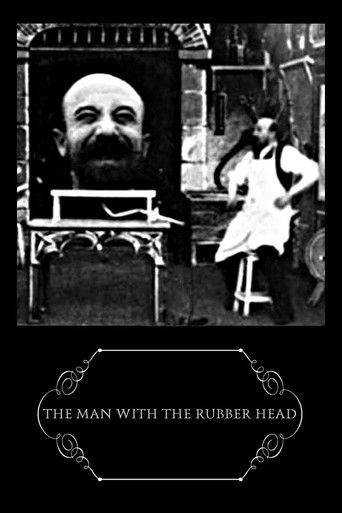
The Cook's Revenge
"a cook attempts to kiss a waitress"
Keys: Space play/pause · ←/→ 10s · F fullscreen · M mute · </> speed
About this film
In a kitchen, a cook attempts to kiss a waitress, and she drops a whole stack of plates in her surprise. The panicking cook, hearing the head waiter coming, hides in a cupboard. He sticks his head out to hear the waiter's remonstrances about the broken plates, and the waiter slams the cupboard door shut.
Cast & crew
More films like this
More Comedy films
View all →







More from Georges Méliès
View all →
More about this film
About the production
Release date1900
Box officeUnknown - box office records from 1900 are not preserved
ProductionStar Film Company
Filmed inMéliès Studio, Montreuil-sous-Bois, France
Filmed using Méliès's innovative substitution splicing technique for the decapitation effect. The cook's head removal was accomplished through careful editing and multiple exposures, a technique Méliès pioneered. Like many of his films from this period, it was likely shot in a single day on one of Méliès's elaborately painted stage sets. The film features painted backdrops and theatrical props typical of Méliès's stage magic background.
Themes
RevengeMagical transformationClass conflictSupernatural justiceTheatrical magic
Themes & topics
Historical background
The Cook's Revenge (1900) emerged during the earliest years of motion pictures. In a kitchen, a cook attempts to kiss a waitress, and she drops a whole stack of plates in her surprise. Archival records and catalog entries help place the work within film-history surveys of the period.
Why this film matters
Preserved under Wikidata ID Q3520391, The Cook's Revenge is valued as a screen drama within catalog and archive collections. Wikipedia's "The Cook's Revenge" entry connect it to broader histories of cinema exhibition and restoration.
Making of
Georges Méliès, a former magician and theater owner, brought his stage magic expertise to cinema with this film. The production took place in his glass-walled studio in Montreuil, where he could control lighting for his special effects. The decapitation sequence required precise timing - the actors had to freeze perfectly while Méliès stopped the camera, removed the actor playing the cook, and resumed filming with the 'headless' version. The film was shot on 35mm film using a Pathé camera, and Méliès personally oversaw every aspect of production from set design to final editing. Like many of his works, the film featured elaborate hand-coloring by teams of women artists working assembly-line style in Méliès's workshop.
What critics said
Trade and archival sources offer limited day-one review coverage for The Cook's Revenge. Modern reception rests on its availability in collections, repertory screenings, and reference works that document 1900 cinema.
Did you know?
- This film is one of over 500 short films Georges Méliès created between 1896 and 1913
- The decapitation effect was achieved using substitution splicing, a technique Méliès accidentally discovered when his camera jammed
- Like many Méliès films, it was hand-colored frame by frame for special screenings
- The film was distributed internationally by Méliès's Star Film Company with catalog number 278
- Méliès often played multiple roles in his films, though it's unclear if he appears in this one
- The film represents Méliès's fascination with magical transformations and bodily dismemberment themes
- Early cinema audiences were often shocked and delighted by the seemingly impossible effects in films like this
- The cook character was likely inspired by theatrical clown and pantomime traditions
- This film was part of Méliès's series of kitchen and restaurant-themed comedies
- The film was likely screened at Méliès's Théâtre Robert-Houdin in Paris before international distribution
Visual style
The film employs Méliès's characteristic static camera position, typical of early cinema where the camera functioned as a theater audience member. The visual style features theatrical lighting and painted backdrops that create a stage-like atmosphere. Méliès used multiple exposure techniques and substitution splicing to create the magical effects. The composition is carefully staged to maximize the impact of the special effects, with the action arranged in the flat, theatrical space that Méliès preferred. The cinematography emphasizes spectacle over realism, creating a dreamlike quality that enhances the fantasy elements.
Innovations
The film showcases Méliès's pioneering work in special effects, particularly substitution splicing for the decapitation sequence. This technique involved stopping the camera, making changes to the scene, and then resuming filming to create instantaneous transformations. The film also demonstrates early use of multiple exposure and careful editing to create magical effects. Méliès's work on this film contributed to the development of continuity editing and visual effects that would become fundamental to cinema. The hand-coloring process, while labor-intensive, added visual appeal and helped distinguish Méliès's premium films from competitors.
Music
As a silent film, it originally had no synchronized soundtrack. During theatrical screenings, it would have been accompanied by live music, typically a pianist or small orchestra playing popular tunes of the era or improvised music to match the on-screen action. The musical accompaniment would have emphasized the comedic and fantastical elements of the story. Modern restorations often feature period-appropriate musical scores to recreate the authentic viewing experience.
Memorable scenes
- The shocking decapitation sequence where the cook's head is mysteriously removed using substitution splicing, creating an impossible illusion that would have stunned early 20th-century audiences
What audiences thought
Early 1900s audiences were reportedly thrilled and sometimes frightened by Méliès's magical effects. The decapitation scenes were particularly sensational for viewers who had never seen such impossible imagery on screen. The film was popular in both France and internationally, as evidenced by its distribution through Méliès's Star Film Company. Modern audiences viewing the film today often appreciate it as a historical artifact and marvel at the ingenuity of the effects given the technological limitations of the era.
Film connections
Influenced by
- Stage magic traditions
- Pantomime theater
- Commedia dell'arte
- Gothic literature
- French theatrical traditions
This film influenced
- The Haunted Castle (1896)
- The Infernal Cauldron (1903)
- The Kingdom of the Fairies (1903)
- The Impossible Voyage (1904)
Film restoration
The film exists in archives and is considered preserved, though like many Méliès films, some versions may be incomplete or damaged. Multiple copies exist in film archives worldwide, including the Cinémathèque Française and other major film preservation institutions. Some versions retain the original hand-coloring, while others exist only in black and white.
Where to watch
- Available on various streaming platforms specializing in classic cinema
- Included in Méliès film collections on DVD/Blu-ray
- Accessible through film archive websites
- Featured in museum exhibitions on early cinema
- Available on YouTube through authorized channels