
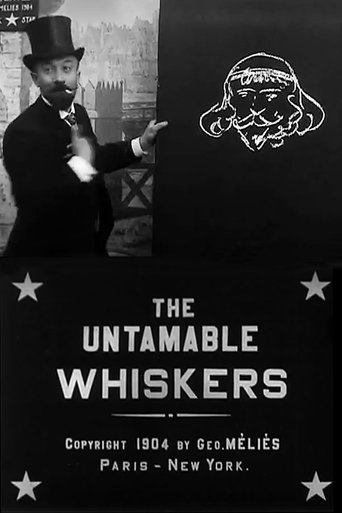
The Doctor's Secret
"Hydrotherapy machine assemble."
Keys: Space play/pause · ←/→ 10s · F fullscreen · M mute · </> speed
About this film
Doctors blow to pieces a patient in a hydrotherapy machine and re-assemble him.
Cast & crew
More films like this
More Fantasy films
View all →




More from Georges Méliès
View all →

More about this film
About the production
Release date1910
Box officeUnknown
ProductionStar Film Company
Filmed inMéliès Studio, Montreuil-sous-Bois, France
was produced during Méliès' later period when he was facing increasing competition from other filmmakers. The dismemberment and reassembly effects would have been achieved through multiple exposures, substitution splices, and careful choreography. Méliès likely used his signature theatrical backdrop and painted scenery to create the medical setting.
Themes
Themes & topics
doctorsblowpiecespatienthydrotherapymachineassemble
Historical background
Made around 1910, The Doctor's Secret engaged audiences already fluent in doctors blow to pieces a patient in a hydrotherapy machine and re-assemble him as a screen subject.
Why this film matters
Reference works on 1910 cinema cite The Doctor's Secret when tracing genre and regional production patterns.
Making of
Production details for The Doctor's Secret are sparse in surviving records. Direction is attributed to Georges Méliès.
What critics said
Audience data from 1910 is sparse; reception for The Doctor's Secret is inferred from reissue and archival interest.
Did you know?
- Directed by Georges Méliès.
- Production country: France.
- Release year commonly listed as 1910.
- The Doctor's Secret (French: Hydrothérapie fantastique) is a 1909 French silent trick film by Georges Méliès.
- TMDB identifier: 194077.
Visual style
The film features Méliès' characteristic theatrical cinematography with static camera positions and deep staging. The visual style emphasizes the artificiality of the setting through painted backdrops and theatrical props. The cinematography serves the special effects rather than attempting realism, with careful attention to lighting and composition to enable the multiple exposure techniques. The camera work is functional and precise, designed to capture the magical transformations without drawing attention to the technical methods.
Innovations
The film Méliès' pioneering special effects techniques, particularly substitution splices for the dismemberment and reassembly effects. The multiple exposure photography required precise timing and coordination. The film demonstrates Méliès' mastery of in-camera effects that created illusions impossible to achieve on stage. The reverse photography used for the reassembly sequence was particularly innovative for its time and required careful planning and execution.
Music
As a silent film, it would have been accompanied by live music during exhibition. The accompaniment might have ranged from piano to small orchestra, with music chosen to match the dramatic and comedic elements of the story. Méliès often provided musical suggestions with his films, and this one likely called for both dramatic music during the explosion and lighter, magical themes during the restoration sequence.
Memorable scenes
- The explosive dismemberment of the patient in the hydrotherapy machine, with body parts flying in all directions; The systematic reassembly sequence where doctors piece the patient back together like a puzzle; The final reveal of the completely restored patient walking away unharmed
What audiences thought
Patrons who saw The Doctor's Secret during initial runs judged it alongside other silent film releases of the day.
Film connections
Influenced by
- Stage magic traditions
- Grand Guignol theater
- Medical quackery shows
- Commedia dell'arte
This film influenced
- Later body horror films
- Medical comedy films
- Fantasy transformation sequences in cinema
Film restoration
Like many Méliès films from this period, preservation status is uncertain. Many of his films were lost due to neglect and the melting of his film stock for celluloid during World War I. However, some Méliès films have been rediscovered and restored by film archives. The current preservation status of this specific film would need to be verified with major film archives.
Where to watch
- Check with major film archives like the Cinémathèque Française, Museum of Modern Art, or the British Film Institute
- Possible inclusion in Méliès film collections on DVD/Blu-ray
- May be available through specialized streaming services focusing on classic cinema