
The Enchanted Sedan Chair
"Palace conjuring in color"
Keys: Space play/pause · ←/→ 10s · F fullscreen · M mute · </> speed
About this film
Court magician Segundo de Chomón materializes costumes, a dandy, and an ornate sedan chair in this 1905 Pathé féerie. Chomón's hand-colored tricks display Spanish-born craftsmanship within French production.
Cast & crew
More films like this
More Fantasy films
View all →

More from Georges Méliès
View all →


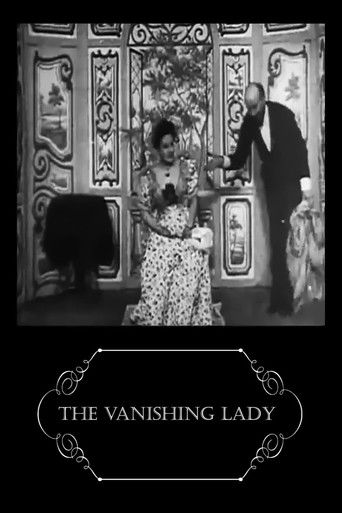
More about this film
About the production
Release date1905
ProductionStar Film Company
Filmed inMontreuil, Seine-Saint-Denis, France
Filmed in Méliès's glass studio in Montreuil, which allowed for natural lighting and the elaborate set construction required for his fantasy films. The production utilized Méliès's multiple exposure techniques and substitution splices to create the magical materialization effects. The sedan chair prop was likely constructed in Méliès's workshop, where he built many of his own sets and props. The film was shot on 35mm film using a hand-cranked camera, typical of the era.
Themes
Magic and illusionTransformationSocial class and statusTheatrical performanceSupernatural power
Themes & topics
magiciantransformationsedan chairpalanquinmaterializationcourtmagicillusiondandyfantasy
Historical background
Chomón worked extensively for Pathé, extending Méliès-style illusion with refined stencil color and design.
Why this film matters
represents an important milestone in the development of fantasy and special effects cinema. Méliès's work, including The Enchanted Sedan Chair, established many conventions of the fantasy genre that would influence filmmakers for decades. The film demonstrates how early cinema could create impossible visions that theater could not achieve, showcasing the unique power of the medium. Méliès's influence can be traced through the works of later fantasy and science fiction filmmakers, from the German Expressionists to modern directors like Tim Burton and Terry Gilliam. The film also represents the cross-pollination of theatrical magic and cinematic technology, showing how performance traditions adapted to new media. As one of over 500 films Méliès created, it contributed to establishing cinema as a vehicle for imaginative storytelling rather than just documentary recording.
Making of
The Enchanted Sedan Chair was created during what many consider the peak of Georges Méliès's creative period (1902-1906). Méliès, a former theatrical magician, brought his stage experience to cinema, treating each film as a magical performance. The glass container effect would have required precise timing - Méliès would stop the camera, place the costume in the container, then restart filming to create the illusion of spontaneous materialization. The sedan chair's appearance likely used the same substitution technique combined with smoke effects for added theatricality. Méliès's studio in Montreuil was essentially a theater space with a glass roof, allowing him to use natural lighting while maintaining complete control over his productions. The film was shot on a single camera setup, with all effects created in-camera rather than in post-production, as editing technology was virtually nonexistent at the time.
What critics said
Restoration advocates praise Chomón's visual invention; The Enchanted Sedan Chair is a standard reference in studies of European trick cinema.
Did you know?
- was released by Méliès's Star Film Company and was cataloged as number 658-659 in their production list
- The film presents Méliès's signature substitution splice technique, which he perfected through his background as a stage magician
- Like many of Méliès's films, it was hand-colored frame by frame for special releases, though most surviving copies are in black and white
- The transparent glass container effect was achieved using careful timing and multiple exposures, a technique Méliès pioneered
- Méliès played the role of the magician himself, as he did in many of his films
- The film was part of Méliès's series of court and royal-themed fantasies that were popular in the early 1900s
- At 3 minutes, this was considered a relatively long film for its time, when most films were under 2 minutes
- The dandy character represents the bourgeois class that was often satirized in French entertainment of the period
- The sedan chair (palanquin) was a symbol of exoticism and luxury in early 20th century French culture
- was likely exported internationally through Méliès's American and British distribution networks
Visual style
The cinematography in The Enchanted Sedan Chair reflects Méliès's characteristic theatrical approach. The film was shot using a static camera positioned to capture the entire stage-like set, allowing audiences to see all the magical transformations clearly. Méliès used deep focus to ensure both foreground and background elements remained sharp, essential for his complex visual effects. The lighting would have been primarily natural, coming through the glass roof of his studio, creating the bright, even illumination typical of his work. The film employed multiple exposure techniques to create the materialization effects, requiring precise timing and camera control. The composition is deliberately theatrical, with actors positioned as if on a stage rather than using naturalistic framing.
Innovations
The Enchanted Sedan Chair presents several of Méliès's technical innovations. The film features sophisticated substitution splices, where Méliès would stop the camera, make changes to the scene, then resume filming to create the illusion of instantaneous transformation. The materialization effects required precise multiple exposure techniques, allowing objects to appear seemingly from nowhere. Méliès also employed dissolves and fade-outs to enhance the magical atmosphere. The film demonstrates his mastery of in-camera effects, as post-production editing was extremely limited in 1905. The creation of the transparent glass container effect involved careful manipulation of props and timing, representing an early form of what would become known as practical effects in cinema.
Music
As a silent film from 1905, The Enchanted Sedan Chair was originally presented without a synchronized soundtrack. During initial screenings, the film would have been accompanied by live music, typically a pianist or small orchestra playing popular pieces of the era or improvising to match the on-screen action. The musical accompaniment would have emphasized the magical elements with dramatic flourishes during the transformation scenes. In modern restorations and presentations, contemporary composers often create new scores using period-appropriate instruments and styles. Some versions may feature classical pieces from the early 1900s that were commonly used in cinema exhibitions of the time.
Memorable scenes
- The magical materialization of the elegant costume from within the transparent glass container, showcasing Méliès's mastery of substitution effects and theatrical timing
- The dramatic appearance of the ornate sedan chair materializing from thin air, complete with smoke effects and elaborate visual flourish
What audiences thought
Early 20th century audiences were captivated by Méliès's magical films, which were popular attractions at fairgrounds and music halls throughout Europe and America. The Enchanted Sedan Chair would have been received as a delightful piece of visual magic, with viewers marveling at the seemingly impossible transformations. The film's courtly setting and elegant imagery appealed to the bourgeois audiences who frequented early cinema venues. However, as cinema evolved toward more complex narratives, audiences began to prefer films with stronger story development over pure spectacle. Modern audiences viewing the film today often appreciate it as a historical artifact and a demonstration of early cinematic creativity, though its simple plot and primitive effects may seem quaint compared to contemporary fantasy films.
Film connections
Influenced by
- Stage magic traditions
- Victorian theatrical productions
- Jean-Eugène Robert-Houdin's magic performances
- Fairy tale literature
- Commedia dell'arte
This film influenced
- Later fantasy films by Méliès
- German Expressionist fantasy films
- Disney's animated fantasy shorts
- Terry Gilliam's visual style
- Tim Burton's gothic fantasies
Film restoration
Like many of Méliès's films, The Enchanted Sedan Chair has survived through various prints and fragments. The film exists in the archives of several institutions including the Cinémathèque Française and the Museum of Modern Art. Some versions show signs of deterioration typical of early nitrate film, but preservation efforts have helped maintain this important work of early cinema. Hand-colored versions may exist in specialized collections, though most surviving copies are in black and white. The film has been digitally restored as part of various Méliès retrospectives and collections.
Where to watch
- Available on various DVD collections of Georges Méliès's work
- Streaming on archive.org and public domain film sites
- Included in the Flicker Alley collection 'Georges Méliès: First Wizard of Cinema'
- Available through some educational film databases and university collections
- Featured in museum exhibitions about early cinema