
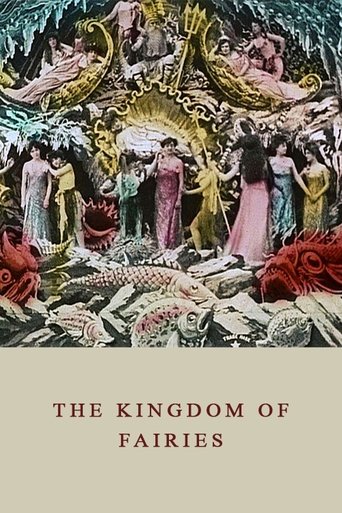
The Good Shepherdess and the Evil Princess
"Evil tantrum throwing princess."
Keys: Space play/pause · ←/→ 10s · F fullscreen · M mute · </> speed
About this film
A good shepherdess is persecuted by an evil, tantrum-throwing princess. A good fairy decides to intervene, and dishes out quite a bit of retribution.
Cast & crew
More films like this
More Fantasy films
View all →

More from Georges Méliès
View all →
More about this film
About the production
Release date1908
Box officeBox office records from 1908 are not preserved, but Méliès films were commercially successful across Europe and America
ProductionStar Film Company
Filmed inMéliès Studio, Montreuil-sous-Bois, France
Filmed in Méliès's glass-walled studio using theatrical sets painted on flats. The film utilized multiple exposure techniques, substitution splices, and dissolves to create the magical transformations. Méliès himself often appeared in his films, though in this case he likely played one of the magical characters rather than the female leads. The hand-coloring was done by a team of women workers in Méliès's studio using stencils, a laborious process that added significant value to the prints.
Themes
Good versus evilSocial justiceMagical interventionClass conflictMoral retribution
Themes & topics
fairy talemagictransformationrevengeprincessshepherdessfairy godmotherjealousytantrummoral lesson
Historical background
By 1908, competing studios crowded weekly bills, and The Good Shepherdess and the Evil Princess had to win attention alongside newsreels and shorts.
Why this film matters
Surviving prints of The Good Shepherdess and the Evil Princess help researchers study how 1908-era filmmakers solved storytelling with limited means.
Making of
The production took place in Méliès's innovative glass studio in Montreuil-sous-Bois, which allowed natural lighting to illuminate the theatrical sets. Méliès, a former magician, brought his stage experience to filmmaking, using trap doors, wires, and pulleys to create the magical effects. The actresses wore elaborate costumes designed by Méliès himself, who had a background in theater design. The hand-coloring process involved dozens of female workers meticulously applying color to each frame using stencils, a technique that made Méliès films particularly valuable in the early cinema market. The film was shot on 35mm film using a Debrie camera, and Méliès likely served as his own cinematographer, as was his practice for most of his productions.
What critics said
Press files from 1908 rarely give The Good Shepherdess and the Evil Princess extended review space; mentions appear in roundup columns.
Did you know?
- This film was released under the French title 'La Bergère et le Ramoneur' in some markets, showing Méliès's practice of retitling films for different regions
- The film was part of Méliès's prolific 1908 output, during which he made over 50 films despite declining fortunes
- Hand-colored versions of the film commanded premium prices from exhibitors, sometimes costing double the black-and-white prints
- The evil princess character was likely played by Jehanne d'Alcy, one of Méliès's frequent collaborators and later his second wife
- The fairy godmother character represented one of Méliès's favorite archetypes, appearing in numerous films throughout his career
- Like many Méliès films, this was likely exported to America through his brother Gaston's Star Film Company in New York
- The film's special effects were achieved entirely in-camera, as Méliès famously rejected post-production manipulation
- The tantrum-throwing princess scene required elaborate stage machinery to create the chaotic effects
- This film represents Méliès's mature style, combining his early trick film techniques with more developed narrative storytelling
- The shepherdess character embodied the idealized rural innocence that was popular in French culture of the early 1900s
Visual style
The cinematography reflects Méliès's theatrical approach, with static camera positions and deep focus to capture the entire stage-like setting. The film uses multiple exposure techniques to create ghostly appearances and magical transformations. Substitution splices (jump cuts) allow characters to appear and disappear instantly. Dissolves create dreamlike transitions between scenes. The hand-coloring adds visual richness, with particular attention to the fairy's magical effects and the princess's royal costumes.
Innovations
The film showcases Méliès's mastery of in-camera special effects, including multiple exposure, substitution splices, and dissolves. The elaborate hand-coloring process represents among the leading sophisticated examples of early film coloring. The use of theatrical machinery for special effects demonstrated the fusion of stage magic with cinematic techniques. The film's relatively complex narrative for its period showed advancement in cinematic storytelling beyond simple trick films.
Music
As a silent film, it would have been accompanied by live musical performance in theaters. Typical accompaniment might include piano or organ music, with selections from popular classical pieces or original improvisations. The score likely included dramatic music for the princess's tantrums, delicate melodies for the shepherdess scenes, and magical-sounding themes for the fairy's appearances. Some larger theaters might have employed small orchestras for more elaborate presentations.
Famous quotes
As a silent film, dialogue was conveyed through intertitles and pantomime rather than spoken quotes
Memorable scenes
- The princess's spectacular tantrum scene where she throws objects and creates chaos through special effects
- The fairy's dramatic entrance with magical sparkles and transformations
- The final retribution sequence where the princess receives her just deserts through elaborate magical means
- The peaceful opening scene establishing the shepherdess's innocence and connection to nature
What audiences thought
Audiences of 1908 responded enthusiastically to the film's magical elements and clear moral narrative. The combination of visual spectacle and emotional storytelling made it popular with both children and adults. In America, the film was particularly successful in vaudeville theaters where it served as part of variety programs. The hand-colored versions were especially prized by exhibitors who could charge higher admission prices for the enhanced visual experience.
Film connections
Influenced by
- Traditional European fairy tales
- Victorian children's literature
- Theatrical stage magic
- French folk tales
- Grand Guignol theater
This film influenced
- Disney's Snow White and the Seven Dwarfs (1937)
- The Wizard of Oz (1939)
- Cinderella (1950)
- Sleeping Beauty (1959)
- Contemporary fantasy films featuring fairy godmothers
Film restoration
Several prints survive in film archives including the Cinémathèque Française and the Museum of Modern Art. Some hand-colored versions exist, though many are in varying states of preservation. The film has been restored by various archives and is available on DVD compilations of Méliès's work. Digital restorations have helped preserve the elaborate hand-coloring for modern audiences.
Where to watch
- Available on DVD collections such as 'Georges Méliès: First Wizard of Cinema'
- Streaming on The Criterion Channel
- Available on YouTube through official archive channels
- Included in the Flicker Alley collection 'Méliès: The Magician'
- Accessible through various film archive websites including the Cinémathèque Française's online collection