
The Great Silence
"Azar is studying literature at Jundishapur School of Ahwaz."
Keys: Space play/pause · ←/→ 10s · F fullscreen · M mute · </> speed
About this film
Azar leaves her sister, and marries a young student named Homayoun. When Homayoun realizes the relative proportions of Azar is studying literature at Jundishapur School of Ahwaz. His sister, Parvin, has been separated from his husband Jamshid and has been drawn to the wrongdoers.
Cast & crew
More films like this
More from Mahmoud Kushan
View all →
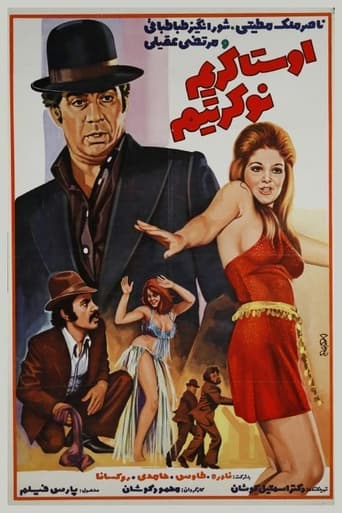
More about this film
About the production
Release date1977
ProductionPars Film
Filmed inLikely filmed in and around Ahwaz, Iran
Very limited production information is available for this film. It appears to be an Iranian drama from the pre-revolutionary period of Iranian cinema, which was experiencing a cultural renaissance at the time.
Themes
Family dynamicsMoral choicesSocial consequencesEducation and societyBrother-sister relationships
Themes & topics
Iranian cinemaFamily dramaSocial issues1970s IranLiterature studentBrother-sister relationshipMarriage problems
Historical background
Made in 1977, in Iran, under Mahmoud Koushan, The Great Silence belongs to feature filmmaking in a period of shifting exhibition and production models.
Why this film matters
Within feature history, Mahmoud Koushan's name attaches to the work; 1977 film by Mahmoud Kushan.
Making of
Unfortunately, detailed behind-the-scenes information about this film is not widely available in documented sources. The film appears to be part of the Iranian New Wave cinema movement that was gaining prominence in the 1970s, which often focused on social issues and family dynamics. The pre-revolutionary Iranian film industry was producing many socially conscious dramas during this period, though many films from this era have limited international documentation.
What critics said
Contemporary reviews of The Great Silence are sparse in open sources; later catalog entries chiefly summarize plot and credits.
Did you know?
- Should not be confused with the famous 1968 Italian spaghetti western 'The Great Silence' directed by Sergio Corbucci
- The Jundishapur School mentioned in the plot refers to the ancient Academy of Gundishapur, a major center of learning in ancient Persia
- Released during the final years of the reign of Mohammad Reza Pahlavi, just before the 1979 Iranian Revolution
- Very little documentation about this film exists in international cinema databases
- The cast includes notable Iranian actors of the 1970s era
Memorable scenes
- The confrontation between Azar and Parvin about her life choices
- The deterioration of Azar and Homayoun's marriage
- Azar's studies at Jundishapur School representing intellectual pursuit
What audiences thought
Audience reception information is not readily available in documented sources. Iranian cinema in the 1970s had a growing domestic audience, though many films from this period have become obscure due to the political changes that followed the 1979 revolution and the subsequent transformation of Iran's film industry.
Film restoration
The preservation status of this film is unknown. Many Iranian films from the pre-revolutionary era face preservation challenges due to political changes, limited archival resources, and the passage of time. Some films from this period have been lost or exist only in poor quality copies.
Where to watch
- It might be accessible through specialized Iranian film archives or cinema studies collections.