
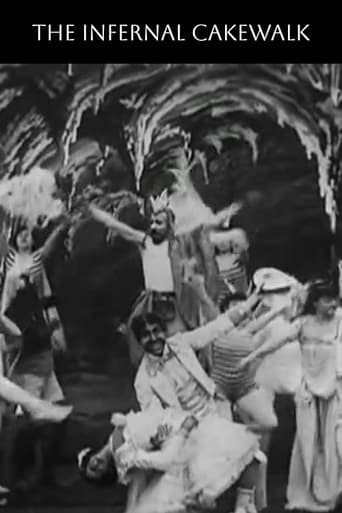
The Infernal Cauldron
"It was released by Méliès's Star Film Company and is numbered 499–500 in its catalogues"
Keys: Space play/pause · ←/→ 10s · F fullscreen · M mute · </> speed
About this film
A green-skinned demon places a woman and two courtiers into a flaming cauldron. It was released by Méliès's Star Film Company and is numbered 499–500 in its catalogues.
Cast & crew
More films like this
More Fantasy films
View all →

More from Georges Méliès
View all →


More about this film
About the production
Release date1903
Box officeUnknown - box office records from this era were not systematically maintained
ProductionStar Film Company
Filmed inMontreuil, Seine-Saint-Denis, France (Méliès' studio garden)
Filmed in Méliès' glass-walled studio in Montreuil using his signature theatrical backdrops and special effects techniques. The cauldron scene required multiple exposures and careful timing of pyrotechnic effects. Méliès painted the scenery himself and used his extensive collection of theatrical props and costumes. The transformation effects were achieved through substitution splicing and careful editing.
Themes
Supernatural evilTransformationMagical powerDemonic controlDeath and rebirth
Themes & topics
Historical background
The Infernal Cauldron (1903) circulated in the first decade of projected cinema. It was released by Méliès's Star Film Company and is numbered 499–500 in its catalogues. Contemporary trade papers and later preservation notes document its place among nickelodeon and cinema-club programs.
Why this film matters
The Infernal Cauldron remains accessible to researchers and viewers as a screen title in museum, archive, and streaming collections. Programmers cite it when tracing regional production history and surviving early prints.
Making of
Georges Méliès filmed this short in his purpose-built glass studio in Montreuil, which allowed him to control lighting conditions for his complex special effects. The demon makeup required hours of application, and Méliès would often perform in multiple takes due to the technical demands of the effects sequences. The skeleton transformation involved creating papier-mâché skeleton costumes that could be worn over the actors, then removed during editing to create the illusion of reassembly. The cauldron flames were created using cotton soaked in alcohol, lit carefully between takes. Méliès' background as a magician at the Théâtre Robert-Houdin heavily influenced his approach to cinematic illusions, treating the camera as an extension of his stage magic techniques.
What critics said
Day-one reviews for The Infernal Cauldron are sparse in digitized press archives; later criticism treats it as a reference point for 1903 cinema programming and preservation.
Did you know?
- This film was released as 'Le Chaudron Infernal' in France and cataloged as Star Film #433-434
- The demon character was one of Méliès' most frequent roles, appearing in numerous films throughout his career
- The skeleton transformation sequence was considered particularly advanced for its time, requiring precise multiple exposure techniques
- Méliès' green makeup was created using theatrical greasepaint, which was notoriously difficult to remove
- The film was hand-colored in some releases, a laborious process where each frame was individually painted
- Like many Méliès films, it was designed to be shown with live musical accompaniment and possibly a narrator
- The cauldron prop was reused in several other Méliès productions, including 'The Kingdom of the Fairies'
- This film was part of Méliès' series of 'demon' films that were particularly popular with audiences
- The dance sequences were choreographed by Méliès himself, who had background in theater performance
- The film was distributed internationally, with copies sent to the United States through Méliès' American distribution network
Visual style
The cinematography reflects Méliès' theatrical background, with static camera positions and compositions reminiscent of stage presentations. The film was shot using a single camera positioned to capture the entire scene, allowing audiences to witness the magical transformations without distraction. Méliès employed multiple exposure techniques to create the appearance and disappearance effects, while substitution splicing enabled the transformation sequences. The lighting was carefully controlled in his glass studio to ensure the visibility of the special effects and maintain consistent exposure across the multiple takes required for the complex sequences. The visual style emphasizes spectacle over realism, with painted backdrops and theatrical props creating a deliberately artificial world.
Innovations
The film showcases Méliès' mastery of early special effects techniques, particularly substitution splicing and multiple exposure. The skeleton transformation sequence required precise timing and careful editing to create the illusion of magical reassembly. The pyrotechnic effects in the cauldron scene demonstrated Méliès' innovative approach to creating dangerous-looking effects safely. The film also features sophisticated makeup and costume effects for the demon character, which were groundbreaking for the period. Méliès' use of painted backdrops and theatrical props represented an early form of production design that would influence later narrative cinema. The disappearance effect at the film's conclusion utilized a puff of smoke effect that became one of Méliès' signature techniques.
Music
As a silent film, 'The Infernal Cauldron' was originally accompanied by live musical performance, typically piano or organ music. The specific musical scores were not standardized, leaving accompaniment to the discretion of individual theater musicians. Méliès' films were often accompanied by dramatic, classical-style music that emphasized the supernatural elements of the narrative. Some venues employed narrators or 'bonimenteurs' who would explain the action to audiences, particularly for films with complex visual effects. Modern restorations typically feature newly composed scores that attempt to capture the spirit of early 20th-century cinema accompaniment.
Memorable scenes
- The climactic transformation sequence where the demon extracts skeletons from the cauldron and magically reassembles them into living beings, a technical marvel of early cinema that showcases Méliès' mastery of substitution splicing and multiple exposure techniques.
What audiences thought
Audiences in 1903 reportedly responded enthusiastically to the film's shocking imagery and magical effects. The demon character and the transformation sequences were particularly popular with viewers, who were still amazed by cinema's ability to create impossible visions. The film was a commercial success in both French and international markets, where Méliès had established distribution networks. Contemporary accounts describe audiences gasping at the skeleton transformation sequence and applauding the final disappearance effect. The film's blend of horror and spectacle appealed to the working-class audiences who frequented early cinema venues, while its technical sophistication impressed more sophisticated viewers.
Film connections
Influenced by
- Stage magic and illusion shows
- Gothic literature
- Theatrical melodrama
- Opera and ballet
- Occult and demonology texts
- Phantasmagoria shows
This film influenced
- Later horror films featuring demonic transformations
- Fantasy films with magical effects
- Surrealist cinema of the 1920s
- German Expressionist horror films
- Modern fantasy special effects sequences
Film restoration
The film survives in multiple copies, including hand-colored versions, and has been preserved by various film archives including the Cinémathèque Française and the Museum of Modern Art. Several restoration projects have been undertaken to preserve and digitize existing prints, with the most comprehensive restoration completed in the early 2000s as part of a broader Méliès film preservation initiative. The film is considered to be in good preservation condition for its age, though some deterioration is evident in surviving prints.
Where to watch
- YouTube (various public domain uploads)
- The Criterion Channel (as part of Méliès collections)
- Flicker Alley DVD releases
- Kino Lorber Blu-ray collections
- Museum of Modern Art film screenings
- Cinémathèque Française archives
- British Film Institute streaming service