
The Inventor Crazybrains and His Wonderful Airship
"Dream flight before dawn"
Keys: Space play/pause · ←/→ 10s · F fullscreen · M mute · </> speed
About this film
An inventor dreams his new airship lifts off and soars above rooftops before awakening at the workbench. Georges Méliès visualizes flight fantasy with painted backdrops and model motion.
Cast & crew
More films like this
More Science Fiction films
View all →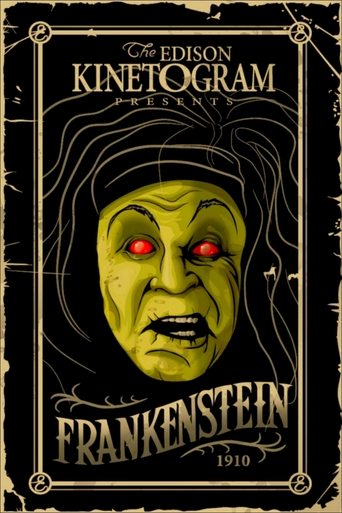
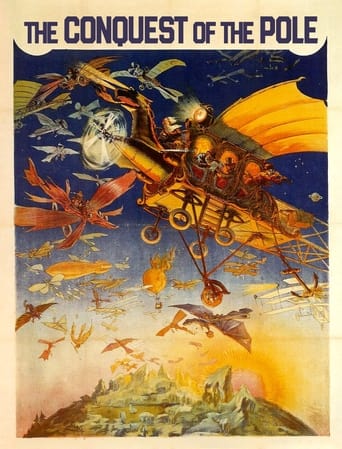
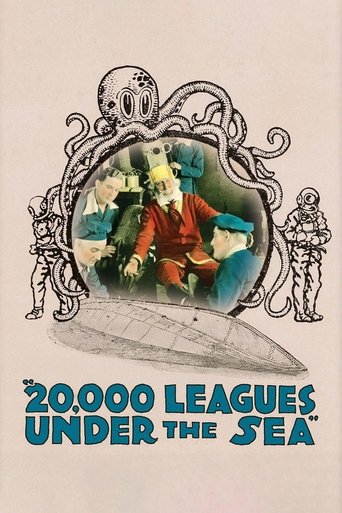


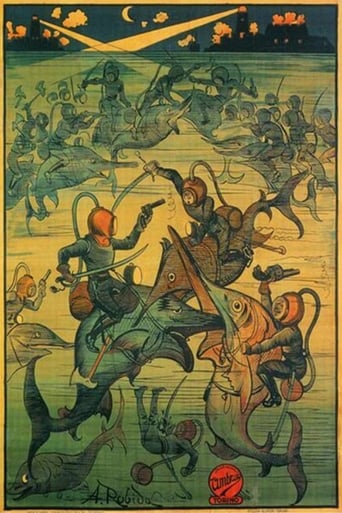
More from Georges Méliès
View all →


More about this film
About the production
Release date1905
ProductionStar Film Company
Filmed inMontreuil, Seine-Saint-Denis, France
Filmed in Méliès's glass studio in Montreuil, which allowed for natural lighting and the complex special effects he was known for. The film utilized multiple exposure techniques, substitution splices, and elaborate mechanical props to create the illusion of the airship's flight. Méliès himself played the role of the inventor, as was common in his productions.
Themes
Innovation and inventionThe power of dreamsTechnological optimismHuman ambitionThe boundary between reality and fantasy
Themes & topics
Historical background
Méliès's 1905 aviation fantasy coincided with European fascination with dirigibles and pioneer aviators.
Why this film matters
Airship dream sequences recur in silent fantasy; this survives as a compact Méliès technical demo.
Making of
The film was created in Méliès's innovative glass-walled studio in Montreuil, which he had built specifically for his fantasy films. The elaborate airship was constructed as a full-scale prop that could be manipulated on stage. Méliès employed his signature substitution splicing technique to create magical transitions and effects. The dream sequence allowed him to incorporate even more fantastical elements than might appear in a straightforward narrative. As with most of his films, Méliès served as director, writer, producer, and star. The production required careful choreography of the airship movements and timing of the special effects, which were all executed in-camera without post-production editing.
What critics said
Fairground audiences cheered the ascent; archivists program it in surveys of early screen aviation.
Did you know?
- the production was released by Méliès's Star Film Company and was cataloged as number 657-658 in their film catalog
- The original French title was 'L'inventeur Cerveau-fou et son dirigeable merveilleux'
- Like many Méliès films, it was hand-colored frame by frame for special screenings
- The film features Méliès's fascination with aviation, which was a popular theme during the early days of flight
- The airship prop was one of Méliès's most elaborate mechanical creations
- the production was produced during the height of Méliès's creative period (1904-1906)
- The dream sequence was a common narrative device in Méliès's work, allowing for more fantastical elements
- The film was distributed internationally, including in the United States through the Star Film Company's American branch
- Many of Méliès's films from this period were stolen and duplicated by American producers, leading to financial difficulties
- The airship design was inspired by the early dirigibles being developed during the aviation pioneer era
Visual style
The film employs Méliès's characteristic theatrical style with static camera positions and deep focus to capture entire sets. The cinematography was designed to showcase the elaborate sets and props, particularly the airship. Méliès used multiple exposure techniques to create ghostly effects and magical transitions. The hand-colored versions of the film added visual richness and helped distinguish different elements of the fantastic imagery. The lighting was carefully controlled in the glass studio to achieve the desired effects for the special sequences.
Innovations
The film features Méliès's mastery of in-camera special effects, including substitution splices, multiple exposures, and dissolves. The elaborate airship prop was a significant technical achievement in itself, requiring complex mechanical operation. The film demonstrates Méliès's innovative use of stage machinery and trapdoors to create magical effects. The hand-coloring process, while labor-intensive, added another layer of technical sophistication to the production. Méliès's ability to create seamless magical transitions in-camera was groundbreaking for the time and influenced the development of special effects in cinema.
Music
As a silent film, it would have been accompanied by live music during screenings. The typical accompaniment would have included piano or organ music, with the score often improvised by the musician based on the action on screen. For Méliès's fantasy films, the music was often whimsical and magical in character to match the visual style. Some theaters may have used pre-selected classical pieces or popular songs of the era that fit the mood of the film.
Famous quotes
As a silent film, it contains no spoken dialogue, but intertitles (if any) would have been in French
Memorable scenes
- The inventor falling asleep at his desk, the magical transformation of the airship coming to life, the airship's flight through fantastic landscapes, the various obstacles encountered during the dream journey, the inventor's awakening and reaction to his dream
What audiences thought
The film was popular with audiences of its time, who were captivated by Méliès's magical effects and fantastical stories. Audiences were particularly drawn to films featuring new technologies and inventions during this era of rapid technological change. The dream narrative and spectacular airship visuals would have been especially appealing to viewers. Like many of Méliès's films, it was successful both in France and internationally through the Star Film Company's distribution network.
Film connections
Influenced by
- The works of Jules Verne
- Contemporary aviation developments
- Stage magic and theatrical traditions
- Earlier trick films by Méliès himself
This film influenced
- Later aviation films
- Science fiction films featuring dream sequences
- Comedy films about inventors
- Fantasy films using similar special effects techniques
Film restoration
The film survives and is preserved in film archives. Prints are held by various institutions including the Cinémathèque Française. Some versions exist in their original hand-colored form. The film has been digitally restored and is available through various film preservation organizations and archives.
Where to watch
- Available on various streaming platforms specializing in classic cinema
- Included in Méliès film collections on DVD and Blu-ray
- Accessible through film archive websites such as the Internet Archive
- Available through educational film distribution services
- Screened at film museums and cinematheques specializing in early cinema