The Invisible Men
"Invisible crooks steal a scientist's potion"
Keys: Space play/pause · ←/→ 10s · F fullscreen · M mute · </> speed
About this film
A scientist concocts a potion that can turn people invisible for short periods of time. Two crooks steal the potion and go on a crime spree.
Cast & crew
More films like this
More Crime films
View all →


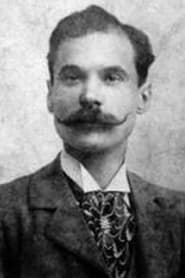
More from Gaston Velle
View all →

More about this film
About the production
Release date1906
ProductionPathé Frères
Filmed inParis, France
This film was produced during the golden age of Pathé Frères, among the pivotal early film production companies. The invisibility effects were achieved through innovative use of multiple exposure techniques and careful matte work, which were groundbreaking for 1906. The production utilized Pathé's advanced studio facilities in Vincennes, outside Paris, where they had developed sophisticated special effects capabilities. The film was shot on 35mm film using Pathé's own cameras and processing equipment.
Themes
Scientific discovery and its consequencesCrime and punishmentThe abuse of powerTechnological progressAppearance versus reality
Themes & topics
Historical background
Made during the nickelodeon years around 1906, The Invisible Men reached audiences through theatrical programs, fairground booths, or specialized distribution channels typical of its generation. A scientist concocts a potion that can turn people invisible for short periods of time. Two crooks steal the potion. Historians now read such works for what they reveal about production methods, national taste, and the expanding vocabulary of screen narrative.
Why this film matters
Archivists and programmers still screen The Invisible Men when tracing how popular entertainment evolved. Its subject—a scientist concocts a potion that can turn people invisible for short periods of time. two crooks—gives later viewers tangible evidence of what drew crowds in the silent period. Home video, restorations, and festival sidebars keep the title circulating among students of film history.
Making of
The production of 'The Invisible Men' represented the cutting edge of early cinema special effects. Director Gaston Velle, working for Pathé Frères, employed sophisticated techniques that were revolutionary for 1906. The invisibility effects required meticulous planning and execution, with actors performing scenes multiple times with different elements masked out. The laboratory sets were designed with special considerations for the effects work, featuring dark backgrounds that would make the masking techniques more convincing. The film's production took advantage of Pathé's state-of-the-art studio facilities, which included some of the most advanced lighting and camera equipment of the time. The actors had to perform with precise timing, often working with props that would appear to move on their own when the invisible characters interacted with them. The post-production process was labor-intensive, requiring careful frame-by-frame work to achieve the seamless invisibility effects that audiences of the time found magical and convincing.
What critics said
Original trade coverage treated The Invisible Men as routine program filler rather than a landmark production—common for shorts. Later criticism emphasizes preservation, stylistic comparison with contemporaries, and whatever cast or crew names later gained prominence. Contemporary writing is mostly historical: assessing completeness, influence, and place in a director's or studio's catalog.
Did you know?
- This is one of the earliest films to explore the concept of invisibility, predating the more famous 1933 Universal 'The Invisible Man' by nearly three decades.
- Director Gaston Velle was a pioneer of trick films and special effects, often compared to Georges Méliès in his innovative approach to fantasy cinema.
- The film was distributed internationally by Pathé, which had established an extensive global distribution network by 1906.
- The invisibility effects were created using a combination of black masking techniques and multiple exposures, requiring actors to perform against black backgrounds.
- The original French title was 'Les Hommes invisibles,' and it was part of Pathé's series of fantasy and trick films that were extremely popular in the early 1900s.
- The film was hand-colored in some releases, a common practice for premium Pathé productions of this era.
- At only 5 minutes long, it was typical of the short format that dominated cinema before feature-length films became common in the 1910s.
- The criminal characters in the film were likely played by professional acrobats or physical comedians, as the role required precise timing and physical comedy skills.
Visual style
The cinematography employed innovative techniques for achieving the invisibility effects, including multiple exposure and careful matte work. The film utilized stationary camera positions typical of the era, with compositions designed to showcase the special effects clearly. The lighting was carefully planned to support the trick photography, with strong contrasts that helped mask the technical limitations of the effects work. The laboratory sets were designed with dark backgrounds to make the invisibility effects more convincing. The camera work was precise and deliberate, as any movement could complicate the multiple exposure techniques used to create the invisible characters.
Innovations
The film's primary technical achievement was its pioneering use of multiple exposure techniques to create convincing invisibility effects. The production team developed innovative matte painting methods that allowed them to mask out portions of the frame selectively. The film demonstrated early mastery of special effects photography, requiring precise timing and coordination between the camera operator and performers. The laboratory sequences featured clever use of props and set design to enhance the illusion of invisibility. The film also showcased Pathé's advanced film processing capabilities, which were necessary for the complex effects work.
Music
As a silent film from 1906, 'The Invisible Men' would have been accompanied by live musical performance during theatrical exhibitions. The typical accompaniment would have been provided by a pianist or small orchestra using music from popular classical pieces or theater compositions. The music would have been chosen to match the mood of each scene, with playful or mysterious themes for the invisibility sequences and more dramatic music for the crime scenes. Some theaters might have used sound effects created manually, such as bells or whistles, to enhance the viewing experience.
Famous quotes
As a silent film, there are no recorded dialogue quotes from the production.
Memorable scenes
- The laboratory break-in scene where the criminals steal the invisibility potion, featuring impressive trick photography as the potion bottle appears to float and move on its own. The subsequent crime spree sequence showcases various instances of invisible theft, with money and valuables mysteriously disappearing and floating through the air, demonstrating the film's innovative special effects work.
What audiences thought
The film was well-received by audiences of 1906, who were fascinated by its magical special effects and clever premise. As part of Pathé's popular series of fantasy films, it drew crowds to cinemas that were hungry for imaginative and spectacular content. The invisibility effects, while primitive by modern standards, were considered amazing and convincing to early cinema audiences who had never seen such tricks before. The film's short length and clear visual storytelling made it accessible to audiences across different countries and language barriers. Its success contributed to the growing popularity of fantasy and science fiction themes in early cinema, encouraging other producers to explore similar concepts.
Film connections
Influenced by
- The works of Georges Méliès
- H.G. Wells' 'The Invisible Man' (1897 novel)
- Contemporary stage magic shows
- French theater traditions
This film influenced
- The Invisible Man (1933)
- Invisible Agent (1942)
- The Invisible Man Returns (1940)
- Numerous later invisibility films
Film restoration
The film is preserved in various film archives, including the Cinémathèque Française. Some versions exist in restored condition, though like many films from this era, some deterioration may be present. The film has been digitized by several archives for preservation purposes and is occasionally screened at classic film festivals.
Where to watch
- Available on some classic film streaming platforms
- Can be found on DVD compilations of early cinema
- Screenings at film archives and classic film festivals
- Some versions available on YouTube and other public domain platforms