

The Last Man on Earth
"Disease turns all humanity into"
Keys: Space play/pause · ←/→ 10s · F fullscreen · M mute · </> speed
About this film
When a disease turns all of humanity into the living dead, the last man on earth becomes a reluctant vampire hunter.
Cast & crew
More films like this
More Science Fiction films
View all →

More about this film
About the production
Release dateOctober 8, 1964 (Italy), March 18, 1965 (United States)
BudgetApproximately $300,000 (relatively low budget even for 1964)
Box officeModest theatrical returns, limited release in the United States
ProductionProduzioni Europee Associati (PEA), Associated Producers (API)
Filmed inRome, Italy, Cinecittà Studios
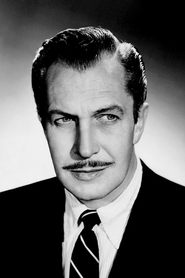
This was an Italian-American co-production filmed primarily in Rome with an Italian crew but English-speaking cast. Vincent Price was the only American actor in the principal cast, with other roles filled by Italian actors speaking English. The film was shot quickly over approximately three weeks to capitalize on Price's horror popularity. The production faced challenges with the vampire makeup effects, which were kept minimal due to budget constraints. The empty city streets were achieved through early morning filming in Rome before traffic began.
Themes
Isolation and lonelinessThe definition of humanityScientific responsibilitySurvival vs. MoralityThe nature of monstrosity
Themes & topics
post-apocalypticvampireplaguelast survivorhorrorscience fictionpsychological thrillerisolationsurvival horrorvampire hunterbiological warfareurban desolationnightmareadaptation breakdown
Historical background
The Last Man on Earth (1964) emerged during the post-studio era and expanding independent production, when exhibition habits and national film industries were still taking shape.
Why this film matters
The Last Man on Earth remains accessible through digital archives, giving modern viewers a direct link to 1964 screen culture.
Making of
The production was a challenging international collaboration between Italian producers and American talent. Director Ubaldo Ragona, primarily known for documentary work, brought a stark realism to the horror genre. The film was shot at Rome's Cinecittà Studios with a predominantly Italian crew, creating cultural and language barriers on set. Vincent Price, accustomed to Hollywood productions, had to adapt to the European filming style which was more improvisational and less structured. The makeup effects for the vampire creatures were deliberately kept minimal due to budget constraints, which ironically enhanced their unsettling appearance. The film's distinctive atmosphere emerged from these limitations, with the empty cityscapes created through clever scheduling rather than expensive set construction. Price's performance was particularly notable for its emotional depth, as he drew on his own feelings of isolation during the Italian shoot to portray Morgan's loneliness.
What critics said
Retrospective notes on The Last Man on Earth emphasize its value as a period production rather than blockbuster reception.
Did you know?
- This was the first film adaptation of Richard Matheson's 1954 novel 'I Am Legend', which would later be adapted as 'The Omega Man' (1971) and 'I Am Legend' (2007)
- Richard Matheson was so dissatisfied with the film that he used the pseudonym 'Logan Swanson' for his screenplay credit
- Vincent Price completed all his scenes in just 10 days of filming
- The vampire creatures were played by local Italian actors, many of whom could barely speak English, which added to their otherworldly presence
- Three different versions of the film exist: the original Italian cut, the American theatrical release, and a re-edited version retitled 'The Night Creatures'
- The film's bleak, empty cityscapes were created by filming at dawn in Rome before the streets filled with traffic and people
- Despite being set in America, the film was shot entirely in Italy with only one American actor in the main cast
- The movie was originally intended to be filmed in color but was switched to black and white to save money
- Vincent Price considered this one of his favorite performances, feeling it was more dramatic than his typical horror roles
- The film's minimalist approach to horror influenced countless subsequent post-apocalyptic films
Visual style
The black and white cinematography by Franco Delli Colli creates a stark, haunting visual landscape that perfectly captures the film's themes of isolation and desolation. The camera work emphasizes empty urban spaces, using wide shots of deserted streets and buildings to convey Morgan's profound loneliness. The lighting creates dramatic contrasts between the relative safety of daylight and the oppressive darkness of night, with shadows used to suggest lurking dangers just beyond sight. The film makes excellent use of the Italian locations, transforming Rome's architecture into an anonymous American city through careful framing and composition. The cinematography also employs close-ups effectively to capture Price's nuanced performance, particularly in scenes where Morgan's psychological deterioration becomes apparent. The visual style, born partly from budget constraints, achieves a documentary-like realism that enhances the horror.
Innovations
Despite its limited budget, the film achieved several notable technical innovations. The production team developed creative solutions for depicting a post-apocalyptic world, including using early morning light and careful location selection to create the illusion of abandoned cities. The makeup effects for the vampire creatures, while minimal, were effective in creating unsettling appearances without elaborate prosthetics. The film's sound design was particularly innovative for its time, using ambient noise and silence to create psychological tension rather than relying solely on musical cues. The cinematography techniques for conveying isolation through empty spaces influenced countless subsequent films in the genre. The production also demonstrated how international co-productions could create compelling genre films that transcended cultural boundaries, paving the way for more global cinema collaborations.
Music
The musical score by Paul Sawtell and Bert Shefter provides a minimalist, atmospheric foundation that enhances rather than dominates the film's mood. The music is sparse and understated, using dissonant strings and brass to create tension without overwhelming the visuals. The soundtrack's restraint is particularly effective during the night sequences, where the absence of music amplifies the sounds of the creatures outside Morgan's home. The score incorporates elements of jazz and avant-garde composition that were unusual for horror films of the period, giving the movie a more contemporary and unsettling feel. The main theme has a melancholic quality that reflects Morgan's isolation and despair. Sound design is equally important, with the film using silence strategically to build tension, punctuated by the creatures' moans and the sounds of Morgan's barricades being tested.
Famous quotes
I am the last man on Earth.. And I'm scared.
They're not vampires. They're something new. Something worse.
Every day I look for a cure. Every night I pray for one.
The dead are not dead. They are only.. Different.
You're all doomed. All of you. You're the living dead.
I have to keep going. I have to keep fighting.
This is my world now. My rules.
They come out at night. They always come out at night.
Memorable scenes
- The opening sequence where Morgan walks through deserted city streets, establishing the complete isolation of his existence
- The nightly siege scenes where vampire creatures pound on Morgan's boarded-up windows while he tries to maintain his sanity
- Morgan's methodical routine of staking sleeping vampires during his daily patrols, showing how he has adapted to this horrific new world
- The flashback sequences revealing how Morgan lost his family to the plague, providing emotional context for his current isolation
- The first encounter with Ruth, offering a glimmer of hope that is immediately complicated by her true nature
- The final scene where Morgan realizes he has become the monster to the new society, the ironic reversal of his role as humanity's last hope
What audiences thought
Initial audience response was modest, with the film performing poorly in its limited U.S. Theatrical run. However, it found more success in Europe and developed a stronger following through television broadcasts and home video releases. Horror enthusiasts, particularly Vincent Price fans, embraced the film's darker tone and the actor's more dramatic performance compared to his usual gothic horror roles. Over the decades, the film has gained significant cult status, with modern audiences appreciating its minimalist approach to horror and its exploration of existential themes. The movie's reputation has grown substantially through word-of-mouth and critical reevaluation, with many considering it the most faithful adaptation of Matheson's novel. Its influence on subsequent post-apocalyptic films has also enhanced its standing among cinema enthusiasts.
Film connections
Influenced by
- Richard Matheson's novel 'I Am Legend'
- Classic vampire mythology
- Cold War anxiety films
- Italian neorealism
- 1950s American horror cinema
- Film noir visual style
- Existentialist literature
- Post-war European cinema
This film influenced
- The Omega Man (1971)
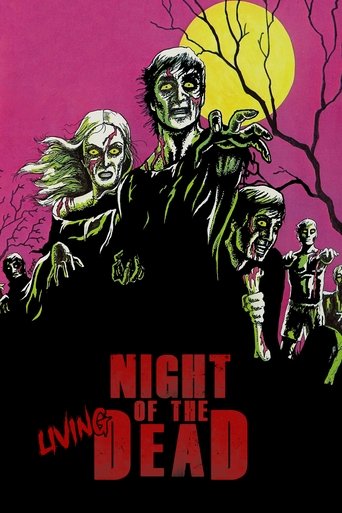
- Night of the Living Dead (1968)
- 28 Days Later (2002)
- I Am Legend (2007)
- The Quiet Earth (1985)
- Dawn of the Dead (1978)
- The Stand (1994 miniseries)
- The Road (2009)
- Contagion (2011)
- A Quiet Place (2018)
Film restoration
The film has been preserved through various home media releases, though the original negative condition remains uncertain. Multiple versions exist due to different international cuts, creating challenges for definitive restoration efforts. The movie has been released on DVD and Blu-ray by several specialty labels, with some releases attempting to restore the original Italian version. The various cuts of the film have been preserved in archives, ensuring that different versions remain accessible to scholars and enthusiasts. Recent digital releases suggest that reasonable preservation efforts have maintained the film's availability, though a comprehensive restoration of the best quality elements has not been undertaken by major film preservation institutions.
Where to watch
- Available on streaming platforms including Amazon Prime Video and YouTube Movies
- DVD and Blu-ray releases from Shout! Factory and Scream Factory with special features
- Available for digital purchase or rental on iTunes and Google Play
- Occasionally airs on classic movie channels like TCM
- Part of various Vincent Price horror film collections on home media