
The Mysterious Knight
"A knight performs several magic tricks with a disembodied head materialized…"
Keys: Space play/pause · ←/→ 10s · F fullscreen · M mute · </> speed
About this film
A knight performs several magic tricks with a disembodied head materialized from a chalkboard drawing.
Cast & crew
More films like this
More Fantasy films
View all →

More from Georges Méliès
View all →
More about this film
About the production
Release date1899
Box officeUnknown - box office records from 1899 are not available
ProductionStar Film Company
Filmed inGeorges Méliès' studio in Montreuil-sous-Bois, France
Filmed in Méliès's glass-walled studio which allowed natural lighting. The film utilized multiple exposure techniques and substitution splices to create the magical effects. Méliès personally hand-colored some prints of his films during this period, though it's unknown if this specific film received color treatment.
Themes
Magic and illusionTransformationThe supernaturalThe power of creationThe boundary between reality and fantasy
Themes & topics
knightmagicdisembodied headchalkboardtransformationspecial effectsfantasyillusion
Historical background
Released in 1899 during cinema's first decade, The Mysterious Knight reached audiences when exhibitors were still defining programming conventions. The narrative hook—A knight performs several magic tricks with a disembodied head materialized…—reflects what contemporary producers thought would draw viewers.
Why this film matters
The Mysterious Knight remains discussed by archivists tracing how screen stories of its period represented work, desire, conflict, and social order. Its central situation—A knight performs several magic tricks with a disembodied head materialized…—still prompts questions about genre conventions and audience expectations.
Making of
Georges Méliès created this film in his custom-built studio in Montreuil-sous-Bois, which featured glass walls and ceilings to maximize natural lighting. The production involved meticulous planning of special effects, particularly the substitution splices used to create the appearance and disappearance of the disembodied head. Méliès would stop the camera, replace objects or actors, then resume filming to create magical transformations. The knight costume and props were likely created in Méliès's workshop, where he designed and built all his film's sets and costumes. The filming process was extremely primitive by modern standards, with Méliès manually cranking his camera and performing all the special effects in-camera without post-production editing capabilities.
What critics said
Trade and newspaper notices for The Mysterious Knight generally emphasized casting, spectacle, and program fit rather than extended aesthetic argument. Retrospective screenings and archival notes continue to shape how viewers evaluate The Mysterious Knight today.
Did you know?
- This film was released during the very dawn of cinema, when films were still considered novelties rather than art forms
- The film showcases Méliès's mastery of substitution splices, a technique he pioneered and perfected
- Méliès often played the lead roles in his own films, believing he could best execute the precise timing required for his special effects
- The disembodied head effect was achieved through multiple exposure techniques that Méliès developed
- This film was cataloged as Star Film No. 181 in Méliès's production list
- Many of Méliès's films from this period were illegally copied and distributed in America by Thomas Edison and others without compensation
- The film would have been originally shown as part of a traveling magic lantern show or fairground attraction
- Méliès was a professional magician before becoming a filmmaker, which heavily influenced his cinematic style
- The chalkboard drawing sequence demonstrates Méliès's interest in bringing inanimate objects to life through cinema
- This film represents Méliès's fascination with the supernatural and magical transformation themes
Visual style
The cinematography in The Mysterious Knight is characteristic of Méliès's theatrical style, featuring a single, static camera position that captures the entire scene as if watching a stage performance. The camera was positioned to capture the full theatrical space Méliès constructed in his studio. The lighting relied primarily on natural light from the glass studio, supplemented by artificial lighting when necessary. The film's visual style is highly theatrical, with painted backdrops and stage-like composition that reflects Méliès's background in theater and magic.
Innovations
The Mysterious Knight showcases several of Méliès's pioneering technical innovations, most notably the substitution splice technique used to create magical appearances and disappearances. The film also demonstrates early use of multiple exposure to create the effect of the disembodied head. These in-camera effects were revolutionary for their time and represented some of the first examples of cinematic special effects. Méliès's ability to precisely time these effects without the benefit of modern editing equipment demonstrates his technical mastery and understanding of the new medium's possibilities.
Music
As a silent film from 1899, The Mysterious Knight had no synchronized soundtrack. During original exhibition, the film would have been accompanied by live music, typically a pianist or small orchestra playing appropriate mood music. The musical accompaniment would have varied by venue and could have included popular songs of the era or improvised pieces. Some exhibitors might have used sound effects created manually to enhance the magical elements of the film.
Memorable scenes
- The magical transformation of the chalkboard drawing into a living, disembodied head that floats independently in space, demonstrating Méliès's mastery of special effects and his ability to bring the impossible to life on screen.
What audiences thought
Audiences in 1899 were typically astonished by Méliès's magical films, which were unlike anything they had seen before. The disembodied head effect would have been particularly impressive to viewers unfamiliar with cinematic techniques. These films were extremely popular at fairgrounds and music halls, where they were often presented as part of larger variety shows. Méliès's films were successful enough to sustain his production company for over a decade, indicating strong audience demand. Modern audiences viewing the film today appreciate it primarily for its historical significance and the ingenuity of its special effects given the technological limitations of the era.
Film connections
Influenced by
- Stage magic and illusion shows
- Theater traditions
- Fairy tales and folklore
- Spiritualism movement of the late 19th century
This film influenced
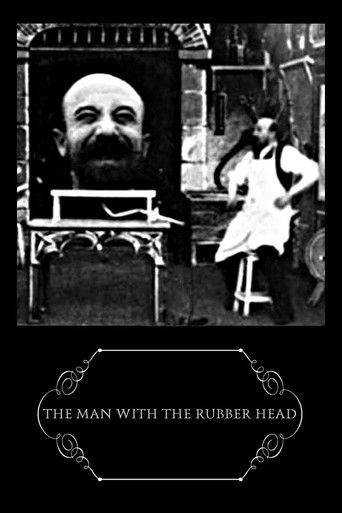
- Later Méliès films such as 'The Man with the Rubber Head' (1901)
- The fantasy and science fiction films of the early 20th century
- Modern special effects cinema
Film restoration
The film survives in archives, though like many Méliès films, some copies may be incomplete or deteriorated. The Méliès family collection and various film archives worldwide preserve copies of his work. The film has been included in various DVD collections and digital restorations of Méliès's films.
Where to watch
- Available in various Méliès film collections on DVD and Blu-ray
- Some streaming platforms featuring classic cinema
- Film archive websites such as the Internet Archive
- Museum screenings and film festivals featuring early cinema