
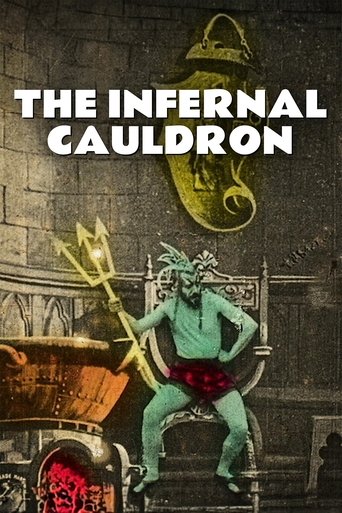
The Mysterious Retort
"The Mysterious Retort (1906)"
Keys: Space play/pause · ←/→ 10s · F fullscreen · M mute · </> speed
About this film
L'Alchimiste Parafaragaramus ou la Cornue infernale, released in the United French silent trick film directed by Georges Méliès. It was released by Méliès's Star Film Company and is numbered 874–876 in its catalogues.
Cast & crew
More films like this

More Fantasy films
View all →

More from Georges Méliès
View all →
More about this film
About the production
Release date1906
ProductionStar Film Company
Filmed inMontreuil-sous-Bois, France (Méliès' studio)
Filmed in Méliès's glass-walled studio in Montreuil-sous-Bois, which allowed for natural lighting and elaborate set construction. The film was shot using Méliès's characteristic theatrical approach with painted backdrops and stage-like settings. The production utilized multiple exposure techniques and substitution splices to create the magical transformations that were Méliès's trademark.
Themes
Magic and sorceryTransformation and metamorphosisThe supernaturalScientific experimentationDreams and the subconscious
Themes & topics
wizardsnakemagictransformationsleepsupernaturalspecial effectsfantasyhorrorlaboratory
Historical background
The Mysterious Retort (1906) emerged during the earliest years of projected motion pictures, when exhibition habits and national film industries were still taking shape.
Why this film matters
The Mysterious Retort remains accessible through digital archives, giving modern viewers a direct link to 1906 screen culture.
Making of
The film was created during the height of Georges Méliès's creative powers, when he was producing dozens of films annually. Méliès not only directed but also starred in the film, playing the wizard role himself - a common practice as he was a former magician and theater owner who understood performance. The snake transformation required careful choreography and multiple exposures, with Méliès having to perform the same movements several times while different props were substituted between takes. The set was constructed in Méliès's custom-built studio, which featured trap doors, flying rigs, and other theatrical mechanisms adapted for film use. The production team included Méliès's regular collaborators who helped with the complex special effects and the meticulous hand-coloring process that was applied to many of his films.
What critics said
Trade and revival screenings have kept The Mysterious Retort (1906) on the map for collectors and scholars rather than mass first-run promotion.
Did you know?
- This film is cataloged as Star Film Company production #876 in Méliès's extensive filmography
- The snake transformation sequence represents one of Méliès's most complex multi-exposure effects for its time
- The film was likely hand-colored by Méliès's studio workers, as was common for his more important productions
- The wizard character was one of Méliès's recurring roles, appearing in numerous films throughout his career
- The elaborate set design with books and scientific equipment reflects Méliès's fascination with both magic and science
- The film was distributed internationally, including in the United States through the Méliès Manufacturing Company
- The drawer mechanism that opens mysteriously was achieved through a simple but effective off-camera wire or string
- Like many Méliès films, it was designed to be shown with live musical accompaniment, though no specific score was composed
- The film's title in French was 'Le Récipient mystérieux' and was sometimes translated as 'The Mysterious Vessel'
- This was one of the later films in Méliès's most productive period before his career decline in the late 1900s
Visual style
The cinematography in The Mysterious Retort exemplifies Méliès's characteristic static camera approach, filming from a single perspective as if recording a stage performance. This technique allowed the audience to focus on the magical transformations and special effects without distraction. The film utilized multiple exposure photography to create the appearance of objects appearing and disappearing, and substitution splices for the transformation sequences. The lighting was typically even and bright, filmed in Méliès's glass studio to maximize natural illumination. The visual composition was carefully staged to ensure all magical elements were clearly visible to the audience.
Innovations
The film showcases several of Méliès's signature technical innovations, particularly the sophisticated use of multiple exposure photography to create simultaneous magical effects. The substitution splice technique, which Méliès pioneered, was used extensively for the transformation sequences. The film also demonstrates advanced matte work and careful masking techniques to composite different elements. The hand-coloring process, applied frame by frame by studio workers, added visual richness to the production. These techniques were particularly advanced for 1906 and demonstrated Méliès's mastery of the emerging medium of cinema.
Music
As a silent film, The Mysterious Retort had no original synchronized soundtrack. During its initial exhibition, it would have been accompanied by live music, typically a pianist or small orchestra in the venue. The musical accompaniment would have been improvised or selected from existing classical pieces to match the film's magical and mysterious mood. Some venues might have used sound effects created manually to enhance the magical transformations. No specific musical score was composed for this film, as was standard practice for most silent shorts of this period.
Memorable scenes
- The mysterious opening of the table drawer revealing the snake, the wizard's awakening and magical transformation of the snake into various objects, the final sequence of complex magical transformations showcasing Méliès's special effects mastery
What audiences thought
Early audiences in 1906 were typically fascinated by Méliès's magical films, which were a popular attraction in fairgrounds, music halls, and early dedicated cinemas. The Mysterious Retort, with its surprising transformations and magical elements, would have provided the wonder and spectacle that audiences of the era sought. The film's short length and clear visual storytelling made it accessible to diverse audiences across different countries. Méliès's films were particularly popular with family audiences, as they contained the kind of magical entertainment that appealed to both children and adults in the early 20th century.
Film connections
Influenced by
- Stage magic and illusion shows
- Gaston Tournier's theatrical productions
- Jules Verne's scientific romances
- Victorian spiritualism
- Parisian theater traditions
This film influenced
- Later Méliès fantasy productions
- Early horror films of the 1910s
- German expressionist cinema
- Harryhausen's stop-motion animations
- Modern fantasy film transformation sequences
Film restoration
The film survives in various archives, including the Cinémathèque Française and other film preservation institutions. Some copies exist in both black-and-white and hand-colored versions. The film has been restored and digitized as part of various Méliès retrospectives and is considered to be in relatively good preservation condition for a film of its age.
Where to watch
- Available on various streaming platforms specializing in classic cinema
- Included in Méliès collections on DVD and Blu-ray
- Accessible through film archive websites
- Featured in online cinema history courses
- Available through public domain film collections