The Photo-Drama of Creation
"From creation to kingdom: the Bible staged in eight hours."
Keys: Space play/pause · ←/→ 10s · F fullscreen · M mute · </> speed
About this film
In 1914, the film presents the Bible's account of God's plan from the creation of the earth through to the end of the 1,000 year reign of Christ.
Cast & crew
More films like this


More Documentary films
View all →


More about this film
About the production
Release dateJanuary 1914
BudgetApproximately $300,000 (equivalent to over $8 million in 2024)
Box officeNot a commercial release - presented free to the public worldwide
ProductionWatch Tower Bible and Tract Society, The Photo-Drama of Creation Company
Filmed inBrooklyn, New York, Various locations in New York and New Jersey
The Photo-Drama of Creation was an unprecedented technical achievement for its time, combining 96 35mm film reels with 500 hand-painted lantern slides, all synchronized with phonograph recordings. The production took over two years to complete, involving a cast of hundreds and elaborate sets built specifically for the production. The film was shot in both black and white and color (using hand-tinting techniques), and the entire presentation required four projectionists working in perfect coordination. Russell personally supervised every aspect of production, ensuring theological accuracy while pushing the boundaries of early cinema technology.
Themes
Divine CreationHumanity's Fall and RedemptionBiblical ProphecyMillennial KingdomGod's Plan for Salvation
Themes & topics
CreationAdam and EveNoah's ArkTower of BabelAbrahamMosesJesus ChristCrucifixionResurrectionMillenniumNew JerusalemParadise Restored
Historical background
Released in 1914, The Photo-Drama of Creation reached audiences during the silent era, when exhibition and production norms differed sharply from today's.
Why this film matters
The Photo-Drama of Creation remains viewable through digital archives, preserving 1914 screen culture for modern audiences.
Making of
The Photo-Drama of Creation represented an extraordinary technical and logistical challenge for 1914. Production began in 1912 under Russell's direct supervision at the Watch Tower Society's Brooklyn headquarters. The team developed innovative synchronization methods using electrical contacts and mechanical linkages to coordinate the phonograph with the projectors. The filming required the construction of massive sets including detailed recreations of the Garden of Eden, Noah's Ark, and various biblical cities. Russell insisted on historical accuracy in costumes and props, consulting with experts and using authentic materials wherever possible. The color slides were created through a painstaking process where artists hand-painted each frame using special dyes. The phonograph recordings featured professional actors, an orchestra, and Russell himself as narrator. The entire system was designed to be portable, allowing the presentation to travel to cities worldwide where it was shown in theaters, halls, and even outdoor venues.
What critics said
Where contemporary reviews survive, The Photo-Drama of Creation is read against the tastes of 1914; revival screenings keep it in circulation.
Did you know?
- This was the first major film production to synchronize motion pictures with recorded sound on a large scale, predating 'The Jazz Singer' by 13 years
- The presentation required 4 projectors operating simultaneously: two for film, one for slides, and one for the phonograph
- Over 500 hand-painted color slides were created by artists, each taking up to 8 hours to complete
- The production was translated into 20 different languages for international presentations
- Charles Taze Russell, who was 61 years old during production, personally appeared in several segments
- The entire presentation was offered free of charge to audiences worldwide, with admission strictly prohibited
- It was estimated that over 9 million people viewed the Photo-Drama during its initial run
- The production used a specially designed portable phonograph system that could be synchronized with the projectors
- The film's sets were some of the most elaborate constructed for early cinema, including detailed recreations of biblical locations
- Russell died shortly after the completion of the Photo-Drama, making it his final major work
Visual style
The cinematography of the Photo-Drama was innovative for its time, utilizing multiple cameras and sophisticated lighting techniques to create dramatic biblical scenes. The filmmakers employed early special effects techniques including dissolves, multiple exposures, and matte paintings to create epic visions of biblical events. The production made extensive use of location shooting combined with elaborate studio sets, creating a visual scope that was unprecedented for 1914. The hand-tinted color sequences were particularly remarkable, with artists carefully coloring each frame to create vibrant, otherworldly effects for divine scenes. The cinematography also included innovative close-up shots and dramatic camera movements that enhanced the emotional impact of key biblical moments.
Innovations
The Photo-Drama of Creation introduced several technical innovations that would influence future film production. Most significantly, it developed a reliable system for synchronizing phonograph sound with moving pictures, predating commercial sound films by over a decade. The production pioneered the use of multiple synchronized projectors, allowing seamless transitions between film and still images. The elaborate color process, involving hand-tinting of both film frames and glass slides, created some of the earliest color motion picture sequences. The portable presentation system, designed to travel worldwide, included innovative electrical and mechanical synchronization devices. The production also developed early techniques for large-scale set construction and crowd management in biblical epics.
Music
The soundtrack was groundbreaking for its time, featuring a combination of orchestral music, sound effects, and synchronized narration. The musical score was composed specifically for the production and performed by professional musicians, with different themes for various biblical periods and characters. Sound effects were created using early audio techniques to enhance dramatic moments such as storms, battles, and miracles. Charles Taze Russell provided the principal narration, with his voice recorded on phonograph cylinders and synchronized with the visual elements. The entire audio system was designed to fill large halls and theaters, using multiple phonographs and early amplification methods to ensure clarity throughout the venue.
Famous quotes
In the beginning God created the heavens and the earth" - Opening narration establishing the biblical foundation
The Photo-Drama of Creation is intended not merely to entertain but to educate and uplift" - Russell's introduction to the presentation
God's plan of the ages will yet be demonstrated to be the wisest and most loving arrangement possible" - Key theological statement from the narration
The millennial reign of Christ will bring blessings to all families of the earth" - Concluding promise of the presentation
Memorable scenes
- The Creation sequence featuring dramatic dissolves and colored light effects depicting the formation of the universe and Earth
- Noah's Ark scene with elaborate miniatures and water effects showing the great flood
- The Crucifixion sequence using dramatic lighting and emotional performances to convey Christ's sacrifice
- The final vision of the New Jerusalem with elaborate painted slides and orchestral crescendo
What audiences thought
Audiences in 1914 were reportedly enthralled by the Photo-Drama of Creation, with many attending multiple showings to absorb its full content. Contemporary accounts describe standing-room-only crowds in cities across North America, Europe, and Australia. Many viewers were particularly impressed by the synchronization of sound and image, which was unlike anything they had experienced before. The presentation's free admission made it accessible to all social classes, and its educational approach appealed to both religious and secular audiences. Some attendees reported profound spiritual experiences, while others were simply amazed by the technical wizardry. The production's popularity helped the Bible Student movement gain new followers, though this was not its primary purpose according to Russell.
Film connections
Influenced by
- Biblical Texts
- Russell's 'Studies in the Scriptures'
- Earlier Magic Lantern Shows
- Contemporary Biblical Epics
- Millerite Movement Prophecy Interpretations
This film influenced
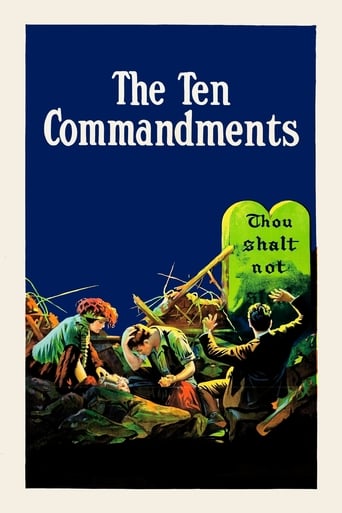
- The Ten Commandments (1923)
- The King of Kings (1927)
- The Passion of Christ (Various versions)
- Later Jehovah's Witness Films
Film restoration
The Photo-Drama of Creation has been partially preserved through the Watch Tower Society's archives. Original film elements and phonograph recordings survive, though some segments have deteriorated over time. The Jehovah's Witnesses organization has undertaken restoration efforts, digitizing available materials and preserving them in their historical archives. Some complete presentations have been reconstructed using surviving elements, though the original synchronization equipment is extremely rare. The production's religious significance has ensured its preservation by the organization that succeeded Russell's Bible Students.
Where to watch
- Jehovah's Witness Kingdom Halls (special presentations)
- Watch Tower Society archives and museums
- Some segments available on official Jehovah's Witness websites
- Selected film archives and museums specializing in early cinema
- Academic institutions with religious film collections