
The Wonderful Living Fan
"Fans that unfold into life"
Keys: Space play/pause · ←/→ 10s · F fullscreen · M mute · </> speed
About this film
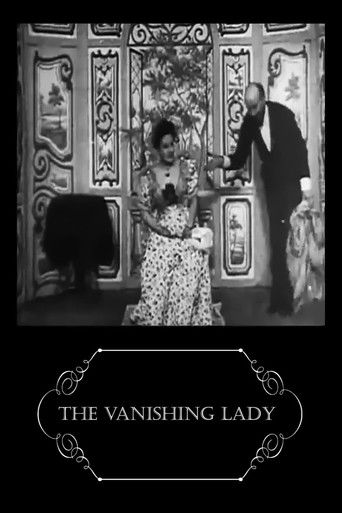
As a conjurer awaits an audience, a procession announces the arrival of a royal representative, carried in a sedan chair, to see him. The conjurer then has a large box brought in.
Cast & crew
More films like this
More Fantasy films
View all →

More from Georges Méliès
View all →


More about this film
About the production
Release date1904
Box officeUnknown - box office records from 1904 are not reliably documented
ProductionStar Film Company
Filmed inGeorges Méliès Studio, Montreuil-sous-Bois, France
The film was created using Méliès' signature combination of stage magic and cinematic techniques, including multiple exposures, substitution splicing, and careful choreography. The 'living fan' effect was achieved through a combination of stop-motion animation and painted animation on the fan's surface. Méliès built the elaborate fan prop himself in his workshop, and the sedan chair was one of his signature set pieces that appeared in multiple films. The royal procession was performed by Méliès' regular troupe of actors, many of whom were stage performers from his theater background.
Themes
Magic and illusionTransformation and metamorphosisThe power of the conjurerWonder and spectacleTheatrical performance
Themes & topics
Historical background
The Wonderful Living Fan reached screens around 1904, produced in its country of origin. Programs then mixed actualities, dances, and staged scenes in single-reel slots.
Why this film matters
Researchers cite The Wonderful Living Fan when tracing screen culture of its decade. Its brevity makes it useful for teaching how early narratives were staged.
Making of
Georges Méliès, a former magician and theater owner, brought his stage magic expertise to the emerging medium of cinema. His studio in Montreuil-sous-Bois was a converted theater with a glass roof that allowed for natural lighting control essential for his special effects. For 'The Wonderful Living Fan,' Méliès employed his team of regular performers and technicians, many of whom had worked with him in his theater days. The film was shot using his custom-built camera that allowed for multiple exposures and precise timing tricks. The elaborate fan prop was constructed in his workshop using lightweight materials to allow for easy manipulation during filming. Méliès' approach to filmmaking was theatrical in nature, with fixed camera positions and performers who moved as if on a stage, creating a unique cinematic style that blended theater with the new possibilities of film.
What critics said
Reviewers in 1904 weighed The Wonderful Living Fan on clarity, pacing, and audience response rather than prestige status. No single canonical review dominates later reference works for the title.
Did you know?
- The original French title was 'L'Éventail vivant' and was released by Star Film as catalog number 576-577
- This film was part of Méliès' series of magical transformation films that showcased his expertise in cinematic special effects
- The fan prop used in the film was approximately 8 feet tall when fully opened, making it one of Méliès' larger props
- Méliès himself played the conjurer, as he did in most of his films during this period
- The film was distributed internationally, with copies sent to the United States through Méliès' American distribution network
- The royal procession scene reused costumes and props from Méliès' earlier film 'The Kingdom of the Fairies' (1903)
- The animation on the fan was created using a combination of hand-painted animation and early stop-motion techniques
- This film was one of over 500 films Méliès created between 1896 and 1913
- The film's special effects were achieved entirely in-camera, without post-production editing as we know it today
- Méliès' studio in Montreuil was essentially a glass-walled theater that allowed him to control lighting precisely for his magical effects
Visual style
The cinematography in 'The Wonderful Living Fan' reflects Méliès' signature style of theatrical staging combined with cinematic innovation. The film uses a fixed camera position typical of early cinema, creating a proscenium arch effect that mimics the theater experience. Méliès employed multiple exposure techniques to create the illusion of the animated fan and the appearance of magical transformations. The lighting was carefully controlled using the glass roof of his studio, allowing for the precise exposure needed for his special effects. The film's visual composition is highly deliberate, with Méliès arranging his performers and props within the frame to maximize the impact of his magical effects. The cinematography demonstrates Méliès' understanding of how to use the new medium of film to create illusions impossible in live theater.
Innovations
The film showcases several of Méliès' pioneering technical innovations, including substitution splicing, multiple exposures, and stop-motion techniques. The 'living fan' effect was particularly sophisticated for its time, combining painted animation with cinematic manipulation. Méliès developed a method of creating the illusion of movement on static objects through careful timing and exposure control. The film demonstrates his mastery of in-camera effects, achieving complex visual trickery without the benefit of post-production editing. The seamless transitions between different states of the fan and the appearance of living figures from the prop represent significant technical achievements in early cinema. Méliès' work on this film contributed to the development of special effects techniques that would become fundamental to fantasy and science fiction filmmaking.
Music
As a silent film from 1904, 'The Wonderful Living Fan' would have been accompanied by live music during its original theatrical presentations. The typical accompaniment would have been a pianist or small orchestra performing popular music of the era, often improvising to match the on-screen action. Méliès' films were sometimes accompanied by sound effects created by theater musicians or even Méliès himself during special presentations. Modern screenings of the film are typically accompanied by newly composed scores or period-appropriate music that captures the magical and whimsical nature of the film. Some contemporary presentations use authentic Belle Époque music to recreate the original viewing experience.
Famous quotes
(Silent film - no dialogue)
Memorable scenes
- The moment when the large fan is opened and its painted designs begin to animate and come to life, showcasing Méliès' pioneering special effects techniques and creating a sense of wonder that defined early cinema magic
What audiences thought
Early 20th century audiences were captivated by Méliès' magical films, which offered a form of entertainment that combined the wonder of stage magic with the novelty of moving pictures. 'The Wonderful Living Fan' would have been particularly impressive to viewers who had never seen such elaborate special effects before. The film's combination of spectacle, humor, and magical transformation appealed to the popular taste of the Belle Époque audience. Méliès' films were popular across Europe and America, with 'The Wonderful Living Fan' being part of his extensive international distribution network. Modern audiences encountering the film through archives and retrospectives often express delight in its charming effects and historical significance, appreciating it as a window into the early days of cinema and the origins of special effects.
Film connections
Influenced by
- Stage magic traditions
- Victorian theatrical productions
- Jean-Eugène Robert-Houdin's magic performances
- Lumière brothers' early films
- Fairy tale illustrations
This film influenced
- Later Méliès fantasy films
- Segundo de Chomón's trick films
- Early Disney animated shorts
- Fantasy films of the 1920s
- Modern magical realism films
Film restoration
The film survives in various film archives, including the Cinémathèque Française and the Museum of Modern Art. A restored version is available through the Flicker Alley collection of Méliès films. While some prints show signs of deterioration, the film has been largely preserved thanks to Méliès' practice of creating multiple copies for international distribution. The film is part of the UNESCO Memory of the World Register through the Méliès collection.
Where to watch
- Available on the Flicker Alley Blu-ray 'Georges Méliès: First Wizard of Cinema'
- Streaming on The Criterion Channel
- Available on YouTube through official archives
- Viewable at film museums including the Cinémathèque Française
- Included in various educational film collections about early cinema