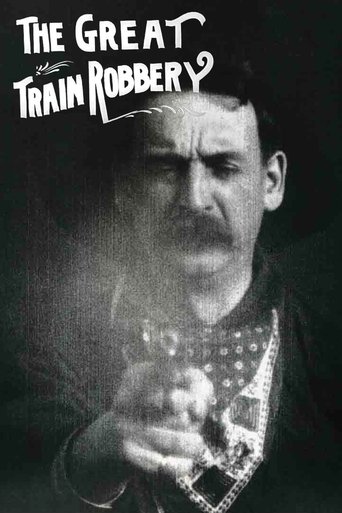
Tracked by Bloodhounds; or, A Lynching at Cripple Creek
"Bloodhounds on a Cripple Creek trail"
Keys: Space play/pause · ←/→ 10s · F fullscreen · M mute · </> speed
About this film
After a tramp murders a generous woman, her husband hunts him with bloodhounds and organizes a lynching at Cripple Creek. A stark 1904 American crime short.
Cast & crew
More films like this
More Western films
View all →

More about this film
About the production
Release date1904
Box officeUnknown
ProductionBuckwalter Film Company
Filmed inColorado Springs, Colorado, Cripple Creek, Colorado
the release was one of the earliest Westerns produced in Colorado, taking advantage of the authentic frontier locations. Director Harry H. Buckwalter was a pioneer in Colorado filmmaking and often used actual locations and local talent. The film was shot on location in the Cripple Creek mining district, which was still an active gold mining area at the time, adding authenticity to the production. The use of real bloodhounds in the chase sequences was notable for the era, as was the decision to film on location rather than on studio sets.
Themes
Frontier JusticeRevengeCivilization vs. WildernessGender Roles in the WestMoral Order
Themes & topics
trampmurderrevengebloodhoundslynchingCripple CreekColoradofrontier justicechaseWesternsilent film1900s
Historical background
Tracked by Bloodhounds; or, A Lynching at Cripple Creek (1904) reached audiences during cinema's first decade, when exhibitors mixed shorts and features on the same program.
Why this film matters
Historians retain Tracked by Bloodhounds; or, A Lynching at Cripple Creek as a record of how filmmakers in 1904 addressed popular genres.
Making of
Harry H. Buckwalter, originally a photographer for the Denver and Rio Grande Railroad, transitioned to filmmaking in the early 1900s and became Colorado's first major filmmaker. He established the Buckwalter Film Company and produced numerous short films showcasing Colorado's landscapes and frontier life. For this production, Buckwalter utilized his extensive knowledge of Colorado locations, filming in and around the actual Cripple Creek mining district. The cast likely consisted of local residents and amateur actors, as was common for regional productions of this era. The bloodhounds used in the film were reportedly trained tracking dogs from the local area, adding authenticity to the chase sequences. The production faced the typical challenges of early cinema, including bulky camera equipment, unpredictable weather, and the need to shoot in natural light. Buckwalter's background in photography is evident in the film's composition and use of Colorado's dramatic mountain scenery.
What critics said
Trade coverage from 1904 treated Tracked by Bloodhounds; or, A Lynching at Cripple Creek as program material; later writers evaluate it through preservation and genre context.
Did you know?
- This is one of the earliest surviving examples of the Western genre, predating many of the classic Westerns that would define the genre
- Director Harry H. Buckwalter was a Colorado photographer turned filmmaker who made some of the first films in the American West
- The film was part of Buckwalter's series of 'Colorado Pictures' showcasing the state's landscapes and frontier life
- The lynching scene was controversial even for its time, though such depictions were not uncommon in early Westerns
- Cripple Creek was a real mining town in Colorado that experienced a gold rush in the 1890s, adding historical authenticity to the setting
- The film was likely shot on 35mm film, which was the standard format of the era
- the release represents an early example of location shooting, as most films of this period were made on studio sets
- The use of bloodhounds in the title and plot reflects the popularity of tracking and hunting themes in early Westerns
- Harry H. Buckwalter was also known for his documentary-style films of Colorado scenery and life
- The film's alternative title 'A Lynching at Cripple Creek' was more descriptive of the dramatic climax
Visual style
The cinematography reflects the technical limitations and aesthetic preferences of 1904 cinema. The film was likely shot with a stationary camera, as mobile camera techniques had not yet been developed. The natural Colorado scenery would have been a major visual draw, with the dramatic mountain landscapes providing an authentic Western backdrop. The black and white photography would have emphasized the rugged textures of the frontier setting. The chase sequences would have been filmed in long takes to maintain continuity and action flow. The lighting would have been entirely natural, as artificial lighting equipment was primitive and rarely used for location shooting. The composition would have been theatrical in style, with actors positioned for maximum visibility within the frame. The film's visual style represents the transitional period between the static compositions of early cinema and the more dynamic techniques that would develop in the following years.
Innovations
While not technically innovative by later standards, the film represented several achievements for its time and region. The extensive location shooting in Colorado's rugged terrain was ambitious for 1904, requiring transportation of heavy camera equipment to remote areas. The use of trained animals (bloodhounds) in action sequences demonstrated early attempts at incorporating animal performances into narrative cinema. The film's multi-scene narrative structure, showing a complete story arc from crime to revenge, was relatively sophisticated for the period. The outdoor filming in natural light, while challenging, resulted in more authentic visuals than the studio-bound productions common on the East Coast. Harry H. Buckwalter's work in Colorado helped prove that viable commercial films could be produced outside the traditional filmmaking centers, contributing to the geographic expansion of the American film industry.
Music
As a silent film from 1904, it would have been accompanied by live musical performance during theatrical exhibition. The specific musical score is not documented, but typical accompaniment would have included a pianist or small ensemble playing popular songs of the era, classical pieces, and improvised music to match the on-screen action. Dramatic scenes like the murder and chase sequences would have been accompanied by tense, fast-paced music, while the lynching scene might have featured somber or dramatic selections. Theaters often used cue sheets or stock music libraries appropriate for Western themes. The music would have been essential in conveying emotion and building suspense, as the film contained no synchronized dialogue or sound effects. Some theaters might have used sound effects like gunshots or dog barks created by backstage crew to enhance the viewing experience.
Famous quotes
Being a silent film, there are no recorded spoken quotes, but intertitles likely included phrases like 'A Kind Woman's Fatal Mistake' and 'Justice on the Frontier'
Memorable scenes
- The opening scene showing the woman's generosity to the tramp, establishing the moral foundation of the story; The shocking murder scene, which would have been particularly graphic for 1904 audiences; The extended chase sequence with bloodhounds tracking through Colorado wilderness; The climactic lynching scene at Cripple Creek, delivering frontier justice
What audiences thought
Early 1900s audiences would have been drawn to the release's combination of authentic Western scenery and dramatic action. The novelty of seeing real Colorado locations on screen, along with the thrilling chase sequences and violent climax, would have provided strong entertainment value. Contemporary viewers were still experiencing the wonder of motion pictures, and films that showcased exotic or dramatic locations were particularly popular. The frontier justice theme resonated with audiences who were only a generation removed from the actual Old West. While specific audience reactions are not documented, the film's subject matter aligns with what was popular in early cinema: action, clear moral narratives, and spectacular settings. Modern audiences viewing the film today primarily experience it as a historical artifact, appreciating its place in cinema history while recognizing its dated sensibilities.
Film connections
Influenced by
- Early dime novels and Western literature
- Actual events from Colorado's frontier history
- Contemporary stage melodramas
- Earlier narrative films by Edison and Biograph studios
This film influenced
- Later Harry H. Buckwalter Westerns
- Other regional Western productions of the 1900s-1910s
- The development of the revenge Western subgenre
Film restoration
The preservation status of this specific 1904 film is uncertain, and it may be partially or completely lost. Many films from this early period, especially regional productions, have not survived due to the fragile nature of early film stock and lack of systematic preservation efforts. Some fragments or scenes may exist in film archives or private collections, particularly those specializing in early cinema or Colorado film history. The Library of Congress, the Academy Film Archive, and regional Colorado archives would be the most likely repositories for any surviving material. If complete prints do exist, they would be extremely rare and valuable artifacts of early American cinema.
Where to watch
- Due to its age and likely lost status, the release is not commercially available. Potential viewing opportunities might include: Special screenings at film archives or museums specializing in early cinema; Academic presentations or film history conferences; Possible inclusion in collections of early American films if footage survives; Check with the Colorado Historical Society or regional film archives for any existing prints or fragments