TR's Arrival in Africa
"African wildlife nervously awaits Theodore Roosevelt's arrival."
Keys: Space play/pause · ←/→ 10s · F fullscreen · M mute · </> speed
About this film
Savanna wildlife, including a lookout monkey, await with trepidation the arrival of big-game hunter Theodore Roosevelt.
More films like this

More Comedy films
View all →






More about this film
About the production
Release date1910
ProductionVitagraph Company of America
Filmed inBrooklyn, New York (studio)
This was one of the earliest animated films to feature a contemporary political figure as a character. The animation was created using cut-out techniques, a common method in early animation before cel animation became standard. The film was produced during the height of Roosevelt's post-presidential fame following his widely publicized African safari expedition of 1909-1910. The production likely took advantage of public fascination with Roosevelt's hunting exploits and the exotic appeal of African wildlife.
Themes
Political satireHuman-animal relationshipsHunting and conservationFear and panicCelebrity culture
Themes & topics
Historical background
By the period, distribution networks were widening, and TR's Arrival in Africa reached viewers through the same short-program bills that mixed comedy, news, and spectacle.
Why this film matters
Reference works on its day cinema cite TR's Arrival in Africa when tracing genre habits, studio economics, or regional production patterns of the period.
Making of
The production of 'TR's Arrival in Africa' took place during the pioneering days of American animation. The Vitagraph Company, primarily known for live-action films, ventured into the new medium of animation to capitalize on the popularity of animated shorts in theater programs. The animators likely worked with paper cut-outs or simple drawings, as cel animation was not yet widely used. The film was created in the context of Roosevelt's highly publicized Smithsonian-sponsored African expedition, which had generated massive newspaper coverage and public fascination. The animators would have worked from newspaper illustrations and photographs of Roosevelt to create his animated likeness. The production team had to carefully balance satire with respect, as Roosevelt remained a beloved public figure. The jungle animals were designed to be both recognizable and comically exaggerated, with the monkey lookout serving as the audience's guide to the unfolding panic.
What critics said
Trade papers near the era treated TR's Arrival in Africa as program material—noticed when exhibitors needed a reliable slot-filler, seldom debated as auteur cinema.
Did you know?
- This film was released shortly after Theodore Roosevelt's actual African safari expedition (1909-1910), capitalizing on contemporary public interest
- It represents one of the earliest examples of political satire in animation, using a then-recent president as its subject
- The film was produced by Vitagraph, one of the major American film studios of the silent era
- The monkey lookout character was an early example of using animal characters as comic relief in animation
- The film's short runtime of approximately 3 minutes was typical for animated shorts of this period
- This predates many famous early animated characters like Felix the Cat and Mickey Mouse by over a decade
- The film was likely shown in vaudeville theaters as part of mixed bills with live performances
- Roosevelt was still a very active public figure in 1910, making this topical satire rather than historical commentary
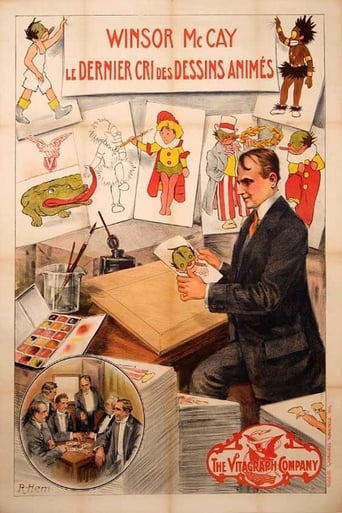
- The animation technique used was probably the cut-out method popularized by early animators like Winsor McCay
- This film represents an early example of how animation was used for political commentary before it became primarily children's entertainment
Visual style
The cinematography of 'TR's Arrival in Africa' reflects the technical limitations of early animation. The film was likely shot frame by frame using a stationary camera, as movement of the camera was rare in early animation. The visual style would have featured simple, bold outlines and minimal backgrounds, typical of cut-out animation of the period. The characters were probably rendered in black and white, as color animation was not yet commercially viable. The animation techniques would have included basic movements like walking, arm gestures, and exaggerated facial expressions to convey emotion. The jungle setting would have been suggested through simple drawings of palm trees and vegetation. The visual gags would have been broad and easily readable, as subtle animation was difficult to achieve with the technology available.
Innovations
While technically primitive by modern standards, 'TR's Arrival in Africa' represented several achievements for its time. It demonstrated the viability of using animation for contemporary political satire, a relatively innovative concept in 1910. The film's successful integration of a recognizable public figure into animated content showed early potential for character-based animation. The production likely employed cut-out animation techniques, which were more efficient than frame-by-frame drawing and allowed for some reuse of character elements. The film's timing and rhythm, crucial for comedy, would have required careful planning in the animation process. The ability to create recognizable caricatures of both Roosevelt and various jungle animals showed growing sophistication in character design. The film also demonstrated how animation could quickly respond to current events, a capability that would become increasingly important in political cartooning and satire.
Music
As a silent film from 1910, 'TR's Arrival in Africa' would have been accompanied by live musical performance during its theatrical exhibition. The typical accompaniment would have been a pianist or small theater orchestra providing background music and sound effects. The music would likely have included jaunty, comedic tunes to match the light tone of the film, with more frantic tempo changes during the animals' panic scenes. Sound effects might have been created by the musician or by theater staff using props - perhaps drum beats for approaching footsteps or whistle sounds for the monkey's warnings. The score would have been improvised or drawn from standard theatrical music libraries of the period, as original film scores were not yet common practice. The musical accompaniment would have been crucial in conveying the comedic timing and emotional shifts of the animated action.
Famous quotes
The lookout monkey's warning: 'The hunter is coming! The great white hunter Roosevelt is coming!'
Various animal cries of panic: 'Hide! Quick! He'll shoot us all!'
Memorable scenes
- The opening scene with the monkey lookout spotting Roosevelt's approach from a treetop perch, frantically warning the other animals with exaggerated gestures and movements
What audiences thought
Audiences in 1910 likely found the film entertaining and topical, given the massive public interest in Roosevelt's African adventures. The sight of animated animals panicking at Roosevelt's approach would have provided comic relief in theater programs. The film's short length and simple visual gags made it accessible to audiences of all ages. Contemporary viewers would have recognized Roosevelt's caricature immediately and appreciated the gentle satire of his hunting reputation. The film probably generated laughter in vaudeville theaters and nickelodeons where it was shown, serving its purpose as light entertainment between live acts or as part of a mixed bill of short films. Modern audiences viewing the film today appreciate it primarily for its historical value and as an example of primitive animation techniques.
Film connections
Influenced by
- Newspaper political cartoons
- Vaudeville comedy
- Circus animal acts
- Contemporary news coverage of Roosevelt's safari
This film influenced
- Later political animation shorts
- Jungle-themed cartoons
- Hunter-versus-animals comedy films
Film restoration
The preservation status of 'TR's Arrival in Africa' is uncertain, as many films from this early period have been lost. The film exists in historical records and filmography databases, but whether a physical or digital copy survives is unclear. Early animated shorts were particularly vulnerable to loss due to the fragile nature of nitrate film stock and the perception that animated shorts were disposable entertainment. If copies do exist, they would likely be held in film archives such as the Library of Congress, the Museum of Modern Art's film collection, or specialized animation archives. The film's historical significance makes it a priority for preservation efforts if surviving elements are discovered.
Where to watch
- Due to its age and uncertain preservation status, 'TR's Arrival in Africa' is not readily available on modern streaming platforms. If preserved copies exist, they might be accessible through specialized film archives, animation history collections, or academic institutions. The film could potentially be found in early animation compilation DVDs or online archives of public domain films. Animation historians and researchers might have access to the film through specialized channels. Viewers interested in seeing this film should check with major film archives or animation museums that specialize in early cinema.