
Window Washers
"A cat and mouse tackle Farmer Al Falfa's dirty windows."
Keys: Space play/pause · ←/→ 10s · F fullscreen · M mute · </> speed
About this film
Farmer Al Falfa's car comes to life and sprays oil on his window before driving away. Al Falfa now needs a window washer. A cat, using a mouse as a washrag, takes the job.
Cast & crew
More films like this
More Animation films
View all →


More from Paul Terry
View all →
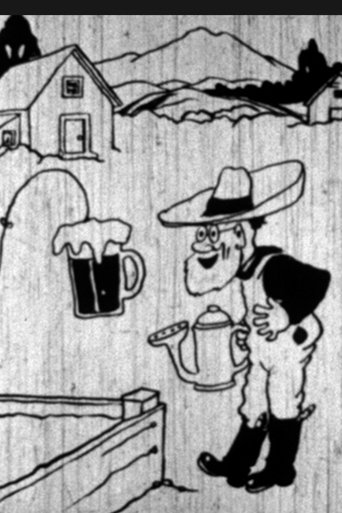
More about this film
About the production
Release dateApril 1925
Box officeUnknown - silent shorts typically earned revenue through theater rental fees rather than box office tracking
ProductionPaul Terry Productions, Terrytoons Studio
Filmed inNew York, New York - Terrytoons Studio
This short was produced during the early years of Terrytoons, when Paul Terry was still perfecting his animation techniques and establishing his studio's signature style. The film utilized traditional cel animation methods, with each frame hand-drawn on paper before being transferred to celluloid sheets for coloring. Like many cartoons of the silent era, it would have been accompanied by live musical accompaniment during theatrical exhibition, with the theater organist or pianist providing appropriate mood music and sound effects.
Themes
Man versus machineAnimal comedyUnconventional problem-solvingDark humorRural life
Themes & topics
anthropomorphic carwindow washingcat and mousefarmersilent animationslapstick comedyanimal cruelty humoremploymenttransportationpractical jokes
Historical background
Window Washers (1925) survives in catalogs and archives as a record of late silent cinema.
Why this film matters
Scholars and collectors reference Window Washers when discussing how late silent cinema filmmakers addressed popular themes.
Making of
The production of 'Window Washers' exemplifies the labor-intensive animation process of the mid-1920s. Each second of animation required 24 separate drawings, meaning this six-minute short contained approximately 8,640 individual frames. Paul Terry, known for his business-minded approach to animation, maintained a fast-paced production schedule, often completing a new cartoon every week. The animators worked on large wooden drawing boards with pegs to keep the paper aligned, using graphite pencils for the initial drawings before inking the final versions. The cel process was still relatively new, and Terrytoons was among the studios that helped perfect this technique for mass production. The backgrounds were painted separately on larger sheets, typically using watercolors, while the character movements were drawn on transparent celluloid sheets. The sound effects and musical accompaniment were created live during each theatrical screening, with the projectionist providing cue sheets to guide the musicians. The cat and mouse dynamic in this short reflects Terry's understanding of animal-based comedy, which would become a staple of animation throughout the century.
What critics said
Trade coverage around 1925 discussed Window Washers in terms of craft and audience appeal rather than blockbuster scale.
Did you know?
- Farmer Al Falfa was Paul Terry's first recurring animated character, created in 1916 and appearing in over 100 cartoons through the 1950s
- The character was originally called 'Farmer Gray' in his first appearance before Terry renamed him to Al Falfa
- Paul Terry founded his animation studio in 1920, making 'Window Washers' one of the earlier productions in the Terrytoons catalog
- The mouse used as a washrag became a recurring gag in Terrytoons cartoons, exemplifying the studio's slightly darker humor compared to competitors like Disney
- This short was released during the same year as Disney's first Alice Comedy, placing it in the competitive landscape of early animation studios
- Terrytoons would later become famous for characters like Mighty Mouse and Heckle & Jeckle, but Farmer Al Falfa remained Terry's personal favorite character
- The animation was likely produced by a small team of 3-4 animators, standard for Terrytoons productions of the mid-1920s
- Unlike many studios of the era, Terrytoons never switched to sound synchronized cartoons until 1929, several years after the technology became available
- Farmer Al Falfa cartoons were particularly popular in rural areas due to the character's agricultural background and relatable situations
- The original nitrate film prints of this short are extremely rare, as most have decomposed over the past century
Visual style
As an animated short, 'Window Washers' utilized the standard cinematography techniques of 1920s animation production. The film was shot on 35mm black and white film stock, likely using an Acme or Mitchell animation camera mounted on a specialized stand with a platen to hold the animation cels flat against the glass. The camera work was static, as was typical for animation of this era, with all movement created through the drawings themselves rather than camera motion. The backgrounds were painted with attention to depth and perspective, creating the illusion of three-dimensional space within the two-dimensional medium. The animation employed limited techniques for creating depth, primarily through size scaling and layering of background elements. The film's visual style was characterized by bold outlines and simplified character designs, optimized for clarity when projected on large theater screens. The contrast between light and dark elements was carefully considered to ensure visibility in theaters with varying projection quality. The animation timing followed the standard 24 frames per second, though animators often worked on twos (12 drawings per second) to save time and money.
Innovations
While 'Window Washers' did not introduce groundbreaking technical innovations, it exemplified several important advances in animation production efficiency that were being refined at Terrytoons in the mid-1920s. The film demonstrated the studio's mastery of the cel animation process, which allowed for smoother character movement and more economical production compared to earlier paper-on-paper animation techniques. The recycling of background elements and limited animation cycles for repetitive movements showed Terry's focus on cost-effective production methods. The film's timing and pacing reflected an understanding of how to create effective comedy within the constraints of silent animation, using clear visual storytelling that required no dialogue. The character designs were optimized for ease of animation while maintaining recognizability - a crucial balance for series production. The studio's use of standardized character model sheets ensured consistency across different animators' work. The film also demonstrated effective use of the multiplane effect through layered cels to create depth without complex camera movements. These technical approaches, while not revolutionary individually, contributed to Terrytoons' reputation for reliable, efficient animation production.
Music
As a silent film, 'Window Washers' did not have an original synchronized soundtrack, but would have been accompanied by live musical performance during theatrical exhibition. Theater organists or pianists would receive cue sheets from Terrytoons indicating suggested musical themes and sound effect timings for different scenes. The music would typically consist of popular songs of the era, classical pieces, and stock musical cues from publishers like Sam Fox or Belwin. For the opening scenes with the mischievous car, performers might use upbeat, playful music, while the window washing sequence could feature comedic, slightly frantic tunes. The cat's appearance might be accompanied by sly, sneaky musical themes, and the mouse's plight would be underscored with frantic, high-pitched passages. Sound effects were created live using various devices, including slide whistles, cowbells, woodblocks, and specialized percussion instruments. Some larger theaters might have employed small sound effects orchestras or used the theater organ's sound effects capabilities. The musical accompaniment was crucial to the silent film experience, providing emotional context and enhancing the comedic timing of the visual gags.
Famous quotes
[Silent film - no dialogue, but intertitles might have included text like: 'My car has gone crazy!' or 'Window washer wanted - apply within']
Memorable scenes
- The surreal moment when Farmer Al Falfa's automobile sprouts eyes and a personality, deliberately spraying oil on the windshield before driving away autonomously
- The cat's professional approach to window washing, pulling out his business card and presenting himself as a qualified cleaner
- The darkly comedic sequence where the cat grabs a terrified mouse and uses it as a living washrag, dragging it across the glass while the mouse struggles desperately
- The final reveal of the sparkling clean window, with the cat looking proud of his work while the mouse's fate remains humorously ambiguous
What audiences thought
Audiences in 1925 generally received Farmer Al Falfa cartoons enthusiastically, particularly in smaller towns and rural areas where the character's agricultural background resonated with viewers. The simple visual humor translated well across different demographics, making Terrytoons shorts reliable crowd-pleasers for theater owners. Children especially enjoyed the exaggerated animations and physical comedy, while adults appreciated the clever wordplay in the intertitles and the slightly more sophisticated humor occasionally embedded in the visuals. The cat and mouse dynamic in 'Window Washers' was particularly effective, as this pairing was already becoming a popular comedy trope in animation and live-action films alike. Theater owners valued Terrytoons productions because they were consistently entertaining and helped fill out theater programs economically. Audience feedback from the period, gathered through theater reports and trade publication surveys, indicated that Farmer Al Falfa was among the more recognizable and popular cartoon characters of the mid-1920s, though he never achieved the same level of fame as contemporaries like Felix the Cat or Oswald the Lucky Rabbit.
Film connections
Influenced by
- Felix the Cat cartoons
- Bringing Up Father comic strip
- Charlie Chaplin comedies
- Buster Keaton films
- Mickey McGuire shorts
This film influenced
- Later Farmer Al Falfa cartoons
- Tom and Jerry series
- Looney Tunes cat and mouse cartoons
- MGM's Barney Bear shorts
- Walter Lantz Woody Woodpecker cartoons
Film restoration
Like many silent-era animated shorts, 'Window Washers' exists in a precarious preservation state. The original nitrate film prints have largely decomposed over the past century, as nitrate film was chemically unstable and prone to spontaneous combustion. A few 16mm reduction prints from the 1930s and 1940s are known to exist in private collections and small archives. The Library of Congress holds a copy in their motion picture collection, though it may be incomplete or in poor condition. Some footage may exist in compilation films released by Terrytoons in the 1950s that included older Farmer Al Falfa cartoons. The film has not been officially restored or remastered for home video release. Digital preservation efforts have been limited due to the lack of funding for silent animation restoration. The UCLA Film and Television Archive maintains a catalog entry for the film, but physical access is restricted due to the fragility of existing prints. Animation enthusiasts have occasionally uploaded fragments or poor-quality transfers to online archives, but these are typically incomplete and deteriorated copies.
Where to watch
- Library of Congress Motion Picture Collection (on-site viewing by appointment)
- UCLA Film and Television Archive (research access)
- Various online animation archives and public domain sites (quality varies)
- Occasional screenings at silent film festivals or animation retrospectives
- Private collector screenings through film societies
- Potential inclusion in Terrytoons compilation releases (rare)