Ernst Matray
Actor
Born: May 27, 1891 in Budapest, Hungary Died: October 30, 1978 Active: 1907-1955 Birth Name: Ernst Mátray
Films
2 films
About Ernst Matray
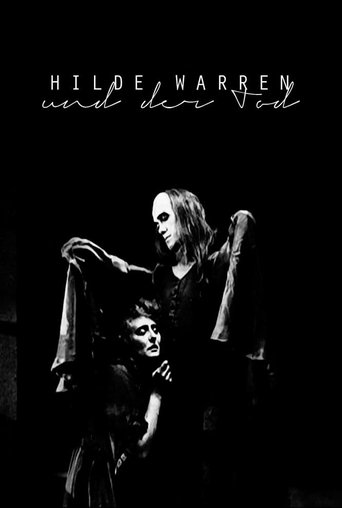
Multifaceted Hungarian-born artist who became a significant figure in the European silent film era and later a respected choreographer in Hollywood. He began his career as a dancer and pantomime artist under the stage director Max Reinhardt in Berlin, which heavily influenced his expressive and physical acting style. During the 1910s, he became a popular star of German silent cinema, often portraying whimsical or grotesque characters that utilized his background in dance. One of his most notable early roles was as the personification of Death in the 1917 film 'Hilde Warren und der Tod' (Hilde Warren and Death), written by Fritz Lang. As the political climate in Europe shifted, Matray, who was of Jewish descent, fled Nazi Germany in the 1930s, eventually settling in the United States. In Hollywood, he transitioned from acting to choreography and directing musical sequences, contributing his unique European avant-garde sensibilities to major MGM productions. He remained active in the arts until his return to Europe later in life, leaving behind a legacy that bridged the gap between silent film pantomime and the Golden Age of Hollywood musicals.
The Craft
On Screen
Matray's acting style was deeply rooted in the art of pantomime and expressionist movement. Having trained under Max Reinhardt, he relied on heightened physical gestures and facial elasticity rather than naturalism, which made him a perfect fit for the silent screen's visual storytelling. His performances often carried a surreal or otherworldly quality, particularly in his portrayals of supernatural or eccentric characters.
Milestones
- Lead dancer and actor in Max Reinhardt's theater company in Berlin
- Starring role as 'Death' in the Fritz Lang-scripted 'Hilde Warren und der Tod' (1917)
- Founded the 'Matray Ballet' with his wife Maria Solveg
- Choreographed the 'Uncle Tom's Cabin' ballet in the film 'The King and I' (1956) - though often credited to Jerome Robbins, Matray — key collaborator on various musical sequences in that era
- Directed the musical sequences for the MGM classic 'Pride and Prejudice' (1940)
- Staged the elaborate dance sequences for 'George White's Scandals' (1945)
Best Known For
Iconic Roles
Must-See Films
Accolades
Won
- German Film Award (Filmband in Gold) for Lifetime Achievement (1972)
Nominated
- Grand Prix at the Cannes Film Festival (Nominated as Director for 'Adventure in Music', 1946)
Special Recognition
- Honorary Member of the German Academy of Performing Arts
- Special recognition for his contributions to the development of the 'Film-Dance' genre in early German cinema
Working Relationships
Worked Often With
Studios
Why They Matter
Impact on Culture
Pivotal figure in bringing the aesthetic of European expressionist dance to the mainstream Hollywood musical. His work helped elevate the role of the 'choreographer' from a mere dance instructor to a visual stylist who influenced the camera movement and editing of musical numbers. In the silent era, he was one of the few actors who successfully transitioned into a full-time creative role behind the scenes, proving the longevity of physical theater training.
Lasting Legacy
Matray is remembered today as a bridge between the avant-garde theater of Berlin and the commercial brilliance of Hollywood's Golden Age. Film historians value his early silent work for its unique physical intensity, while musical theater scholars study his Hollywood sequences for their technical innovation. His survival and subsequent success as an émigré artist show the resilience of the European creative class during the mid-20th century.
Who They Inspired
He influenced the way movement was captured on film, moving away from static 'stage-like' filming of dances toward a more dynamic, cinematic approach. His work with Max Reinhardt influenced a generation of German expressionist actors, and his later teaching in the U.S. Impacted the stylistic choices of Hollywood dance directors.
Off Screen
Matray was married to the actress and dancer Maria Solveg (born Maria Bakema), who was his frequent professional partner; they collaborated on numerous stage and film projects as a dance duo. He was part of the influential circle of European émigrés in Los Angeles during the 1940s, which included figures like Thomas Mann and Bertolt Brecht. After the war, he eventually returned to Germany and lived in Hamburg, where he continued to work in theater and television.
Education
Trained at the Royal Hungarian Opera House in Budapest; further studied under Max Reinhardt at the Deutsches Theater in Berlin.
Family
- Maria Solveg (married 1927-1958)
- Elisabeth 'Liesl' Neumann (married 1960-1978)
Did You Know?
- He was a champion fencer in his youth in Hungary.
- Matray was one of the first actors to work with a young Fritz Lang, who was then primarily a screenwriter.
- He directed one of the first 'concert films' in 1944, titled 'Adventure in Music'.
- His wife, Maria Solveg, was the sister of the famous writer and screenwriter Hans Székely.
- He was known for his 'grotesque' dance style, which combined comedy with slightly unsettling, jerky movements.
- During his time in Hollywood, he was often called upon to 'fix' dance sequences that lacked visual flair.
- He returned to Germany in 1955 to stage the first German production of 'Kiss Me, Kate'.
In Their Own Words
Movement is the language of the soul when words are too heavy to carry the meaning.
In the silent film, the body was the only voice we had; we had to make it sing.
Hollywood is a factory, but even in a factory, one can find the space to create a small piece of art.
Frequently Asked Questions
Who was Ernst Matray?
Hungarian with credits in this catalog. He was a key member of Max Reinhardt's theater company and is noted for his expressive, pantomime-based acting style.
What films is Ernst Matray best known for?
Titles linked here include Hilde Warren und der Tod (1917), The Hunchback and the Dancer (1920).
When was Ernst Matray born and when did he die?
Born May 27, 1891; died October 30, 1978.
What awards did Ernst Matray win?
His most significant honor was the German Film Award (Filmband in Gold) for Lifetime Achievement, which he received in 1972 for his long-standing contributions to the industry.
What was Ernst Matray's acting style?
His style was characterized by 'grotesque' pantomime and expressionist movement, utilizing his background as a professional dancer to create highly visual and physically demanding performances.