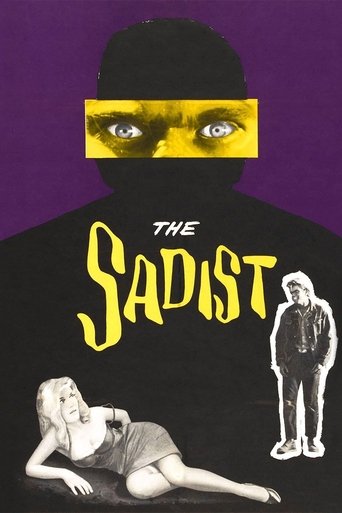
James Landis
Director
Born: 1923 in California, United States Died: 1991 Active: 1963-1963
Films
1 film
About James Landis
American film director who emerged briefly in the early 1960s, leaving an indelible mark on cult cinema despite his limited filmography. His most significant work, 'The Sadist' (1963), to his ability to create compelling psychological tension on a minimal budget. Born in California in 1923, Landis entered the film industry during a transitional period in Hollywood, working outside the major studio system. His directorial approach demonstrated a keen understanding of suspense and psychological horror, drawing inspiration from real-life crime stories. The film, loosely based on the Charles Starkweather murder spree, showcased Landis's talent for creating claustrophobic tension and exploring the darker aspects of human nature. Despite the critical acclaim his work would later receive in cult cinema circles, Landis's career remained brief and he never achieved mainstream recognition. He passed away in 1991, leaving behind a singular but influential work that continues to be studied by horror and exploitation film enthusiasts.
The Craft
Behind the Camera
Landis's directing style emphasized psychological tension and claustrophobic atmosphere, utilizing black and white cinematography to enhance the film's noir elements. He demonstrated a remarkable ability to create suspense through minimal settings and focused character dynamics, often using close-ups and tight framing to intensify the psychological horror. His approach to violence was suggestive rather than explicit, relying more on psychological dread than graphic content, which contributed to the film's enduring effectiveness.
Milestones
- Directed 'The Sadist' (1963)
- Created influential cult horror film on minimal budget
- Adapted real-life crime story for psychological thriller
Best Known For
Must-See Films
Accolades
Special Recognition
- Cult film recognition for 'The Sadist'
Working Relationships
Worked Often With
Studios
Why They Matter
Impact on Culture
James Landis's 'The Sadist' has had a significant and lasting impact on cult cinema and the horror genre, despite its modest origins. The film is frequently cited as an early example of the psychological thriller genre that would become increasingly popular in the decades that followed. Its influence can be seen in subsequent low-budget horror films that prioritize atmosphere and psychological tension over explicit violence. The movie's exploration of random violence and the banality of evil prefigured many later films in the genre, and its status as a cult classic has grown substantially since its initial release.
Lasting Legacy
James Landis's legacy is defined almost entirely by 'The Sadist,' which has achieved cult status among horror and exploitation film enthusiasts. The film is regularly screened at revival theaters and film festivals dedicated to cult cinema, and it has been released on home video formats that cater to cult film collectors. Film scholars and critics often cite 'The Sadist' as an example of how effective horror filmmaking can be achieved with minimal resources and creative vision. Landis is remembered as a director who, despite working with significant constraints, created a film that has endured far beyond its initial release.
Who They Inspired
Landis's work on 'The Sadist' influenced subsequent generations of independent horror filmmakers, particularly those working with limited budgets. The film's approach to creating tension through psychological means rather than relying on elaborate special effects has been emulated by numerous directors in the horror and thriller genres. His ability to craft compelling narratives within confined settings has served as inspiration for filmmakers seeking to maximize the impact of minimal resources.
Off Screen
Very little is publicly documented about James Landis's personal life beyond his professional work. He maintained a low profile throughout his career and did not seek the spotlight that often accompanies film directors. His brief tenure in the film industry suggests he may have pursued other professional interests outside of cinema.
Did You Know?
- 'The Sadist' was loosely based on the real-life murder spree of Charles Starkweather and Caril Ann Fugate
- The film was shot in just three days on a budget of approximately $33,000
- Despite its cult status, 'The Sadist' was not a commercial success upon its initial release
- The film was one of the first American movies to be rated 'X' for violence rather than sexual content
- Arch Hall Jr., who played the lead role, was a rock singer and teen idol before acting
- The entire film takes place in a single location - a remote desert gas station and junkyard
- Landis never directed another feature film after 'The Sadist'
- The film's title was changed from 'Profile of Terror' to 'The Sadist' for its release
- The movie was featured in the book 'Cult Movies' by Danny Peary, cementing its cult status
- Despite being an American production, the film found greater initial success in European markets
In Their Own Words
Sometimes the most terrifying monsters are the ones that look just like us
Horror doesn't need a big budget, just a big imagination
Frequently Asked Questions
Who was James Landis?
American on YTB.my.' His career was brief, with this psychological thriller being his most significant and widely recognized work in the film industry.
What films is James Landis best known for?
Titles linked here include The Sadist (1963).
When was James Landis born and when did he die?
Born 1923; died 1991.
What awards did James Landis win?
James Landis did not receive any major formal awards during his lifetime. However, his film 'The Sadist' has gained significant cult recognition and is celebrated among horror film enthusiasts as an influential work in the genre.
What was James Landis's directing style?
Landis's directing style emphasized psychological tension and claustrophobic atmosphere, using black and white cinematography to enhance noir elements. He excelled at creating suspense through minimal settings and psychological horror rather than explicit violence, making the most of limited resources.