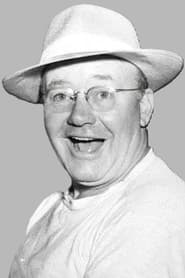
Leslie Goodwins
Director
- Active
- 1928-1940s
Films directed 1
About Leslie Goodwins
Leslie Goodwins was an American film director and writer whose career was primarily centered in the studio era, with his best-known work coming after the silent period and into the early sound years. He is credited with directing the 1928 short or featurette Holding His Own, which places him in the late silent-era production landscape and marks him as a working filmmaker during a transitional moment in cinema history. Goodwins went on to work in Hollywood as a director on a variety of modestly budgeted pictures, especially shorts and programmer features, a common career path for many studio craftsmen of the period. His name appears in film history more as a reliable studio director than as a major auteur, which is typical of many filmmakers who helped sustain the industrial machinery of classic Hollywood. Because documentation on his personal life is limited in standard reference sources, much of what survives about him is tied directly to his screen credits rather than extensive biographical records. He remains a figure of interest to classic cinema researchers because his career reflects the often-overlooked working directors who kept the silent and early sound film industries productive. His surviving filmography suggests a practical, efficient filmmaker working within studio demands rather than a personality defined by publicity or celebrity.
More about Leslie Goodwins
Behind the camera
Leslie Goodwins appears to have worked in the efficient, studio-bound style common to mid-tier directors of the late silent and early sound eras. His directing likely emphasized clear storytelling, economical scene construction, and dependable pacing suited to short subjects, programmers, and lower-budget productions. Rather than a visually flamboyant or highly personalized style, his work fits the profile of a competent studio professional adapting to changing technology and production methods during the transition from silent cinema to sound. Surviving credits suggest a pragmatic approach that prioritized production needs, actor timing, and straightforward narrative delivery.
In film history
Leslie Goodwins's cultural impact is best understood within the broader framework of classic Hollywood labor rather than star-driven fame. Directors like Goodwins were essential to the functioning of the studio system, supplying reliable content for theaters and helping maintain the enormous volume of films needed during the silent and early sound eras. Even when individual names were not widely promoted, filmmakers in his position shaped audience taste, helped standardize cinematic storytelling, and supported the evolution of film grammar across the industry. His work on Holding His Own situates him among the many transitional-era craftsmen who bridged silent cinema and the coming dominance of synchronized sound.
Later reputation
Goodwins's legacy lies in the historical record of studio-era filmmaking and in the preservation of smaller, lesser-known credits that reveal how classic Hollywood actually operated. While he is not remembered as a major auteur or awards figure, his career is representative of the many directors whose labor made the studio system function smoothly. For film historians, such careers are valuable because they illuminate the ecosystem of silent and early sound production beyond the marquee names. His legacy is therefore one of craft, professionalism, and participation in the foundational decades of American cinema.
Influence
Leslie Goodwins's influence was likely indirect rather than widely attributed to named successors. As with many studio directors who worked on shorts and modest productions, his practical methods contributed to the professional norms passed along within Hollywood production departments. His work would have reinforced expectations for efficiency, continuity, and audience-friendly storytelling that later directors inherited as part of the studio tradition. Although no specific protégés are well documented, his career exemplifies the kind of behind-the-scenes influence that shaped the institutional style of classic cinema.
Off screen
Publicly available information about Leslie Goodwins's personal life is extremely limited in standard film reference sources. Unlike major stars or marquee directors of the classic period, he does not appear to have left behind a widely documented record of marriages, family life, or personal controversies. As a result, his biography is preserved mainly through film credits and studio-era listings rather than newspaper profiles or memoirs. This scarcity of personal detail is common for behind-the-scenes filmmakers who worked steadily but without substantial publicity.
Credits
- Directed Holding His Own (1928), placing him in the late silent-era transition period
- Worked in Hollywood as a studio-era director on short subjects and feature productions
- Built a career as a reliable craftsman within classic film production rather than as a celebrity auteur
- Contributed to the industrial filmmaking system that produced large numbers of entertainment films during the studio era
Films
- Holding His Own (1928)
Notes
- He is associated with the late silent era through his 1928 directing credit on Holding His Own.
- He appears to have been a working studio director rather than a high-profile celebrity filmmaker.
- Documentation on his personal life is sparse, which is common for many early Hollywood craftsmen.
- His career reflects the many mid-level directors who sustained the volume production needs of classic Hollywood.
- His known filmography suggests experience with economical, production-driven filmmaking.
- He is a useful example of how many early directors are remembered primarily through surviving credits rather than biographies.
- He likely worked across the silent-to-sound transition period, though full filmographic documentation is limited in readily available sources.
Questions
Who was Leslie Goodwins?
Leslie Goodwins was an American film director active in the studio era, known in surviving records for directing Holding His Own (1928). He appears to have been a working Hollywood craftsman rather than a celebrity auteur, contributing to the industrial production of films during the late silent and early sound periods.
What films is Leslie Goodwins best known for?
The clearest surviving credit tied to him is Holding His Own (1928). Additional filmography information is limited in standard reference sources, but he is generally remembered as a studio-era director whose work belonged to the practical side of classic Hollywood production.
When was Leslie Goodwins born and when did he die?
Reliable public reference sources do not consistently provide verified birth and death dates for Leslie Goodwins. Because of that, both his exact birth date and death date remain uncertain in the available historical record.
What awards did Leslie Goodwins win?
No major awards or formal honors are commonly documented for Leslie Goodwins in standard classic-cinema sources. His career appears to have been built on steady studio work rather than public award recognition.
What was Leslie Goodwins's directing style?
His directing style is best described as practical, economical, and studio-oriented. Like many directors working in short subjects and lower-budget productions, he likely emphasized clear storytelling, efficient pacing, and dependable execution rather than a highly stylized visual signature.
What is Leslie Goodwins's legacy in film history?
His legacy is that of a dependable classic Hollywood filmmaker whose career illustrates how the studio system functioned behind the scenes. Even without celebrity status, directors like Goodwins were essential to keeping the film industry productive during the silent era and early sound transition.