Lyudmila Glazova
Actor
Born: November 11, 1907 in Saint Petersburg, Russian Empire Died: October 16, 1983 Active: 1936-1945 Birth Name: Lyudmila Ivanovna Glazova
Films
3 films
About Lyudmila Glazova
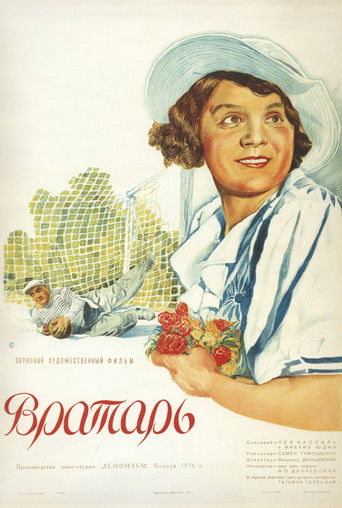
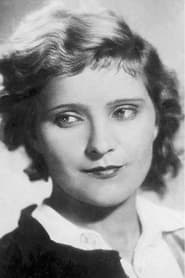
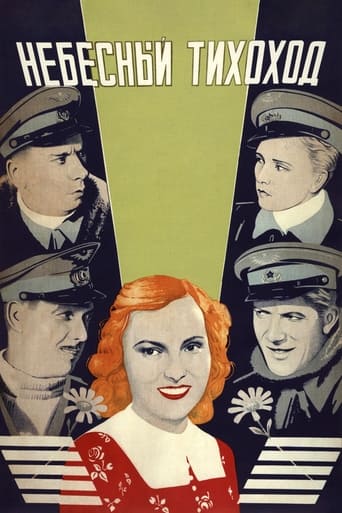
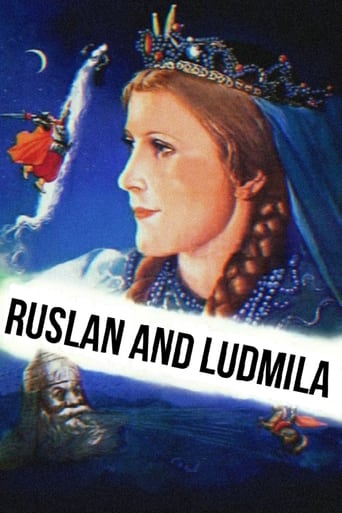
Lyudmila Ivanovna Glazova — prominent Soviet actress whose career flourished during the Stalinist era of Soviet cinema. Born in Saint Petersburg in 1907, she developed her craft at the prestigious Leningrad Institute of Performing Arts, graduating in the early 1930s as Soviet cinema was transitioning from silent films to talkies. Her breakthrough came with the sports drama 'The Goalkeeper' in 1936, where she demonstrated the emotional depth and naturalistic style that would become her trademark. Glazova reached the pinnacle of her career with her starring role as Ludmila in the lavish fantasy adaptation 'Ruslan and Ludmila' (1940), based on Pushkin's epic poem, which showcased her ability to embody both romantic idealism and dramatic intensity. During World War II, she continued to perform in films that supported the Soviet war effort, including 'The Sky Slow-Mover' (1945), which was released just as the war concluded. Her career, while relatively brief compared to some contemporaries, on Soviet cinema during a crucial period of its development. After the mid-1940s, her film appearances became less frequent, though she remained respected within the Soviet film community until her death in 1983.
The Craft
On Screen
Glazova was known for her naturalistic and emotionally nuanced performances, which stood out during an era when Soviet acting often emphasized theatricality. Her approach combined subtle facial expressions with a dignified presence, allowing her to convey complex emotions without excessive melodrama. She particularly excelled in romantic roles, bringing both vulnerability and strength to her characters, which made her especially effective in period pieces and literary adaptations.
Milestones
- Breakthrough role in 'The Goalkeeper' (1936)
- Starring role as Ludmila in 'Ruslan and Ludmila' (1940)
- Performance in wartime drama 'The Sky Slow-Mover' (1945)
- Graduation from Leningrad Institute of Performing Arts
- Recognition as Honored Artist of the RSFSR
Best Known For
Iconic Roles
Must-See Films
Accolades
Won
- Honored Artist of the RSFSR
Special Recognition
- Honored Artist of the RSFSR (1947)
- Order of the Badge of Honor
Working Relationships
Worked Often With
Studios
Why They Matter
Impact on Culture
Lyudmila Glazova represented the ideal Soviet woman of her era - strong, beautiful, and devoted to socialist principles. Her performances helped establish the archetype of the Soviet heroine who could be both romantic and revolutionary, embodying the complex balance between personal desire and collective duty that characterized Stalinist cultural policy. Her role in 'Ruslan and Ludmila' was particularly significant as it was.
Lasting Legacy
Glazova's legacy lies in her contribution to establishing the visual and performative language of Soviet cinema during its formative sound era. Though her filmography is relatively small, each role she played was carefully crafted to represent Soviet ideals while maintaining artistic integrity. Her work in adaptations of Russian literature helped legitimize Soviet cinema as a vehicle for cultural preservation and education, not just propaganda. Today, film historians study her performances as examples of how Soviet actors navigated the delicate balance between artistic expression and political conformity during.
Who They Inspired
Glazova influenced subsequent generations of Soviet actresses by demonstrating how to maintain personal artistry within the constraints of state-controlled cinema. Her naturalistic approach to acting, which emphasized subtlety over grand gestures, paved the way for more psychologically complex performances in later Soviet cinema. Younger actresses studied her technique for finding emotional truth in ideologically prescribed roles, a skill that became increasingly important as Soviet cinema evolved in the post-Stalin era.
Off Screen
Lyudmila Glazova led a relatively private life away from the spotlight, maintaining the discretion expected of Soviet cultural figures during her era. She was married to fellow actor Nikolai Kryuchkov,. The couple's relationship was closely followed by Soviet media during the height of their careers in the late 1930s and early 1940s. After her film career diminished in the post-war years, Glazova focused on theater work and teaching, sharing her expertise with younger generations of Soviet actors. She remained respected within the Soviet artistic community until her death in Moscow at age 75.
Education
Leningrad Institute of Performing Arts (graduated early 1930s)
Family
- Nikolai Kryuchkov (1938-1945)
Did You Know?
- Her role in 'Ruslan and Ludmila' required extensive preparation, including horseback riding lessons and historical costume fittings
- The film 'Ruslan and Ludmila' was
- During World War II, Glazova participated in concert brigades that entertained Soviet troops at the front lines
- She was among the first Soviet actresses to successfully transition from silent films to talkies
- Her marriage to Nikolai Kryuchkov was considered one of Soviet cinema's power couples of the 1930s-40s
- Glazova was known for her meticulous preparation for roles, often spending months researching historical periods
- She turned down several Hollywood offers during the 1930s, preferring to remain in the Soviet Union
- After retiring from film, she taught acting at her alma mater, the Leningrad Institute of Performing Arts
In Their Own Words
Acting is not about pretending to be someone else, but about finding the truth within yourself that connects to the character.
In Soviet cinema, we don't just tell stories - we build the future through our art.
The camera doesn't lie, so the actor must be absolutely honest in their emotions.
Frequently Asked Questions
Who was Lyudmila Glazova?
Prominent Soviet actress active during the 1930s and 1940s, best known for her roles in 'The Goalkeeper' (1936), 'Ruslan and Ludmila' (1940), and 'The Sky Slow-Mover' (1945). She was recognized for her naturalistic acting style and was awarded the title of Honored Artist of the RSFSR for her contributions to Soviet cinema.
What films is Lyudmila Glazova best known for?
Titles linked here include The Goalkeeper (1936), Ruslan and Ludmila (1940).
When was Lyudmila Glazova born and when did she die?
Born November 11, 1907; died October 16, 1983.
What awards did Lyudmila Glazova win?
Glazova was awarded the title of Honored Artist of the RSFSR in 1947,. She also received the Order of the Badge of Honor for her contributions to Soviet cinema and culture.
What was Lyudmila Glazova's acting style?
Glazova was known for her naturalistic and emotionally nuanced performances, which stood out during an era when Soviet acting often emphasized theatricality. She combined subtle facial expressions with a dignified presence, excelling particularly in romantic roles where she could convey both vulnerability and strength.