S. Panju
Director
Born: 1914 in Tamil Nadu, India Died: 1994 Active: 1952-1952 (as solo director), 1940s-1960s (as part of Krishnan-Panju duo) Birth Name: Panju Arunachalam
Films
1 film
About S. Panju
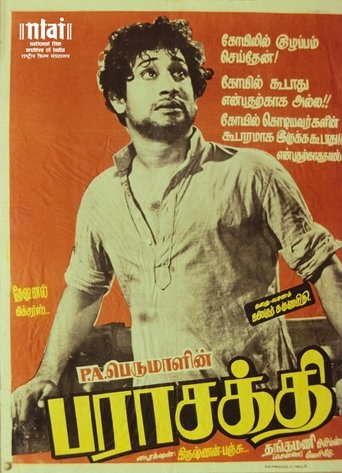
Panju Arunachalam, professionally known as S. Panju, was a Tamil film director who formed one of Indian cinema's most successful directing partnerships. He was born in 1914 in Tamil Nadu and began his film career by teaming up with A. S. A. Sami (Krishnan) to create the directing duo 'Krishnan-Panju'. Their most significant achievement came in 1952 when they directed 'Parasakthi', a film that launched the career of the actor Sivaji Ganesan and revolutionized Tamil cinema with its bold social themes. Panju was known for his keen understanding of social issues and his ability to translate them into compelling cinematic narratives. The directing duo was particularly adept at adapting stage plays to the screen, bringing theatrical intensity to their films while maintaining cinematic appeal. Throughout their partnership, they directed numerous successful films that addressed contemporary social issues and featured strong character-driven stories. Panju's contribution to Tamil cinema was significant, particularly in establishing a new wave of socially conscious filmmaking in the 1950s.
The Craft
Behind the Camera
Known for socially relevant themes, strong narrative structure, and successful adaptation of stage plays to cinema. His directing style emphasized realistic storytelling while maintaining dramatic intensity, particularly effective in bringing theatrical elements to the screen.
Milestones
- Directed 'Parasakthi' (1952) - launched Sivaji Ganesan's career
- Part of successful directing duo Krishnan-Panju
- Pioneered socially conscious themes in Tamil cinema
- Adapted stage plays successfully to film medium
Best Known For
Must-See Films
Accolades
Won
- Filmfare Award for Best Film (Tamil) for 'Parasakthi' (1952)
Special Recognition
- Recognized as pioneer of Tamil cinema's golden era
- Honored for launching Sivaji Ganesan's legendary career
Working Relationships
Worked Often With
Studios
Why They Matter
Impact on Culture
Panju Arunachalam, as part of the Krishnan-Panju duo, played a crucial role in transforming Tamil cinema by introducing socially relevant themes and realistic storytelling. Their film 'Parasakthi' was revolutionary for its time, addressing issues like caste discrimination, religious hypocrisy, and women's rights. The film's success paved the way for more progressive cinema in Tamil Nadu and influenced the Dravidian movement's cultural impact. Their work demonstrated that commercial cinema could successfully tackle serious social issues without sacrificing entertainment value.
Lasting Legacy
Panju Arunachalam's legacy is primarily defined by his role in creating 'Parasakthi', which not only launched Sivaji Ganesan's legendary career but also established a new paradigm for socially conscious cinema in Tamil Nadu. The Krishnan-Panju directing partnership became synonymous with quality filmmaking that balanced commercial appeal with social relevance. Their influence can be seen in subsequent generations of Tamil filmmakers who continue to address social issues through cinema. The duo's work remains a reference point for studying the evolution of Tamil cinema from mythological and romance films to more realistic, socially relevant narratives.
Who They Inspired
Panju Arunachalam influenced Tamil cinema by demonstrating the power of socially relevant storytelling. His work with Krishnan showed that films could be both commercially successful and socially meaningful. This approach influenced directors like K. Balachander and Bharathiraja, who continued the tradition of addressing social issues in their films. The success of 'Parasakthi' also proved that launching new talent through meaningful roles could create lasting cinematic legacies, a practice adopted by many subsequent filmmakers.
Off Screen
Panju Arunachalam maintained a relatively private personal life outside of his professional achievements. He was deeply committed to his craft and was known as a dedicated filmmaker who prioritized artistic integrity. His partnership with Krishnan was.
Education
Limited information available about his formal education, but he was well-versed in literature and theatre, which contributed to his success in adapting stage works to film.
Family
- Information not publicly available
Did You Know?
- 'Parasakthi' was initially controversial for its anti-Brahminical themes and criticism of religious practices
- The film's dialogues were written by M. Karunanidhi, who later became Chief Minister of Tamil Nadu
- Sivaji Ganesan was initially rejected for the lead role but was eventually chosen after screen tests
- The film's success led to the formation of the DMK party's cultural wing
- Krishnan-Panju directed over 50 films together during their partnership
- They were known for completing films on schedule and within budget
- The duo often adapted popular stage plays, which gave their films theatrical depth
- Panju was particularly skilled at extracting powerful performances from actors
- Their films were known for their strong female characters, unusual for the era
- The directing duo rarely gave interviews, preferring to let their work speak for itself
In Their Own Words
Information about specific quotes by S. Panju is not widely documented in available sources
Frequently Asked Questions
Who was S. Panju?
S. Panju (Panju Arunachalam) was a prominent Tamil film director who, along with A. S. A. Sami, formed the famous directing duo 'Krishnan-Panju'. He is best known for directing the landmark film 'Parasakthi' (1952), which launched Sivaji Ganesan's career and revolutionized Tamil cinema with its bold social themes.
What films is S. Panju best known for?
Titles linked here include Parasakthi (1952), Thirumanam (1953).
When was S. Panju born and when did he die?
Born 1914; died 1994.
What awards did S. Panju win?
S. Panju, as part of the Krishnan-Panju duo, received the Filmfare Award for Best Film (Tamil) for 'Parasakthi' (1952). While specific individual awards for Panju are not extensively documented, he is widely recognized as a pioneer of Tamil cinema's golden era and is honored for launching Sivaji Ganesan's legendary career.
What was S. Panju's directing style?
S. Panju's directing style was characterized by socially relevant themes, strong narrative structure, and successful adaptation of stage plays to cinema. He emphasized realistic storytelling while maintaining dramatic intensity, particularly effective in bringing theatrical elements to the screen. His films often addressed contemporary social issues and featured strong character-driven stories.
What was the significance of 'Parasakthi' in Tamil cinema?
'Parasakthi' (1952) was revolutionary for Tamil cinema as it addressed bold social issues like caste discrimination and religious hypocrisy. The film launched Sivaji Ganesan's career and established a new paradigm for socially conscious cinema in Tamil Nadu. Its success influenced the Dravidian movement's cultural impact and paved the way for more progressive cinema in the region.
Who were Krishnan-Panju?
Krishnan-Panju was the famous directing duo consisting of A. S. A. Sami (Krishnan) and Panju Arunachalam (Panju). They were. Their collaboration was marked by mutual respect and creative synergy, producing numerous commercially successful and socially relevant films.