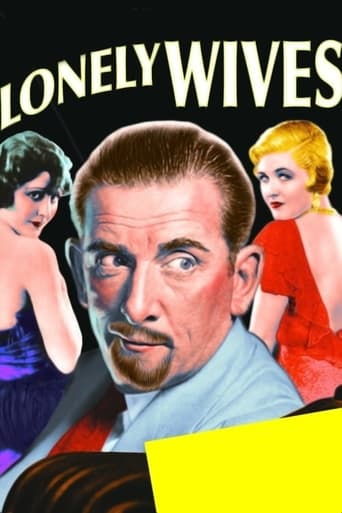
Films
1 film
About Russell Mack
American film director active during the early sound era of Hollywood, specifically around 1931. He emerged as a filmmaker during the critical transitional period when silent cinema was giving way to talkies, a time that presented both challenges and opportunities for directors adapting to new technologies. Mack's most notable work was directing the comedy film 'Lonely Wives' in 1931, which demonstrated his ability to handle dialogue-driven humor in the early sound format. His career appears to have been concentrated primarily in this pivotal year, though he may have been involved in other film projects during this period. While his filmography was limited, Mack contributed to the development of early sound comedy techniques, helping establish approaches to timing and dialogue delivery that would influence subsequent filmmakers in the talkie era. His work represents an important though often overlooked chapter in cinema history, capturing the industry's evolution during this transformative technological period.
The Craft
Behind the Camera
Early sound comedy director specializing in dialogue-driven humor during Hollywood's transition to talkies
Milestones
- Directed 'Lonely Wives' (1931)
- Worked during the transitional period from silent to sound films
Best Known For
Must-See Films
Why They Matter
Impact on Culture
Russell Mack's contribution to cinema, while limited in scope, represents the work of countless directors who helped navigate Hollywood through the challenging transition from silent films to talkies. His direction of 'Lonely Wives' (1931) exemplifies the early attempts at creating dialogue-driven comedy in the sound era, a genre that would become enormously popular in subsequent decades. While not as well-remembered as his contemporaries, Mack and directors like him were essential in developing the technical and artistic approaches that would define early sound cinema.
Lasting Legacy
Russell Mack's legacy is primarily preserved through his work on 'Lonely Wives' (1931), which serves as a historical artifact documenting the evolution of American comedy cinema during the early sound period. His career exemplifies the many directors who worked during this transitional era, contributing to the foundation upon which later Hollywood filmmakers would build. While his name may not be widely recognized today, his work represents an important piece of cinema history during one of its most transformative periods.
Who They Inspired
Due to the limited scope of Russell Mack's known filmography, his direct influence on subsequent filmmakers is difficult to trace. However, like other directors working during the early sound era, his experiments with dialogue timing and sound recording techniques would have contributed to the collective knowledge that advanced the art of filmmaking. Directors who followed in the comedy genre benefited from the groundwork laid by early sound directors like Mack.
Off Screen
Very limited information is available about Russell Mack's personal life, as his career in film was brief and occurred during a period when many directors from the early sound era have been overshadowed in historical records by more prominent filmmakers of the time.
Did You Know?
- Russell Mack's entire known directorial career appears to be concentrated around the year 1931
- 'Lonely Wives' (1931) was released during the Great Depression, a time when comedy films were particularly popular with audiences seeking escapism
- The early 1930s was a period of massive technological change in Hollywood, with many directors struggling to adapt to sound recording requirements
- Directors from this transitional period often worked on multiple films simultaneously as studios rushed to produce sound content
- Many directors from the early sound era, including Mack, have been largely overlooked in film history despite their important contributions
Frequently Asked Questions
Who was Russell Mack?
American on YTB.my. He worked during Hollywood's transitional period from silent films to talkies.
What films is Russell Mack best known for?
Titles linked here include Lonely Wives (1931).
When was Russell Mack born and when did he die?
Specific birth and death dates for Russell Mack are not readily available in historical records, which is common for many directors who had brief careers during the early sound era.
What awards did Russell Mack win?
There are no known awards or nominations recorded for Russell Mack, which was not uncommon for directors working during the early 1930s when many industry awards were still being established.
What was Russell Mack's directing style?
Russell Mack specialized in early sound comedy, demonstrating ability to handle dialogue-driven humor during Hollywood's transition to talkies. His work on 'Lonely Wives' shows his adaptation to the technical and artistic challenges of early sound filmmaking.