Films
1 film
About Boris Gorin-Goryainov
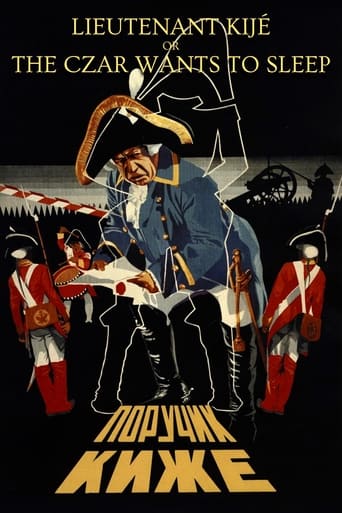
Boris Gorin-Goryainov appears once in this catalog: Lieutenant Kizhe (1934). His most notable and possibly only film appearance was in the 1934 comedy classic 'Lieutenant Kizhe' (Poruchik Kizhe), directed by Alexander Rou. This film was one of the earliest Soviet musical comedies and became an enduring classic of Soviet cinema. Gorin-Goryainov's role in this film, while not the lead, contributed to the ensemble cast that brought to life this satirical tale about a bureaucratic mistake that creates a fictional lieutenant. The film was notable for its innovative use of music by Sergei Prokofiev, who composed one of his first film scores for this production. Unfortunately, detailed records about Gorin-Goryainov's broader career are scarce, suggesting he may have had a brief film career or primarily worked in theater. His appearance in 'Lieutenant Kizhe' places him among the actors of early Soviet sound cinema, a period when the film industry was transitioning from silent films to talkies and establishing new cinematic traditions.
The Craft
Milestones
- Appeared in the classic Soviet film 'Lieutenant Kizhe' (1934)
- Part of the ensemble cast in one of the earliest Soviet musical comedies
- Worked during the transition period from silent to sound cinema in the Soviet Union
Best Known For
Iconic Roles
Must-See Films
Working Relationships
Worked Often With
Studios
Why They Matter
Impact on Culture
Boris Gorin-Goryainov's contribution to cinema, while limited in scope, is part of the broader cultural significance of early Soviet film. His appearance in 'Lieutenant Kizhe' connects him to a film that represents an important milestone in Soviet cinema history - one of the first successful musical comedies that also served as political satire. The film itself has endured as a classic, with Prokofiev's score becoming particularly famous and often performed independently as a concert suite. The film's success demonstrated that Soviet cinema could produce sophisticated entertainment while still operating within the constraints of the state-controlled film industry.
Lasting Legacy
Boris Gorin-Goryainov's legacy is primarily tied to his participation in 'Lieutenant Kizhe,' a film that has stood the test of time as a classic of Soviet cinema. While his individual contribution may have been small, being part of such an influential work places him within the historical narrative of Soviet film development. The film itself continues to be studied by film historians and appreciated by cinema enthusiasts for its innovative approach to musical comedy and its subtle political commentary. Actors from this era, even those with brief careers, represent the foundation upon which the great Soviet film tradition was built.
Who They Inspired
Due to the limited documentation of Boris Gorin-Goryainov's career, it's difficult to assess his direct influence on other actors or filmmakers. However, as part of the cast of 'Lieutenant Kizhe,' he contributed to a film that influenced subsequent generations of Soviet filmmakers in terms of how musical comedy and satire could be successfully combined. The film's success helped establish templates for future Soviet comedies that needed to balance entertainment value with ideological requirements.
Off Screen
Very limited information is available about Boris Gorin-Goryainov's personal life. Historical records from the early Soviet period are often incomplete, especially for actors who had brief or secondary film careers. Like many actors of his era, he may have also worked in theater, which was a more common and stable profession for performers during this time.
Did You Know?
- 'Lieutenant Kizhe' was one of the first Soviet films to feature a score by renowned composer Sergei Prokofiev
- The film's title character, Lieutenant Kizhe, never actually appears on screen - he exists only as a bureaucratic error
- Prokofiev's music from the film became so popular that he created a concert suite from the score
- The film was based on a satirical story by Yury Tynyanov about the absurdities of Russian bureaucracy
- Despite being made in 1934 during Stalin's era, the film managed to include subtle satire about bureaucracy and military life
- The film was restored and re-released in the 1960s, introducing it to new generations of Soviet audiences
- Very little biographical information survives about many supporting actors from early Soviet films, including Gorin-Goryainov
Frequently Asked Questions
Who was Boris Gorin-Goryainov?
Soviet with credits in this catalog.' He was part of the early generation of actors working in Soviet sound cinema during a transformative period in Russian film history.
What films is Boris Gorin-Goryainov best known for?
Titles linked here include Lieutenant Kizhe (1934).
When was Boris Gorin-Goryainov born and when did he die?
Unfortunately, specific birth and death dates for Boris Gorin-Goryainov are not readily available in historical records. This is common for many supporting actors from the early Soviet film period, where documentation was often incomplete.
What awards did Boris Gorin-Goryainov win?
There are no recorded awards or nominations for Boris Gorin-Goryainov. During the early Soviet era, formal award systems for film actors were not as established as they would become in later decades.
What was Boris Gorin-Goryainov's acting style?
Due to limited documentation of his career and the fact that 'Lieutenant Kizhe' appears to be his only known film, specific details about Boris Gorin-Goryainov's acting style are not well-documented. He was part of an ensemble cast in a film that blended comedy with musical elements.
Why is 'Lieutenant Kizhe' considered significant in cinema history?
'Lieutenant Kizhe' is significant as one of the first Soviet musical comedies and for featuring Sergei Prokofiev's first film score. The film successfully combined entertainment with subtle political satire, demonstrating the possibilities for sophisticated cinema within the Soviet system.